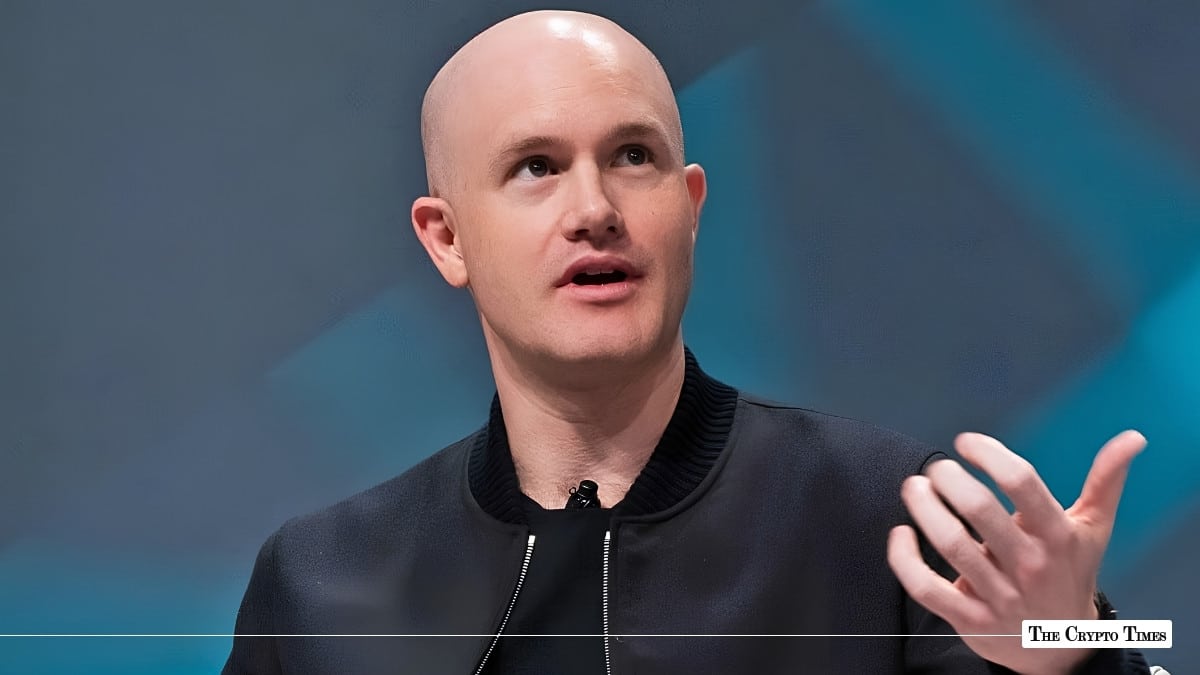
Brian Armstrong is, more than perhaps any other crypto CEO, fluent in turning a single tweet into a strategic statement. His recent post is the latest example. It lays out an eight-point framework of what Armstrong calls the unfinished work, the “jobs not done,” of the digital asset sector, and reads as a strategic map of how the world’s largest U.S.-listed crypto exchange views the next decade ahead.
The post reads, in full:
- Tokenization of real-world assets: Real estate, stocks, bonds, funds, etc. onchain for instant settlement, fractional ownership & massive distribution.
- 24/7 Global trading: Pooled global liquidity, every asset, every person, with great leverage and capital efficiency.
- Next-gen payments: Near-instant, low-cost global transfers using stablecoins, including for Agentic payments.
- AI-powered risk, credit, compliance, and advice: Better decisions, less fraud, and broader access to capital. Everyone gets access to a great financial advisor.
- Innovation friendly regulation: Move from one-size-fits-all to risk-based rules that encourage innovation and competition instead of stifling it.
- Expanded access: Open protocols that reduce middlemen and self-custodial wallets to expand access to everyone with a smartphone.
- Capital formation: Low cost and turnkey for anyone to raise money for a good idea, increasing the number of startups.
- Sound money: A refuge from inflation, when discipline is lost in fiat money.
The post is notable for what it includes and for the timing. Each of the eight items maps to a current Coinbase product line, a regulatory fight Coinbase is actively engaged in, or a piece of infrastructure the company has been building toward — and the message arrives at a moment when several of those fights are simultaneously reaching inflection points.
A Framework Mapped to a Month
It would be a mistake to read Armstrong’s eight points as a Coinbase product roadmap. They are something more interesting — a public articulation of how Coinbase’s CEO frames the entire purpose of the industry, with the company’s own products serving as evidence that the work is already underway.
Examined point by point, the framework reveals a careful integration of operational reality and strategic ambition.
Point 1 maps to Coinbase’s active engagement with real-world asset tokenization on Base, its Layer-2 network, where institutional issuers have been deploying tokenized money-market funds and treasuries for over a year.
Point 2 is the implicit endgame of every traditional financial market currently moving toward continuous settlement, and the operating reality of crypto markets since inception.
Point 3’s inclusion of “Agentic payments” is the most forward-looking phrase in the post; but it is also already concrete operational reality at Coinbase. The company’s x402 payment protocol disclosed in Q1 earnings that it had processed more than 100 million payments, with 99%+ in USDC, and Base has captured the majority of agentic stablecoin transaction volume globally. Armstrong is signaling that machine-to-machine commerce on stablecoin rails is no longer a theoretical use case — it is a category Coinbase is openly building for.
Point 4 is the framework version of Armstrong’s May 21 disclosure that Coinbase had rebuilt “essentially every workflow” in its compliance function, cutting restriction-resolution times by 90% while keeping humans in the validation loop. That post offered a specific operational metric; the May 25 framework elevates the same idea into a sector-wide aspiration: AI as the mechanism that gives “everyone access to a great financial advisor.”
Point 5 is verbatim the language of the May 19 Trump executive order directing six federal financial regulators to dismantle “overly burdensome and fragmented regulations and supervisory practices that… primarily benefit incumbent financial services firms.” The phrasing is unlikely to be coincidental.
Points 5, 6, and 7 together are, in substance, the case for the CLARITY Act — which cleared the Senate Banking Committee 15-9 on May 14 after a last-minute ante-room deal between Republicans and Democrats. Coinbase has publicly backed the bill since April 9, when Armstrong famously responded to Treasury Secretary Scott Bessent with two words: “We agree.” The framework restates the positions Coinbase has been arguing on the Hill for years, now in the form of a public commitment.
Point 8’s “sound money” is the canonical Bitcoin thesis, articulated in a form that does not name Bitcoin specifically. It is also — given that Coinbase has been the custodian of choice for institutional Bitcoin holdings since the launch of the spot Bitcoin ETFs — the philosophical premise underwriting one of the company’s largest revenue streams.
The framework, in other words, tells the world that Coinbase’s product strategy, its policy advocacy, and its long-term thesis are not eight separate businesses but a single integrated argument about what financial infrastructure should look like.
What the List Doesn’t Mention
What is included in the post is vital, but what is left out is just as revealing.
There is no specific mention of Bitcoin by name. There is no mention of DeFi as a standalone category, despite Coinbase’s deep integration with the ecosystem. Crucially, there is no mention of memecoins, NFTs, or speculative retail trading—the volatile layer of the market that has historically driven massive portions of the exchange’s quarterly volume.
These omissions explicitly define the target audience: policymakers, institutional partners, traditional finance counterparts, and long-term developers. Armstrong is aggressively framing crypto as foundational financial infrastructure, distancing the brand from the optics of an offshore casino.
Continuity With Armstrong’s Larger Pitch
This is not the first time Armstrong has used X to lay out a long-form vision. He has advocated repeatedly for Shenzhen-style special economic zones in the U.S., calling for “red-tape-free zones” where crypto and other emerging technologies could iterate without regulatory friction. He has framed the 2025-2026 window as the last realistic legislative window before the political environment shifts again. And his April 9 “we agree” reversal marked the moment Coinbase moved from opposing to actively backing the CLARITY Act.
The May 25 framework is the synthesis — Armstrong drawing the through-line from Coinbase’s product strategy (tokenization on Base, x402 payments, AI compliance) to its policy advocacy (CLARITY Act, Section 1960 protections, the Trump fintech EO) to its long-term thesis (sound money, expanded access, capital formation).
He closed the post with two lines that carry the weight: “Jobs not done until we get these working for all. Will require lots of tech innovation and policy work to get there.”
Translated: Coinbase intends to be doing exactly this work for the next decade.
The Wider Industry Context
Armstrong’s post lands in a market where the most successful crypto companies are increasingly defining themselves not as exchanges or token issuers, but as infrastructure layers for a broader financial transformation.
Strategy continues to position Bitcoin as institutional reserve capital. SpaceX’s May 20 IPO filing disclosed an 18,712 BTC corporate treasury that has remained untouched since 2024. Block’s March 2026 auto-rollout of Lightning Network payments across roughly 4 million Square merchants put Bitcoin-denominated commerce into millions of small businesses overnight. And the CLARITY Act’s Senate Banking Committee markup brought the first federal market-structure framework within real reach.
In each case, the operative framing is the same one Armstrong’s post articulates: the work is not about replacing the existing financial system; it is about rebuilding its infrastructure on permissionless, programmable, globally accessible rails. Coinbase, in Armstrong’s articulation, is building toward that rebuild on eight fronts simultaneously.
For now, the post is what it is: an early-morning articulation by the CEO of the largest U.S.-listed cryptocurrency exchange of the work he believes the industry has left to do. Armstrong’s eight points read less like a forecast than a public commitment — a statement, made when the policy and regulatory environment is more favorable to that commitment than it has been in years, that Coinbase intends to spend the next decade building toward each one of them.
Jobs not done.
Also Read: 1 Month to Go: Litecoin Summit 2026 Set to Kick Off Dutch Blockchain Week