A federal judge has denied Coinbase’s request to stop Michigan from enforcing its gambling laws against the exchange’s sports event contracts, dealing a setback to the crypto industry’s argument that such products fall under exclusive federal oversight.
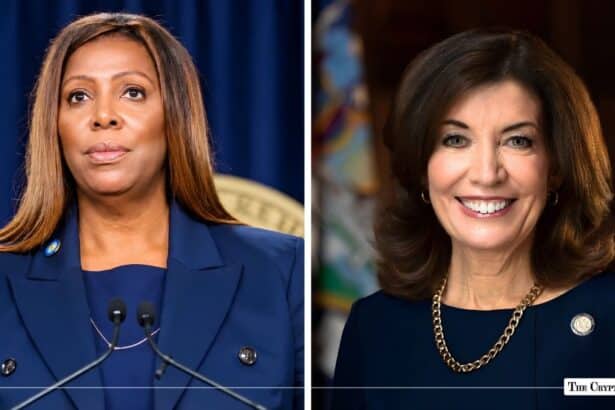
In an order issued August 6, US District Judge Shalina D. Kumar of the Eastern District of Michigan ruled that Coinbase Financial Markets is not likely to succeed on the merits of its case, denying the preliminary injunction it sought against Michigan Attorney General Dana Nessel and state gaming officials.
What the Court Decided
Coinbase had asked the court to block enforcement while its lawsuit proceeds, arguing that the sports event contracts it offers through Kalshi, a CFTC-regulated designated contract market, are federally regulated derivatives, so Michigan’s Lawful Sports Betting Act is preempted under the Constitution’s Supremacy Clause. The judge rejected that argument on every ground she reached.
First, the court found the contracts are likely not “swaps” under the Commodity Exchange Act (CEA). Coinbase’s broad reading of the statute, that any contract tied to the “occurrence of an event” with a “financial, economic, or commercial consequence” qualifies, would, the judge wrote, render other parts of the swap definition superfluous and sweep in everything “from politics to music to climate to movies to sports.”
Adopting it, she noted, could theoretically turn ordinary sports betting outside a federal exchange into a felony, a result the order called “absurd.”
Second, and independently, the court held that even if the contracts were swaps, the CEA does not preempt Michigan’s gambling laws. The order works through all three preemption theories and rejects each: the CEA’s “exclusive jurisdiction” language identifies the governing agency, not the governing law, and is paired with savings clauses; the statute’s own “special rule” expressly incorporates state law by letting the CFTC bar event contracts that involve activity “unlawful under State law”; and enforcing Michigan’s rules does not make federal compliance impossible.
In a characteristically blunt passage, the judge described one Coinbase argument as “applesauce.” The court also dismissed the Michigan Gaming Control Board itself on sovereign-immunity grounds, leaving Nessel and the board’s directors as defendants.
A Crowded Field Against Coinbase
Notably, Coinbase drew organized opposition beyond the state. Thirty-three federally recognized Indian tribes and the City of Detroit filed amicus briefs supporting Michigan, arguing that a win for Coinbase would undermine tribal gaming sovereignty and cut into the casino tax revenue Detroit depends on—a reminder that prediction markets collide with entrenched, well-funded gambling interests, not just regulators.
Why It Matters Beyond Michigan
The ruling is the latest data point in a fast-widening national split, and the crypto exposure is direct. Coinbase sued Michigan, Connecticut, and Illinois in December to establish federal supremacy over its event contracts, and it has since faced enforcement in Nevada, Wisconsin, and other states, often alongside Kalshi, Polymarket, Robinhood, and Crypto.com. Michigan had already secured a temporary restraining order against Kalshi over the same conduct.
The order itself catalogs the divide. Courts in Nevada, Ohio, and the Western District of Michigan have found sports event contracts are not swaps; the Third Circuit, Arizona, and Tennessee courts have found they are. That kind of conflict among federal courts is precisely the condition that draws the Supreme Court’s attention, and the question, whether CFTC-regulated event contracts can operate over state gambling law, increasingly looks headed there.
The decision also carries an echo of the CLARITY Act fight. As with that stalled market-structure bill, the courts here are declining to read a broad grant of exclusive federal authority into a statute that does not spell it out. The recurring lesson is that an agency’s assertion of jurisdiction is a weaker foundation than clear statutory text—and only Congress can resolve the underlying question definitively.
What Comes Next
Crucially, this is a preliminary ruling on Coinbase’s likelihood of success, not a final judgment that the contracts are illegal; the underlying case continues, and Coinbase can appeal the denial to the Sixth Circuit. But the near-term signal is unfavorable: the same Sixth Circuit already leaned this way in a related Kalshi matter the order cites repeatedly, and the judge found the balance of equities “heavily” favors Michigan’s traditional police power to regulate gambling.
For now, Coinbase’s path to offering sports event contracts to Michigan users without state-law risk runs through an appeals court—or through Congress.
Also Read: Is Kalshi Legal? State-by-State Status and Court Rulings (2026)