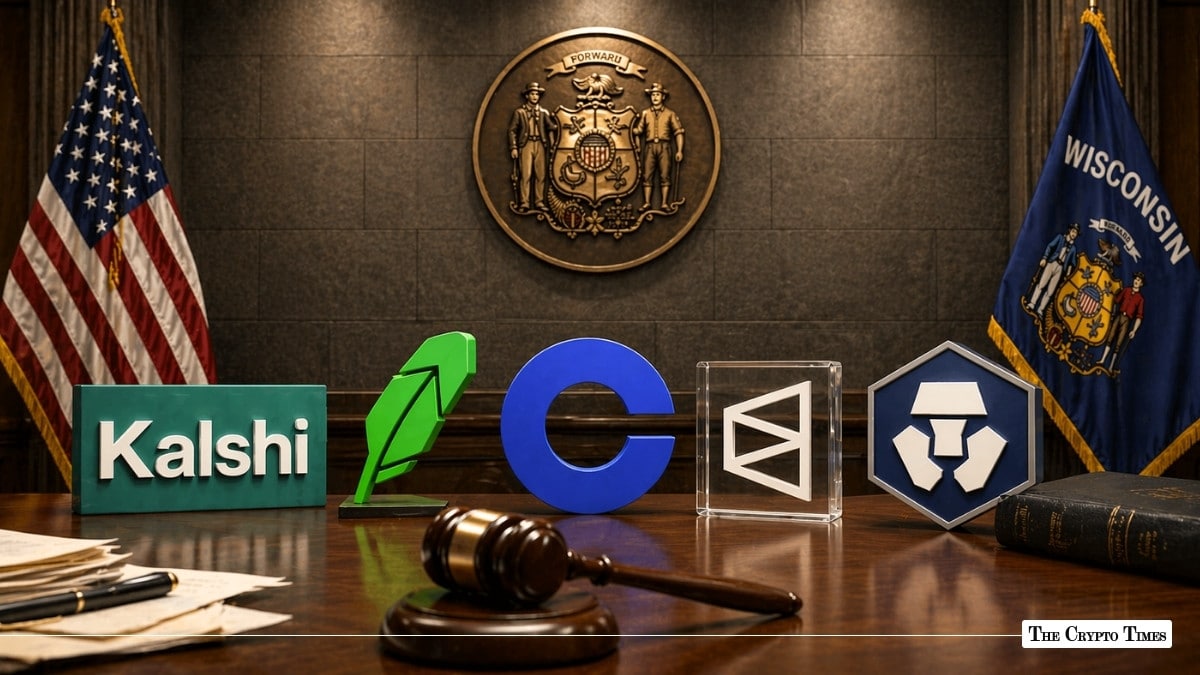
The state of Wisconsin has taken legal action against major prediction markets and crypto platforms, accusing them of facilitating illegal sports betting under the guise of financial products.
In a series of lawsuits, announced by the Wisconsin Department of Justice on April 23, 2026, the Wisconsin Department of Justice (DOJ) targeted Kalshi, Robinhood, Coinbase, Polymarket, and Crypto.com. The state alleges that these companies are flouting local statutes to operate unlicensed commercial gambling hubs.
“Thinly Disguised” Conduct
According to the complaints filed in Dane County, the platforms allegedly offer sports-related event contracts that function like traditional bets paying out based on real-world outcomes such as game results.
“Thinly disguising unlawful conduct doesn’t make it lawful,” said Attorney General Josh Kaul. “These companies’ alleged facilitation of sports betting in Wisconsin should be shut down.”
While Wisconsin recently legalized tribal sports betting via mobile apps on tribal lands, Kaul clarified that these lawsuits are unrelated to that legislation, as the defendant companies operate entirely outside of tribal jurisdiction.
The revenue model under fire
Wisconsin authorities allege the companies generate revenue by charging fees on each transaction, likening the model to casinos taking a cut from wagers.
As cited in the filing, Kalshi reportedly generates over $1 billion annually from sports-related contracts—accounting for a significant portion of its revenue. The state argues that profiting from such activity constitutes unlawful gambling under Wisconsin statutes.
The DOJ is seeking court orders to declare the platforms in violation of state gambling laws, classify their operations as a public nuisance, and block access to sports-related event contracts for Wisconsin users, along with preliminary and permanent injunctions to halt such offerings in the state.
Clash over regulation
The lawsuits add to a growing national dispute over how prediction markets should be regulated.
Industry voices have pushed back against the lawsuits. Paul Grewal, Coinbase’s Chief Legal Officer, hit back in a post stating that Congress intended derivatives markets to have uniform federal oversight, warning that state-level enforcement risks recreating the kind of regulatory patchwork lawmakers sought to eliminate.
Companies like Kalshi have argued their products fall under federal oversight as financial instruments regulated by the Commodity Futures Trading Commission (CFTC). However, states including Wisconsin contend these contracts are indistinguishable from gambling and should be regulated locally. Moreover, earlier this month, the CFTC sued Illinois, arguing that federal law overrides the state’s crackdown on prediction markets.
The outcome of these cases could eventually reach the U.S. Supreme Court, as the judiciary decides whether “information markets” are innovative financial derivatives or simply high-tech sportsbooks.
Also read: U.S. Soldier Charged in $400K Polymarket Insider Trading Case