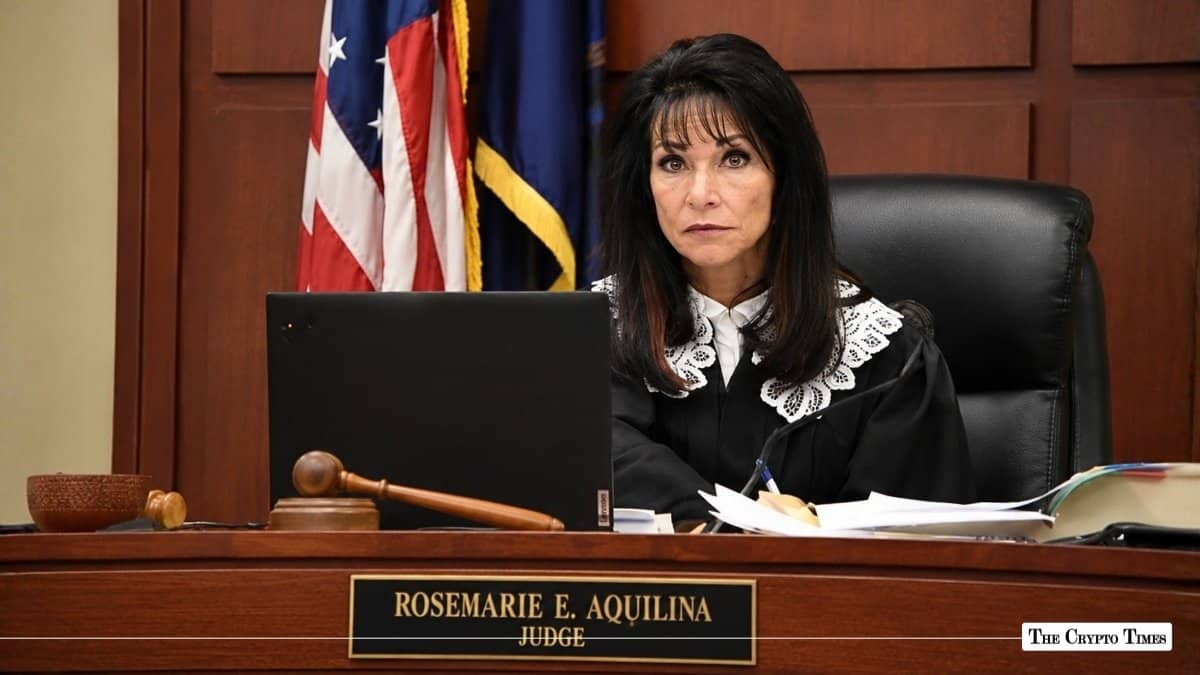
A Michigan state court has issued a temporary restraining order against KalshiEX, LLC, barring the prediction market platform from offering, advertising, or facilitating sports-related event contracts to Michigan residents.
The order, signed by Ingham County Circuit Court Judge Rosemarie E. Aquilina on June 29, will remain in effect for 14 days until July 13, 2026, and carries a $120,000 per day fine if Kalshi fails to comply with geofencing requirements.
Michigan Attorney General Dana Nessel secured the emergency order after successfully keeping the case in state court, marking a significant win for state regulators in the escalating nationwide battle over prediction market jurisdiction.
What the Court Order Says
The court order is sweeping in scope. Judge Aquilina’s ruling prohibits Kalshi and its officers, agents, employees, and affiliated entities from engaging in the following activities within Michigan:
Offering, listing, matching, executing, clearing, settling, or facilitating any contract that constitutes internet sports betting as defined under Michigan law. Accepting deposits, stakes, or fees in connection with any such contracts from Michigan residents. Advertising, promoting, or soliciting participation through any channel, including websites, mobile apps, social media, influencers, and paid placements.
Permitting account creation, verification, or funding for the purpose of accessing internet sports betting. Designing or launching products that are functionally similar to internet sports betting, including single-game bets, parlays, over-under, moneyline, exchange betting, in-game betting, and proposition bets for Michigan residents.
To comply, Kalshi must utilize a third-party geolocation services provider licensed by the Michigan Gaming Control Board, capable of meeting the state’s geofencing specifications under Technical Bulletin No. 2024-03.
The $120,000 daily fine for geolocation non-compliance was calculated by estimating Kalshi’s $600 million per day trading volume, dividing by 50 to approximate Michigan’s share of transactions, and applying a 1% fee.
Why the Court Ruled Against Kalshi
Judge Aquilina laid out seven grounds for finding that Michigan faces immediate and irreparable harm if Kalshi continues to operate unchecked.
First, while Michigan law requires all sports bettors to be at least 21 years old, Kalshi allows wagers starting at age 18, which the judge said could cause “profound” harm to Michigan’s youth. Second, the court found that Kalshi takes advantage of mental health vulnerabilities without providing the protections embedded in Michigan’s regulatory framework.
Third, the platform bypasses Michigan’s patron protection mechanisms. Fourth, Kalshi’s failure to comply with state gaming law gives it a “massive and unfair advantage” over licensed entities operating within Michigan’s regulatory structure.
Fifth, Kalshi undercuts Michigan’s funding for schools, compulsive gambling prevention, economic development, and first responders. Sixth, the City of Detroit relies on gaming taxes to fund law enforcement, public safety, youth programs, and infrastructure. And seventh, Kalshi’s conduct harms Michigan’s tribal nations by depriving them of revenue needed to operate their governments and serve their citizens.
The Remand Victory
The restraining order follows a key procedural win for Michigan’s Attorney General. After Nessel filed the original lawsuit against Kalshi in March 2026, alleging violations of Michigan’s Lawful Sports Betting Act (LSBA), Kalshi quickly attempted to move the case from Ingham County Circuit Court to the U.S. District Court for the Western District of Michigan.
On June 25, U.S. District Judge Paul L. Maloney issued a 14-page opinion granting Nessel’s motion to remand the case back to state court. The federal judge rejected all three of Kalshi’s theories for keeping the case in federal court.
On the federal question argument, Judge Maloney found that Michigan’s LSBA does not incorporate definitions from the federal Unlawful Internet Gambling Enforcement Act (UIGEA) and therefore does not “necessarily raise” a federal issue. The court noted that “state courts are perfectly capable of handling defenses based in federal law.”
On complete preemption, the judge found that Kalshi failed to identify a “parallel federal cause of action” as required under existing Supreme Court precedent, noting that “no other court has ever found” that the Commodity Exchange Act provides such a parallel cause of action.
On the federal officer removal theory, the court rejected Kalshi’s argument that Michigan was required to join the CFTC as a necessary party under state court rules, calling the theory “farfetched and lack[ing] any support.”
While Judge Maloney denied Michigan’s request for attorney fees, he noted that Kalshi is “on a losing streak with similar arguments in district courts across the country.”
Nessel Responds
“Our gambling laws exist to protect Michiganders from unlicensed, predatory operations, and failing to comply with them carries serious legal consequences,” Attorney General Nessel said in an official statement.
“I am proud of the attorneys in my office who not only kept this case in state court but also secured an order protecting residents as this litigation moves forward. We remain committed to enforcing a level playing field for all gambling platforms in Michigan and ensuring that companies cannot evade accountability or exploit consumers under the guise of a prediction market.”
The Bigger Picture: A Nationwide War Over Prediction Markets
Michigan’s victory is part of a rapidly escalating multi-state legal war that has engulfed the prediction market industry in 2026. Over 20 states are now involved in active litigation with prediction market platforms, and the CFTC has sued at least nine states, including Arizona, Connecticut, Illinois, New York, New Mexico, Minnesota, Rhode Island, Wisconsin, and most recently Kentucky, in its campaign to assert exclusive federal jurisdiction over event contracts.
The fundamental question at the center of every one of these disputes is whether sports-related event contracts are federally regulated financial derivatives under the Commodity Exchange Act, as the CFTC and prediction market platforms argue, or unlicensed gambling products that fall under state authority.
Just days before the Michigan ruling, Kalshi sued Illinois over SB 3019, the state’s new prediction market law set to take effect on July 1. The Digital Chamber also filed an amicus brief in the Sixth Circuit supporting Kalshi against Tennessee, warning that a ruling against the platform could threaten weather derivatives, energy futures, and other federally regulated products.
Meanwhile, Kalshi is reportedly eyeing a $40 billion valuation in a new funding round, nearly doubling the $22 billion it reached during its $1 billion raise last month. The platform generated more than $30 billion in trading volume so far in June, a 79% increase from May.
Courts remain deeply divided on the preemption question. The Third Circuit ruled in Kalshi’s favor against New Jersey in April, while the Sixth Circuit has expressed skepticism about the platform’s federal preemption arguments.
As Judge Maloney noted in his Michigan remand opinion, both the Sixth Circuit and his own court have questioned whether the CEA preempts state gambling laws “to nearly the extent that Defendant claims it does.”
Michigan’s restraining order adds another state-level win for regulators pushing back against the prediction market industry, even as the CFTC continues its aggressive campaign to protect what it calls its exclusive jurisdiction.
Legal experts widely expect the jurisdictional question to reach the U.S. Supreme Court, potentially as soon as next year.
Also Read: Kalshi Set for Massive Exposure as Official FIFA World Cup 2026 Partner