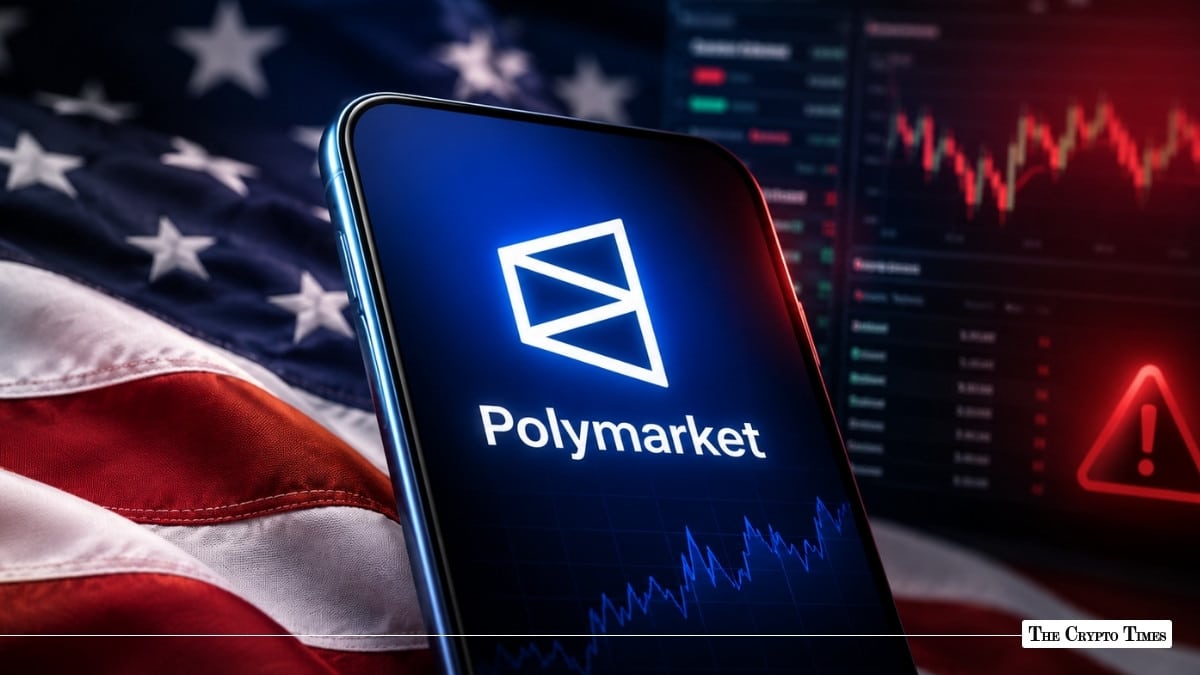
Polymarket, the crypto-native prediction market that has spent the past year chasing mainstream legitimacy, is facing its most damaging scrutiny yet. A Wall Street Journal investigation published over the weekend found the platform paid a network of offshore social-media “clippers” and creators to quietly promote its international exchange to American audiences, the very users it is legally prohibited from serving, and that much of the viral “proof” of easy winnings was simply fabricated.
The findings are awkward for a company whose entire value proposition rests on verifiable, on-chain transparency.
Fake wins on fake sites
According to the report, Polymarket paid mostly college-age creators to film themselves placing and winning bets on near-perfect copycat versions of its website, then concealed that it was paying them. The Journal reviewed more than 1,100 videos and found none of the roughly $1.9 million in bets shown were real, with hundreds of the clips placed on dummy sites rather than the live platform.
The mechanics were crude but effective. Many clips were filmed on lookalike domains such as “poiymarket.com,” built to mirror the real platform, and across 118 videos creators celebrated roughly $900,000 in fabricated wins, bets that on the real market would have lost more than $166,000. In one case, public on-chain data showed more than 50 accounts placed the same bet and every one of them lost. Creators reportedly altered headlines and reused outdated footage to make losing or simulated trades look like jackpots.
A clipper army aimed straight at Americans
This is where the regulatory problem bites. Polymarket’s main exchange has been off-limits to Americans since a 2022 settlement with the Commodity Futures Trading Commission (CFTC), and US users can still only reach it through a VPN. Yet the promotional campaign was engineered to target exactly those users. A marketing firm called Virality managed the network of clippers and paid them only when at least 60% of their audience was based in the US, with the clips drawing more than 140 million views across TikTok, YouTube, and Instagram.
The creators were kept cheap and quiet. They earned roughly $2,000 to $3,000 a month and were told not to disclose the payments, and some only added “@polymarket partner” to their bios after Journal reporters began asking questions. Higher up the influence chain, reportedly streamer Adin Ross has a multimillion-dollar deal with Polymarket and appeared in at least five promoted videos discussing ways to use inside information.
The irony: An “auditable” platform that couldn’t be audited
Here is the part that should sting most for crypto observers. Polymarket’s pitch is radical transparency: real trades settle on the Polygon blockchain in USDC, and markets resolve through UMA’s permissionless oracle, where anyone can dispute an outcome by posting a bond. The whole selling point is that you do not have to trust Polymarket, you can check the ledger.
The growth campaign relied on the inverse. It was built on staged trades on fake sites that no ledger could verify, wins that existed only in edited video, on domains designed to look like the real thing precisely because the real, on-chain record would have shown losses. A platform that asks users to “verify, don’t trust” sold itself to America on footage that verification would have instantly debunked.
Inside information and a pattern
The investigation also found that Polymarket paid clippers to promote videos discussing how to trade on inside information, though the company says it prohibits trading based on stolen or confidential data.
It is also the second marketing-disclosure flap to hit the company this month. Politico reported on June 5 that Polymarket’s Chief Marketing Officer used a personal PayPal account to pay creators who promoted the platform’s odds on X without labeling the posts as ads, sending at least $350,000 to creators and more than $2.5 million to over 800 people overall. A separate Journal analysis, meanwhile, found that most Polymarket users actually lose money, the opposite of what the viral clips advertised.
Why the timing is dangerous
The scandal lands at a sensitive moment for Polymarket’s mainstream ambitions. After years offshore, the company secured a CFTC-regulated path back into the US via an amended order in late 2025 for intermediated access through brokerages, and has been expanding its domestic presence. It is racing regulated rival Kalshi for the prediction-market crown even as the sector has seen record volumes. A deception campaign aimed at American users is already changing how regulators view that onshore push, exactly the audience and the authorities Polymarket most needs to win over.
In response, Polymarket said it is “committed to maintaining accurate, fair, and transparent markets” and plans a comprehensive audit of its promotional content. That audit will be closely watched. For now, the cleaner takeaway is the one the blockchain itself supports: a viral video of someone winning big on Polymarket is not proof that anyone won anything at all.
Also Read: Prince William Enlists Chainalysis, TRM Labs, & PayPal for a $23B Wildlife Fight