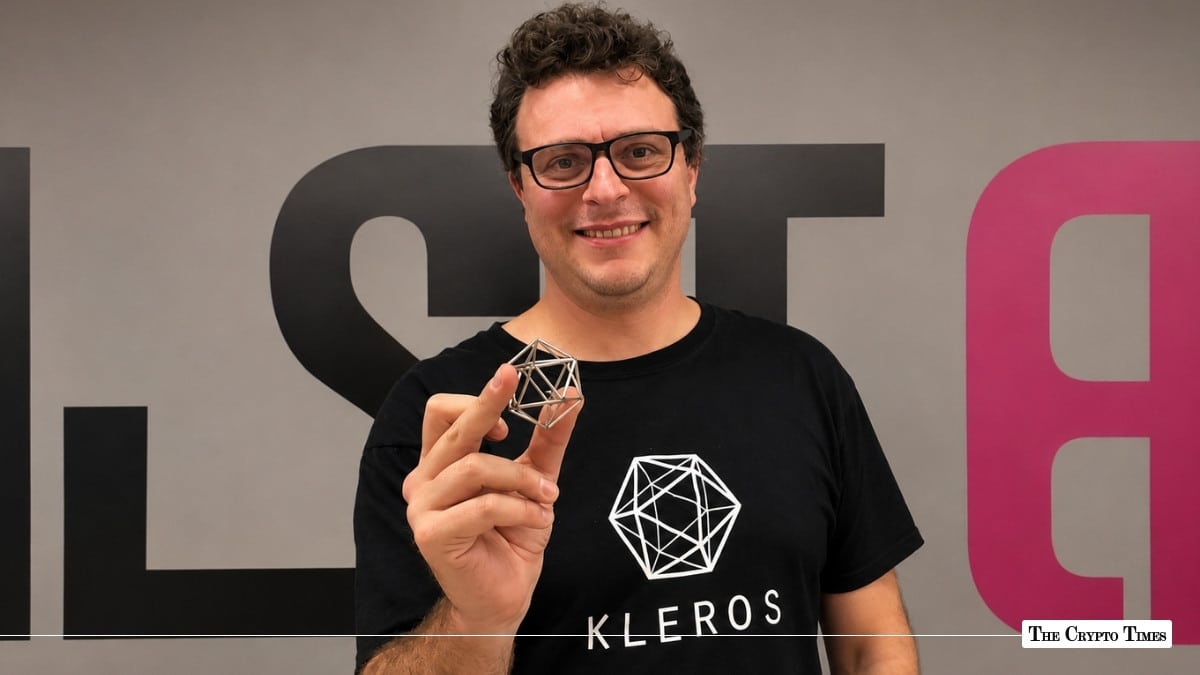
A new proposal from Kleros Founder Clément Lesaege could give Ethereum validators a direct role in funding ecosystem development by allowing them to redirect a portion of their staking rewards to public goods projects.
The proposal, published on the EthResearch forum and titled “Validator Redirection of Earnings Mechanism,” would enable validators to collectively decide how much of their rewards to contribute and which projects should receive the funds. Lesaege said the approach is designed to address persistent funding challenges for Ethereum’s shared infrastructure and other ecosystem initiatives.
Targeting Ethereum’s public goods funding gap
Lesaege said Ethereum suffers from a funding gap because many projects rely on shared infrastructure but few contributors want to pay for it alone. He argued that this leaves important ecosystem upgrades without enough financial backing, creating a coordination problem that limits long-term growth.
The founder compared the challenge to a prisoner’s dilemma, where participants avoid contributing because they expect others to cover the costs. He said this dynamic creates inefficiencies by preventing the network from funding projects that could benefit the broader Ethereum community.
Under the proposal, validators would decide whether to redirect part of their staking income toward ecosystem development. If more than 51% of validators support a contribution level, the rule would apply across the network, making the funding commitment collective rather than voluntary.
The plan would cap redirected rewards at 10% of validator earnings. Lesaege said the limit would prevent excessive control while still providing meaningful support for Ethereum projects. Validators currently receive about 700,000 ETH annually in staking rewards, according to figures cited in the proposal.
A redirect rate between 5% and 10% could channel about 50,000 to 70,000 ETH each year into ecosystem funding. However, validators would retain the ability to lower the contribution rate to zero, keeping the current system unchanged if they choose.
Set-and-forget governance
To prevent the system from collapsing into an exhausting, high-maintenance voting cycle, Lesaege’s model allows validators to input their preferred funding recipient addresses directly into their validator configurations just once.
Ethereum software clients would then automatically aggregate these static configurations using two distinct algorithmic concepts:
- King-of-the-Hill Rotation: Every 128 blocks (roughly 5 minutes), any validator can propose a new candidate “splitter contract” to challenge the reigning payout structure.
- Condorcet Winner Evaluation: The client automatically measures choices using Condorcet voting theory. The contract that can defeat all other candidate configurations in head-to-head, majority-preference matchups is declared the winner, acting as the primary distribution hub.
This mathematical approach allows validators a passive, “set-and-forget” experience while ensuring the distributed capital perfectly matches group consensus.
Debate continues over Ethereum’s future funding model
Despite its innovative approach to solving the free-rider problem, the proposal has predictably reignited sharp debates regarding blockchain governance and the concentration of validator influence.
Critics warn that large institutional liquid staking providers (like Lido or centralized exchanges) control dominant blocks of validator keys. If a cartel aligns over 51% of the network, they could theoretically vote to redirect 10% of the network’s yield directly into their own native sub-protocols, effectively taxing independent stakers.
Lesaege openly acknowledged these vectors in his research post but emphasized that similar 51% governance risks already inherently exist on Ethereum (such as manipulating the block gas limit). He argues that economic incentives, robust social-layer oversight, and client diversity would act as natural guardrails against malicious capture.
The proposal is currently designed to spark ecosystem debate rather than serve as a final protocol roadmap. Lesaege intends to gather extensive community feedback before deciding whether to transition the research into a formal Ethereum Improvement Proposal (EIP).
Also Read: Ethereum MEV Bot JaredFromSubway Drained in $15M Honeypot Attack