Key Highlights
- Fidelity has asked the SEC to allow its FETH Ethereum ETF to stake up to 100% of its ETH holdings under normal conditions.
- The fund plans to keep 85% of staking rewards, with the remaining 15% going toward fees for Fidelity and other service providers.
- If approved, FETH could use its staking income to make quarterly cash payments to shareholders.
Fidelity Investments has asked the U.S. Securities and Exchange Commission (SEC) to allow its Fidelity Ethereum Fund (FETH) to stake Ether.
According to a filing submitted on Tuesday, the proposed change would let the fund earn staking rewards from its ETH holdings and potentially pay the income to shareholders through quarterly cash distributions. Fidelity filed a pre-effective amendment to FETH’s registration statement, setting out how the proposed staking program would work.
Under normal conditions, the fund could stake up to 100% of its Ether, while keeping some ETH available for redemptions, expenses, and other liquidity needs. The proposal does not set a minimum amount that must be staked.
What staking means for the Ethereum ETF
Staking is a process used by the Ethereum network to help check and confirm transactions. ETH is put into the network to support this process, and the holder can receive rewards in return. For FETH, Fidelity plans to work with custodians and node operators that would handle the technical side of staking.
According to the filing, the fund has entered custodial arrangements with Anchorage Digital and BitGo, while its existing relationship with Fidelity Digital Assets will continue. Node operators will run the systems needed to stake the fund’s Ether on the Ethereum network.
The money earned from staking would be divided between the fund and the companies involved in running the program. FETH would keep 85% of the staking rewards, while 15% would go toward fees shared by Fidelity, custodians, node operators, and other service providers.
Shareholders could receive quarterly payments
Fidelity said it plans to use the net staking income to make quarterly cash payments to shareholders. The staking rewards would be converted into U.S. dollars before the payments are made.
However, shareholders would not be guaranteed a payment every quarter. Fidelity could change, suspend, or terminate the distributions under the terms outlined in the proposal.
Proposal still needs SEC approval
Fidelity said it expects staking to begin “as soon as practicable” after the registration statement becomes effective. This means the fund cannot start the new staking program simply because the filing has been submitted. The SEC must first declare the registration statement effective.
The proposed change would also give FETH a new investment objective. The fund currently seeks to track the Fidelity Ethereum Reference Rate after fees. With staking, the objective would also include an amount linked to the rewards earned from staking its ETH.
The plan also comes with risks. Staked ETH may not be available immediately when the fund needs to withdraw it. Ethereum’s unstaking process can take time, which could create problems when the fund needs more ETH for redemptions or other needs. Validators can also face penalties known as slashing if they fail to follow network rules.
FETH has attracted billions since launch
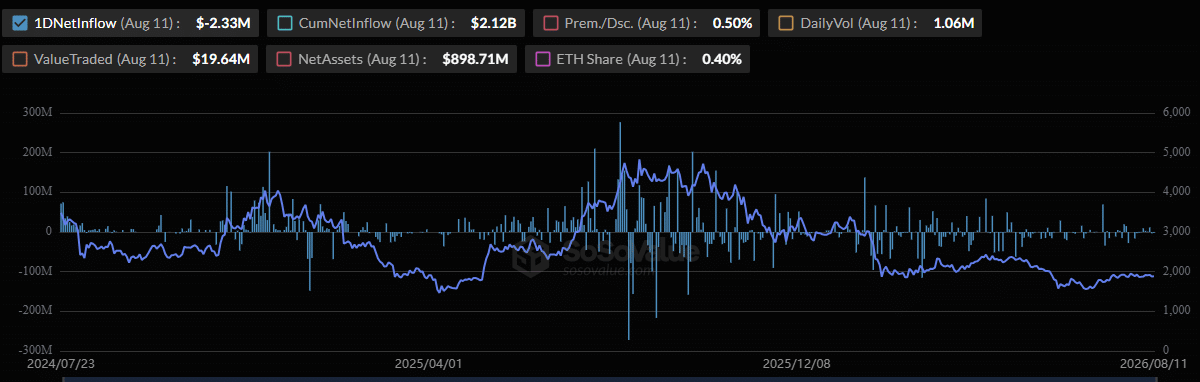
FETH launched in July 2024 as one of the first U.S. spot Ethereum ETFs and charges a 0.25% fee. As of Aug. 11, the fund had recorded about $2.12 billion in cumulative net inflows since launch, according to SosoValue.
If approved, Fidelity would join other U.S. Ethereum ETF issuers that have pursued staking. Grayscale was one of the first U.S. issuers to enable staking in its spot crypto products in 2025, while BlackRock launched its separate iShares Staked Ethereum Trust ETF in February 2026. Bitwise also sought to add staking to its Ethereum ETF but later withdrew its proposal.
When U.S. spot Ethereum ETFs launched in 2024, staking was left out of the products. Fidelity’s latest filing would change that for FETH if the SEC approves the amendment and makes the registration statement effective.
Also Read: Ethereum Leads RWA Market With 56.6% Share