Key Highlights
- India does not currently impose a ban on individuals buying or holding USDT.
- USDT is not legal tender, and it is not an RBI-issued currency.
- Covered VDA service providers operating in India are subject to FIU-IND registration and anti-money laundering requirements.
- A platform’s FIU registration does not guarantee its safety or protect a buyer from losses.
- Tax, identity checks, and the purpose and structure of a transfer matter, especially when dealing directly with another person or moving funds overseas.
A USDT price on an Indian exchange can exceed the rupee value implied by the USD/INR exchange rate. That difference can look like an unofficial dollar rate. It is not an official foreign-exchange rate. The Crypto Times’ India USDT Premium Index measures the price of a crypto asset on exchange order books, rather than the official INR/USD exchange rate.
That distinction raises a practical question: can an Indian resident legally buy USDT at that price? As of 2026, India does not impose a blanket prohibition on an individual buying or holding USDT. But the answer depends on how the transaction is conducted, which service is involved and what the buyer does with the tokens.
Is Buying USDT Legal in India?
Generally, there is no blanket prohibition on an individual purchasing or holding USDT in India. India instead subjects covered virtual digital asset service providers to anti-money laundering rules and applies tax and reporting rules to virtual digital assets.
That does not mean India has approved USDT as money or established a comprehensive consumer protection regime for it. The government has continued to warn that virtual digital assets carry risks and that users may not have the same regulatory protections available for regulated financial products.
Think of three separate questions: whether you may hold the asset, whether the platform serving you complies with Indian requirements, and whether your particular transaction meets tax, foreign-exchange payment, anti-money laundering, or other applicable rules. A “yes” to the first question does not settle the other two.
What Has the RBI Said About Crypto?
The RBI’s 2018 circular stopped entities it regulated from dealing in virtual currencies or providing services to those dealing in them. Following a Supreme Court judgment, the RBI clarified in 2021 that the 2018 circular was no longer valid and could not be cited as a continuing restriction.
The RBI also said its regulated entities could continue customer due diligence under applicable KYC, anti-money laundering, counter-terrorist financing, and foreign-exchange rules. The withdrawal of the 2018 banking restriction did not turn USDT into legal tender or an RBI-issued currency.
Is USDT Legal Tender in India?
No. USDT is issued by Tether; it is not a rupee note or India’s central bank digital currency. Government material has stated that virtual currencies are not legal tender and have not been authorized by the government or RBI as a currency.
The RBI, by comparison, identifies its digital rupee, or e₹, as legal tender. The RBI says e₹ is the digital form of the rupee and is issued by the central bank.
A seller may agree to accept an asset as part of a transaction, but that private agreement does not give the asset legal tender status. Other laws governing the underlying sale, payment, or transfer can still apply.
What Does FIU-IND Registration Mean?
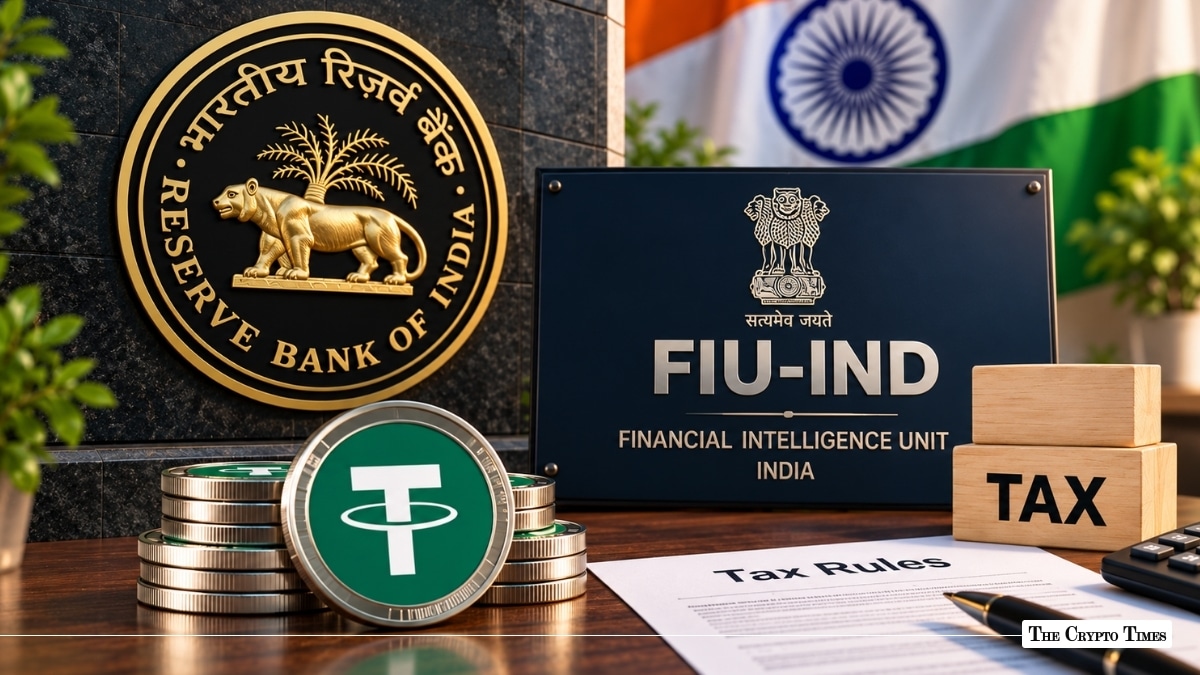
Under the Ministry of Finance, the Financial Intelligence Unit–India, or FIU-IND, oversees anti-money laundering compliance for reporting entities providing covered virtual digital asset services. FIU-IND’s 2026 AML/CFT guidelines cover activities including exchange between virtual digital assets and fiat currencies, exchange between virtual digital assets, and custody or administration of virtual digital assets.
Covered VDA service providers must register with FIU-IND as reporting entities and meet applicable obligations involving customer due diligence, record keeping, and transaction reporting.
FIU-IND has also taken action against providers that it said were non-compliant. In September 2026, it issued notices to 15 VDA service providers under Section 13 of the Prevention of Money Laundering Act, 2002 (PMLA).
Registration is a compliance status, not an investment endorsement. It does not mean the RBI has licensed USDT, that the government guarantees a platform’s deposits, or that users will recover funds after a hack or failure.
Before using a platform, check the legal entity behind the service and its current FIU status. Do not assume that a familiar brand name, an accessible website, or an old registration announcement establishes its position today. FIU-IND’s official website publishes its notices and registration material.
Which USDT Transactions Need Extra Care?
| Situation | What a buyer should understand |
|---|---|
| Buying through an India-facing exchange | Check the provider’s legal identity and FIU status, complete applicable identity checks, and retain the trade and payment records. |
| Buying directly from another person | A direct trade is not automatically prohibited, but the source of funds and the counterparty can be harder to verify. Keep evidence of whom you dealt with, what you paid, and how the USDT was transferred. |
| Using an offshore exchange | An offshore platform serving Indian users may still have obligations under India’s AML framework. Access to an app does not establish that its operations comply with Indian requirements. |
| Sending USDT abroad or using it for payments | The purpose and structure of the transaction may raise separate foreign-exchange, payment, tax, or anti-money laundering questions. Do not assume a blockchain transfer falls outside those rules. |
These distinctions are important because FIU-IND requirements primarily impose obligations on covered service providers and reporting entities. They do not, by themselves, declare that every customer of a noncompliant platform has committed an offence. The facts of an individual transaction still matter.
Does Paying a Higher USDT Price Make the Purchase Illegal?
No. A premium over the implied USD/INR value does not, by itself, establish that a USDT purchase is illegal. An exchange quote reflects what buyers and sellers are willing to pay for USDT in rupees. It should not be described as an official USD/INR rate or evidence that a buyer obtained actual U.S. dollars.
A higher price also does not establish that a transaction is compliant. Buyers still need to consider the provider, payment trail, counterparty, and intended use. The India USDT Premium Index describes a market-price difference; it cannot determine the legality of an individual trade.
How Is USDT Taxed in India in 2026?
India taxes income from transfers of virtual digital assets under its crypto tax framework. The Income Tax Department says income from the transfer of VDA is taxed at a flat 30%, with deductions generally limited to the cost of acquisition.
A 1% tax deducted at source, or TDS, can also apply to specified VDA transfers under Section 194S, subject to the applicable conditions and thresholds. The Income Tax Department’s current guidance says the threshold is ₹10,000 for certain payers and ₹50,000 for specified persons.
TDS is a collection mechanism and is not an additional 1% tax on every purchase.
The 2026 tax framework also includes specific reporting requirements for crypto-asset transactions. Section 285BAA, effective from April 1, 2026, requires prescribed reporting entities to furnish information on transactions involving crypto-assets in the prescribed form and manner.
The Income Tax Department has separately published the Income-tax Act, 2025 and guidance on crypto-asset reporting obligations under Section 509 of the new Act.
This new framework does not mean that a buyer owes 30% tax merely for acquiring and continuing to hold USDT. Selling USDT, exchanging it for another token and using it in a transaction can have different tax consequences from simply holding it.
Keep purchase prices, fees, dates, wallet addresses, and transaction statements so any later transfer can be assessed accurately.
For a closer look at the 2026 changes, see The Crypto Times’ guide to India’s crypto tax and reporting rules.
What Should a Buyer Check Before Purchasing USDT?
First, identify the service and the legal entity operating it. Check current FIU-IND information where applicable, read its custody and withdrawal terms, and confirm the network and wallet address before transferring tokens. Registration addresses anti-money laundering compliance; it cannot remove market, custody, or operational risk.
Second, use a payment method that leaves a clear record. Save the order confirmation, rupee payment details, quantity received, and fees. If another person is involved, verify who is receiving your payment. Unexplained third-party payments can make a later dispute or compliance review more difficult.
Finally, ask what you intend to do with the USDT. Holding it, selling it, swapping it, and sending it across a border are different activities. Where a transaction involves a business payment, overseas recipient, or substantial sum, the applicable tax and foreign-exchange rules should be checked against the specific facts.
Frequently Asked Questions
Can I Buy USDT Using INR in India?
Generally, there is no blanket ban on an individual buying USDT with rupees. Check the platform and transaction carefully, complete applicable identity checks, and retain payment records. USDT’s availability for purchase does not make it legal tender or an RBI-issued currency.
Is It Illegal to Buy USDT Through an Overseas Exchange?
An exchange’s overseas location alone does not answer the question. FIU-IND says covered VDA service providers serving Indian users have obligations whether they are based onshore or offshore. The legality and risks of a customer’s particular transaction depend on its facts, including how it is funded and used.
Is an FIU Registered Exchange Approved by the RBI?
No. FIU registration concerns anti-money laundering obligations. It should not be presented as an RBI licence for USDT, a guarantee of the exchange’s solvency, or protection against losses.
Do I Pay 30% Tax When I Buy USDT?
Buying and holding USDT does not, by itself, mean that a 30% tax is charged on the purchase amount. The 30% VDA rate applies to income arising from qualifying transfers, while 1% TDS can apply to specified transfers subject to the applicable conditions and thresholds.
The purchase record can become important when you later dispose of the asset because the cost of acquisition is relevant to the tax calculation.