Key Highlights
- Fairshake plans to support 32 House candidates, including 19 Republicans and 13 Democrats, ahead of the November midterm elections.
- Six candidates will receive $1 million each in planned spending from the political network.
- Fairshake and its affiliated PACs reported about $120 million in cash on hand at the end of August.
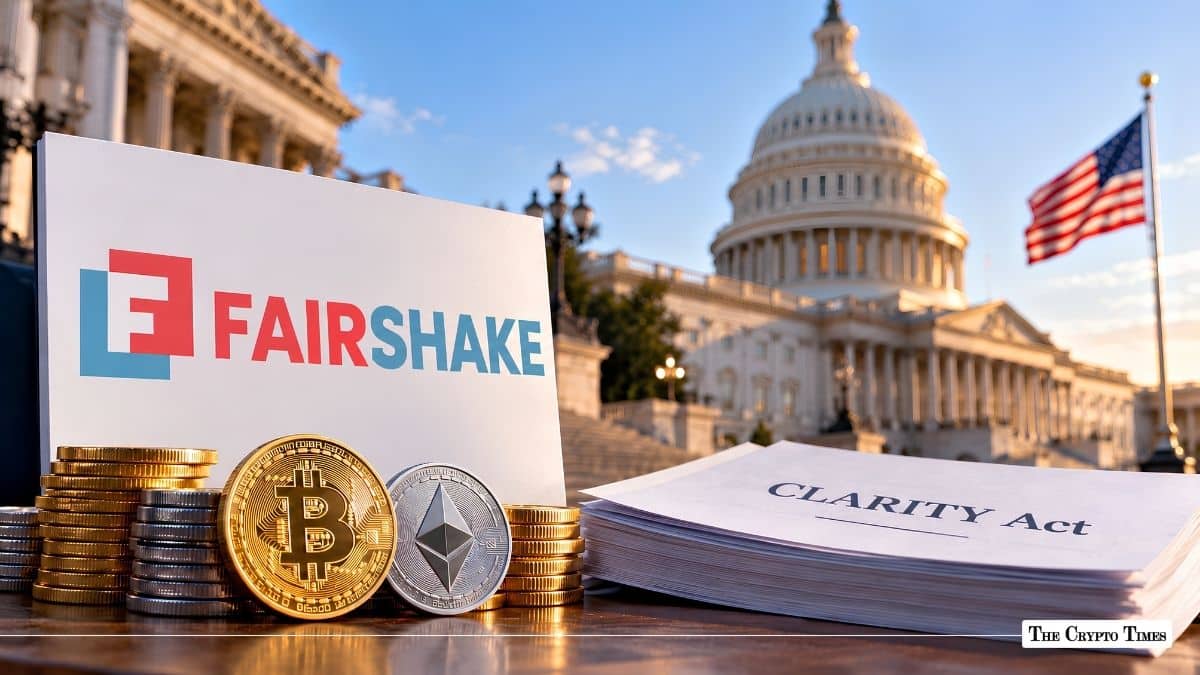
Fairshake, a crypto super political action committee (PAC), is backing 32 House candidates from both parties ahead of the November midterm elections, weeks after the Senate blocked the CLARITY Act.
According to an Associated Press report published October 5, the slate includes 19 Republicans and 13 Democrats. All 32 candidates supported legislation that was a priority for the crypto industry. Fairshake plans to spend $1 million each on six candidates, while it has not disclosed the amounts planned for the remaining 26.
Six candidates to receive $1M each
The six candidates receiving the highest disclosed spending include three Democrats and three Republicans.
On the Democratic side, Fairshake plans to support Reps. Janelle Bynum of Oregon, Steven Horsford of Nevada, and Derek Tran of California with $1 million each. The same amount is planned for Republican Reps. French Hill of Arkansas, Bryan Steil of Wisconsin, and Bill Huizenga of Michigan. Several of the candidates are running in competitive reelection races, according to AP.
Fairshake spokesperson Geoff Vetter said the group supports candidates based on their crypto policy positions rather than party affiliation. “Fairshake has always been and always will be an issue-focused organization,” Vetter said.
Vetter added that Fairshake and its affiliated groups have won 53 of the 57 races they have engaged in during the current election cycle.
Spending comes after CLARITY Act vote
Fairshake’s House spending comes weeks after Senate Democrats blocked the CLARITY Act in September. The legislation sought to establish a federal regulatory framework for digital assets and divide oversight between federal regulators. Opponents raised concerns about President Donald Trump’s crypto-related financial interests.
Those concerns had been raised before the September vote. In July, Sen. Elizabeth Warren cited Trump’s reported crypto income in a letter to Senate leaders John Thune and Chuck Schumer and called for conflict-of-interest and ethics provisions to be included in the CLARITY Act.
Warren’s position added to the debate over whether the legislation should include additional safeguards related to lawmakers and executive-branch officials with financial interests in digital assets.
Following the Senate vote, Fairshake announced plans to spend nearly $30 million against Democratic Senate candidate Sherrod Brown in Ohio, who is challenging Republican Sen. Jon Husted. Brown had previously faced nearly $40 million in cryptocurrency-related spending in 2024, when he lost to Republican Bernie Moreno.
Fairshake has not disclosed whether it plans additional spending in House or Senate races before November.
Fairshake reported $120M in cash
Fairshake and its affiliated political action committees reported about $120 million in cash on hand at the end of August, according to Punchbowl.
Vetter said the network and its affiliates spent about $40 million supporting 29 Democrats and $31 million supporting 28 Republicans in primaries and special elections this year.
The latest House slate adds to that campaign spending ahead of the November elections.
Stand With Crypto previously backed 32 House members
Fairshake’s announcement is separate from an earlier 32-member House endorsement by Stand With Crypto in August.
The Crypto Times reported on August 24 that Stand With Crypto backed 32 incumbent House members who had voted for the House version of the CLARITY Act. The list included Republicans Tom Emmer and Bill Huizenga and Democrats Ritchie Torres and Josh Gottheimer.
That earlier move was an endorsement based on lawmakers’ CLARITY Act voting records, while Fairshake’s latest announcement involves planned campaign spending.
The two groups therefore announced separate 32-member House slates ahead of the same November elections.
Market structure legislation remains unresolved
The Senate’s September vote left the broader push for federal crypto market-structure legislation unresolved.
Democratic Sen. Ruben Gallego, who previously received support from Fairshake, criticized the decision to target Brown after the CLARITY Act vote. Gallego called the move “dumb politics” and said lawmakers would still need 60 votes to advance market-structure legislation after the election.
“You still need 60 votes after this election if you want to pass market structure,” Gallego said. “Now the negotiations will just get harder, and the deal is going to be not as good as they had right before they decided to kill it.”
Fairshake’s latest spending announcement comes as the industry continues its campaign activity ahead of the November elections, while federal crypto market-structure legislation remains unresolved.
Also Read: Modern Treasury Applies for OCC National Trust Bank Charter