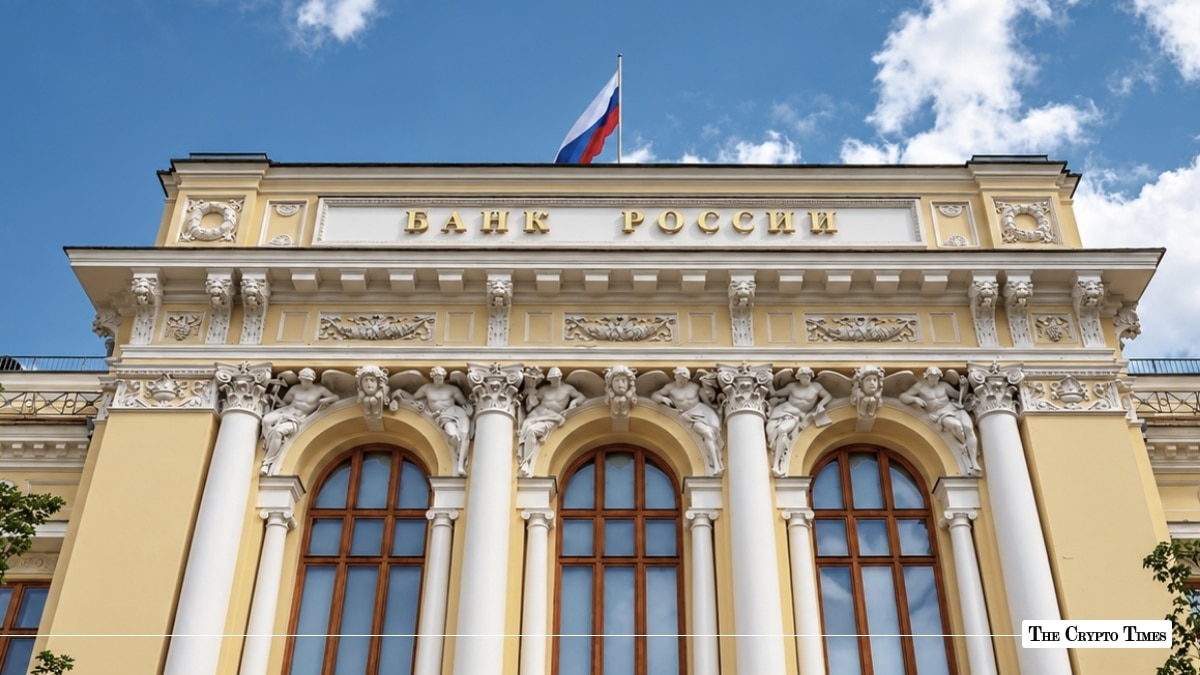
The Bank of Russia has opened the formal process for cryptocurrency exchanges, digital depositories, and related operators to apply for inclusion in official registers, with the governing regulations taking effect on October 5, 2026.
The central bank detailed the admission procedures in a notice published on September 24, after the acts were registered with the Ministry of Justice.
Under the framework established by Federal Law No. 282-FZ of August 4, 2026 “On Digital Currencies and Digital Rights”, organizations that exchange digital currencies, hold digital assets in custody, or operate information systems for digital financial rights must appear on the relevant registers maintained by the Bank of Russia before they can conduct these activities on a regulated basis. The law itself entered into force on September 1, 2026. The October rules set the practical steps for new and existing firms to seek entry.
Register Admission Requirements and Process
Applicants must be business entities formed under Russian law. For organizations that exchange digital currencies, the Bank of Russia requires a minimum of 15 million rubles in own funds. Digital depositories face higher capital thresholds that vary by the scope of their activity. Management bodies, certain officers, and shareholders must meet qualification standards and business-reputation criteria set out in the statute and the central bank’s implementing acts.
Firms must also demonstrate that their technical systems can support continuous operations and data security, with primary and backup facilities located inside the Russian Federation, and they must control a domain name for an official website.
Applications are submitted electronically through the personal cabinet of the information-exchange participant. The review period for a complete application from an organization seeking to exchange digital currencies is 30 working days from the date the last required document is received.
The Bank of Russia notifies the applicant of its decision within three working days after the decision is made. Existing market participants may use a simplified route when applying for status as a digital depository or cryptocurrency exchange. Once entered, register information is published on the central bank’s website and updated as changes occur.
The October 5 effective date marks the start of the application window rather than an automatic authorization for any firm. No organization is admitted to a register solely because the rules are now in force. Each applicant receives an individual decision. The Bank of Russia has stated that the first entries into the registers could occur before the end of 2026 if applications are filed promptly and documentation is complete.
Investor Access Rules and Transition Period
This register process forms one part of the broader infrastructure described when the State Duma adopted the law in July. Both non-qualified and qualified investors are permitted to transact in cryptocurrencies through authorized intermediaries. Non-qualified investors may purchase the most liquid cryptocurrencies up to a limit of 300,000 rubles per year through a single intermediary after passing a knowledge test. Qualified investors must also pass a test but face no monetary cap and may buy or sell any cryptocurrencies.
The same requirements extend to foreign stablecoins. Transactions can occur through brokers, management companies, or organized trading platforms, and investors may exchange cryptocurrencies for securities or other digital rights issued under Russian law.
The statute provides a transition period running through July 1, 2027 for market participants to obtain the necessary authorizations and align their operations with the new requirements. During that interval, certain entities already listed in earlier registers may continue limited activity under prior rules while they complete the new admission steps.
Domestic use of cryptocurrencies as a means of payment remains outside the scope of the permitted activity; the framework centers on investment and exchange services conducted through regulated intermediaries. Coverage of the retail limits that took effect in September noted the same 300,000-ruble annual cap for non-qualified investors.
The capital, governance, and technical standards are intended to bring exchange and custody functions under the same supervisory perimeter that already applies to other segments of the Russian financial market.
By requiring inclusion in public registers and ongoing compliance with qualification rules, the Bank of Russia gains a mechanism to monitor ownership, management fitness, and operational resilience before services are offered to clients.
Publication of the registers also allows counterparties and investors to verify an organization’s status directly on the regulator’s site. Earlier reporting on the proposal to allow Bitcoin, Ether, and Tether on regulated venues outlined the investor-testing and purchase-limit structure that the July law later confirmed.
Market participants that have already begun preparing digital-asset infrastructure under the September law can now file the formal applications that the October acts enable. The combination of the investor-access rules that took effect on September 1 and the register procedures that opened on October 5 creates the sequential steps the central bank outlined earlier in the year for a supervised domestic market.
Further secondary acts on eligible assets and operational details remain subject to the Bank of Russia’s separate decisions, so the precise set of cryptocurrencies available to non-qualified investors will depend on those determinations and on the products that authorized intermediaries ultimately offer.
The opening of the application process therefore advances the implementation timetable set by Federal Law No. 282-FZ without itself authorizing any specific firm or finalizing the retail asset list. Firms that meet the capital, personnel, and technical criteria can now submit documentation, after which the Bank of Russia will conduct its review within the stated working-day periods and publish the results of successful admissions.
Also read: Hong Kong to Submit Virtual Asset Licensing Bill This Year