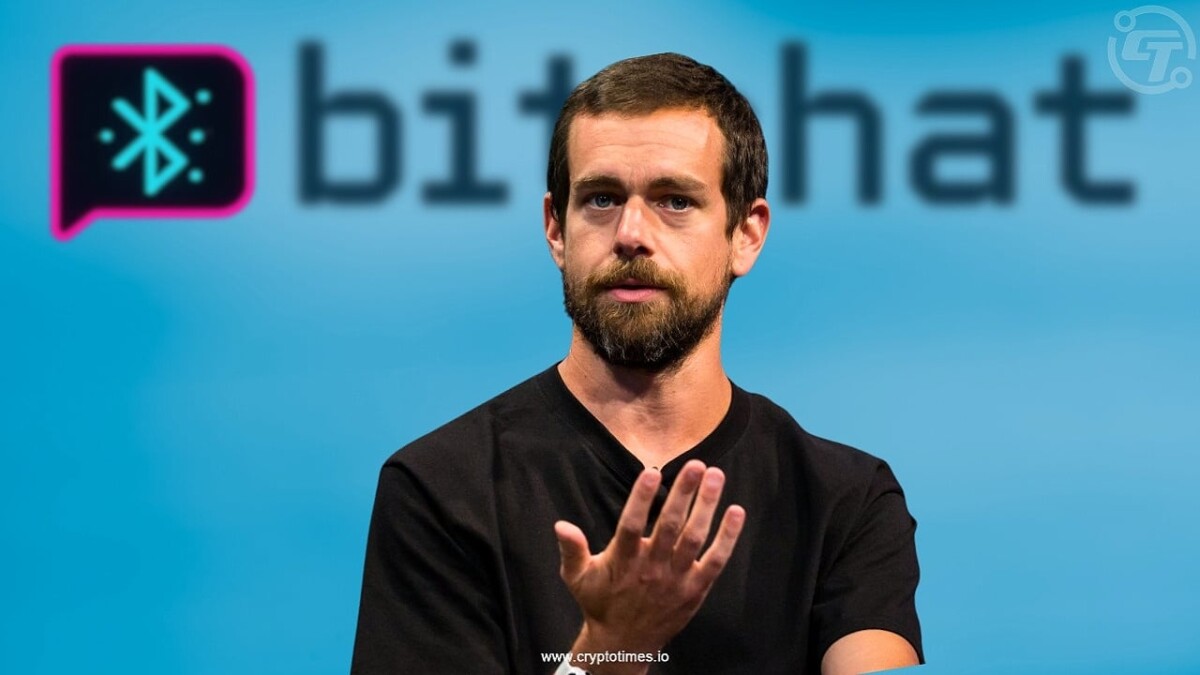
Apple has removed Jack Dorsey’s Bitchat from its India App Store under a Section 69A demand from India’s IT ministry. In July, a government notice seeking the same result left the app in place.
That earlier notice came from the Home Ministry’s cybercrime unit and relied on a different provision of the Information Technology Act. Digital rights groups argued then that Section 69A, which carries procedural safeguards, was the law’s designated route for blocking access.
On Oct. 3, Dorsey posted on X a copy of an Apple App Review notice. The notice says the Ministry of Electronics and Information Technology (MeitY) issued the takedown demand under “Section 69(A)” of the Information Technology Act, 2000.
It also says Bitchat “will be removed from the India App Store because it includes content that is illegal in India.” Bitchat is an open-source messaging app that relays encrypted messages between nearby phones over Bluetooth, without an internet connection or central servers.
What Apple’s Notice Says
Apple’s guideline requires apps to comply with the laws of every territory where they are offered. The notice directs Dorsey to contact MeitY for further information about the removal.
According to the notice, Bitchat remains available in all other territories selected in App Store Connect. Apple said the TestFlight beta will also be unavailable for internal and external testing in India and that public TestFlight links will stop working.
Dorsey captioned the screenshot: “government of India officially removes bitchat from the App Store.” The notice does not identify which content in the app it considers illegal under Indian law.
The July Notices Under Section 79(3)(b)
The removal follows notices issued in July by the Indian Cyber Crime Coordination Centre (I4C), part of the Ministry of Home Affairs. The I4C notice was issued at 11:16 p.m. on July 23, 2026, citing Section 79(3)(b) of the IT Act and Rule 3(1)(d) of the IT Rules. It directed GitHub to disable access to three Bitchat repositories within three hours or risk losing intermediary protections.
According to documents and officials cited by MediaNama, I4C also directed Google to remove Bitchat, Briar, and Bridgefy from the Play Store and Apple to remove Bitchat and Bridgefy from the App Store. Briar was not included in the Apple notice because it is not available on iOS.
MediaNama also reported that on July 24, government officials orally told technology companies and telecom operators they did not need to comply with the previous day’s directions, and the apps stayed on both stores.
The notices followed student protests at Jantar Mantar in New Delhi. I4C said in its notice that the app enables communication during network restrictions and creates a substantial risk of misuse by anti-national elements, terrorist organizations, organized criminal groups, and cybercriminals seeking to evade lawful detection.
Why the Choice of Law Was Disputed
Section 79 of the IT Act governs “safe harbour,” the legal protection platforms receive from liability for content their users post. Section 69A gives the central government a direct power to block public access to information. That power applies on grounds including sovereignty, security of the state, and public order, and it follows the procedures in the 2009 Blocking Rules.
The Internet Freedom Foundation (IFF) called the July order “unconstitutional and authoritarian”. It argued that the government had relied on Section 79(3)(b) as a blocking mechanism instead of following the Section 69A procedure. IFF also demanded that the notice be withdrawn and that all takedown orders issued under Section 79(3)(b) be made public.
Section 69A has been used against mesh-messaging apps before. MediaNama reported that apps including Briar were blocked under Section 69A in May 2023. That followed an April 2023 I4C request to MeitY to block 14 applications in Jammu and Kashmir over their alleged use by terrorists and their supporters.
In June, MeitY invoked Section 69A to block Telegram across India from June 16 through June 22, acting on a recommendation from the National Testing Agency. Section 69A has also been used against crypto platforms: in December 2023, FIU-India asked MeitY to block the URLs of offshore exchanges, including Binance and KuCoin.
China Removed Bitchat in April
India is the second country where Apple has removed Bitchat at a government’s request. In April, Apple removed the app from its China App Store at the request of the Cyberspace Administration of China (CAC). The CAC said the app breached rules requiring a security assessment for apps capable of shaping public opinion or mobilizing users.
Apple’s China notice, as reported at the time, used the same Guideline 5 language that appears in the India notice.
How Bitchat Works
Dorsey released Bitchat as open-source software in July 2025. According to its GitHub project description, the app uses two transport systems: a local Bluetooth mesh network for offline messaging and the Nostr protocol for communication over the internet.
A mesh network passes each message from phone to phone until it reaches the recipient, so no central server handles it. The app has been used during protests and internet restrictions in countries including Uganda, Iran, and Nepal.