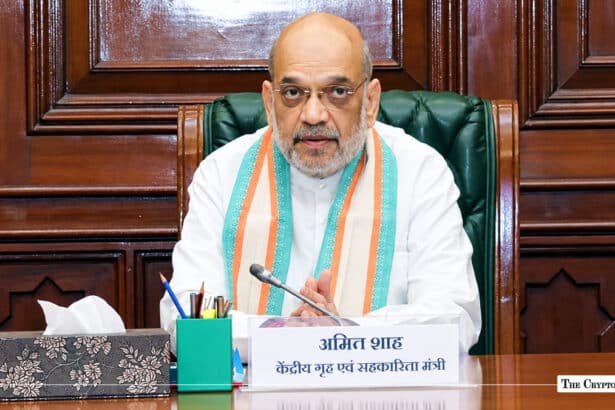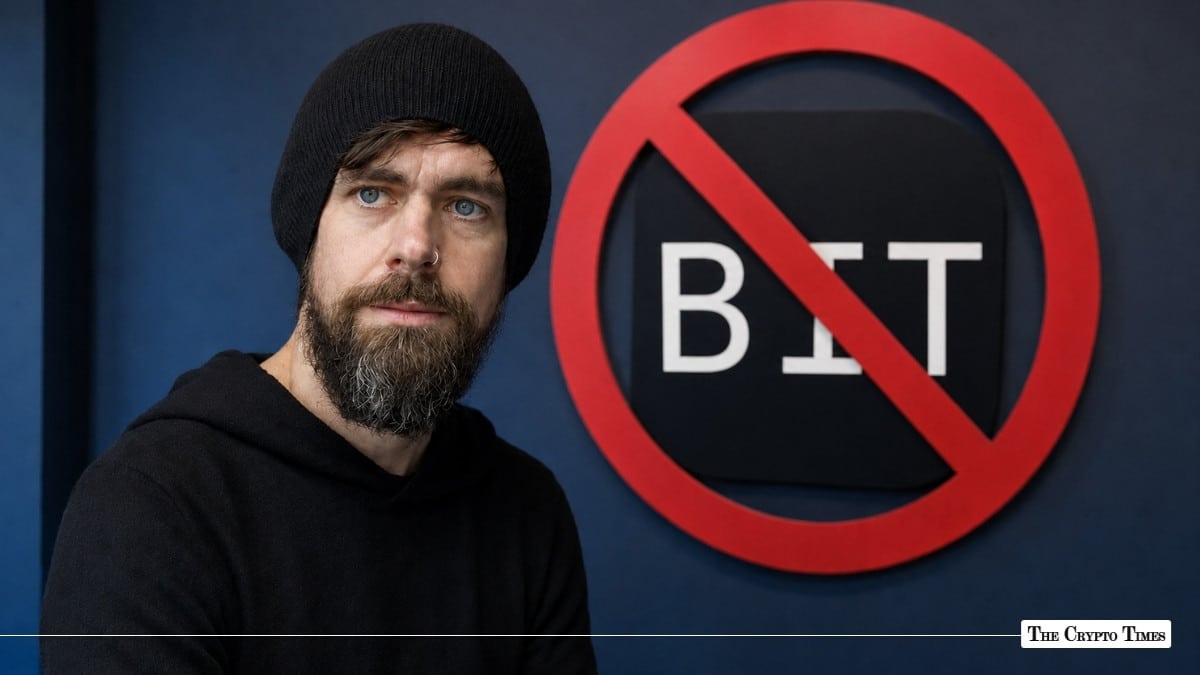
The Indian government has formally ordered GitHub to remove access to the source-code repositories of Bitchat, an offline, Bluetooth-based messaging app whose development is backed by Block Inc. CEO Jack Dorsey.
The order, dated July 23, 2026, was made public a day later when Dorsey posted the notice on X, writing: “the government of india does not like technologies like bitchat and wants it taken down.”
What the order says
The notice was issued by the Indian Cyber Crime Coordination Centre (I4C), a wing of the Ministry of Home Affairs, and addressed to GitHub as the “intermediary” hosting the content in question. It cites two specific legal provisions: Section 79(3)(b) of the Information Technology Act, 2000, and Rule 3(1)(d) of the IT (Intermediary Guidelines and Digital Media Ethics Code) Rules, 2021. Together, these provisions require an intermediary to expeditiously remove or disable access to content that has been found unlawful, or risk losing the legal immunity (“safe harbor”) that normally shields platforms from liability for user-uploaded content.
The order names three specific URLs, all pointing to GitHub pages for the “permissionlesstech/bitchat” and “permissionlesstech/bitchat-android” repositories, including their releases page. It directs GitHub to disable access within three hours of receipt.
The government’s stated rationale
The order includes a “brief summary of the unlawful act” laying out the reasoning behind the takedown. According to the notice, I4C found that Bitchat is a communication application capable of establishing decentralized peer-to-peer messaging over Bluetooth mesh networks, functioning without reliance on mobile networks, internet connectivity, or centralized servers.
The government’s core objection is architectural rather than content-based: the order states that the app’s design “significantly impedes lawful interception, attribution, and investigation by law enforcement agencies,” because communication can occur directly between nearby devices through a decentralized mesh network “without mandatory user registration, phone number verification, or centralized logging.”
The notice further states that “intelligence inputs” indicated such decentralized platforms are “capable of being exploited for coordinating unlawful assemblies, violent protests, dissemination of misinformation, radicalization, criminal conspiracy, and other activities prejudicial to the sovereignty and integrity of India, defence of India, security of the State, public order.” It also raises concern that the absence of a centralized service provider limits the ability of law enforcement to obtain subscriber information, communication records, or timely assistance during investigations, and adds that the application’s design “creates a substantial risk of misuse by anti-national elements, terrorist organizations, organized criminal groups, and cybercriminals seeking to evade lawful detection.”
The order lists the relevant legal basis for classifying the content as unlawful under the IT Act (Sections 43, 84B and 84C) and the Bharatiya Nyaya Sanhita, 2023 (Sections 61 read with 196 and 197).
What Bitchat is, and how it came to attention
Bitchat is an open-source messaging application that uses Bluetooth Low Energy and mesh networking to relay encrypted messages between nearby devices without requiring internet access, cellular service, phone numbers, or central servers — each device in range can extend the network by relaying messages to others. Development is associated with Jack Dorsey, the Twitter co-founder and Block CEO, whose company has backed various open-source and decentralized technology projects, including Bitcoin infrastructure.
Bitchat saw a rise in downloads and use in Delhi during a period of large, student-led demonstrations at Jantar Mantar in July, tied to allegations of leaked national competitive exams. Protesters and organizers cited concerns about mobile network and data reliability in the protest area, and social media posts circulating beforehand encouraged attendees to install offline-capable apps, including Bitchat, in case of connectivity issues. Some protest participants said the app was used for peer-to-peer coordination when calls and mobile data reportedly became unreliable in parts of central Delhi during the demonstrations.
It has not been independently established what specific evidence or incident directly prompted the I4C’s July 23 order, and the notice itself does not reference the Delhi protests. The order’s stated justification is framed in general terms around the app’s technical architecture and its potential for misuse across a range of scenarios, rather than around any single documented case.
A dispute with two legitimate sides
This is a contested case; both positions deserve a fair hearing.
The government’s concern is not unique. Mesh tools have no central server, phone numbers, or provider to compel, making them hard for any authority to monitor. Similar worries about encrypted or decentralized apps surface in many countries around crime, terrorism, and public order. India’s order follows the IT Act’s documented process for intermediaries.
At the same time, those very features, such as no logging, resilience during network outages, resistance to real-time monitoring, are also why the tools matter for lawful uses: rural areas, disaster response, poor connectivity, or any situation where people prefer not to leave a telecom trail. Digital-rights advocates argue that blocking open-source code itself is a wider step than targeting specific unlawful use.
It is also true, as a factual matter independent of either position, that Bitchat’s use coincided with a period of heightened protest activity in Delhi, and that the app’s usefulness in that context (communicating without a functioning cellular network) is precisely the property the order’s rationale addresses. Readers can reasonably draw different conclusions about what that timing means; The Crypto Times is not asserting a causal link that the order itself does not state, nor is it asserting that no such link exists.
Practical impact and next steps
Under India’s safe-harbor rules, GitHub typically complies with localized takedown orders via geo-blocking. This restricts access to the specified repository URLs for users browsing from Indian IP addresses while leaving the repositories accessible globally.
Because Bitchat is open source, geo-blocking GitHub removes its primary distribution channel but does not erase existing installations or prevent technical users from compiling source code mirrored elsewhere.
For the broader Web3 and open-source ecosystem, the move signals an expanding regulatory focus: enforcement is moving beyond centralized financial gateways to target decentralized communication software at the code distribution layer.
Also Read: India’s ED Nabs Dubai Man Running Crypto-Hawala Pipeline for Brazil, Thailand Cartels