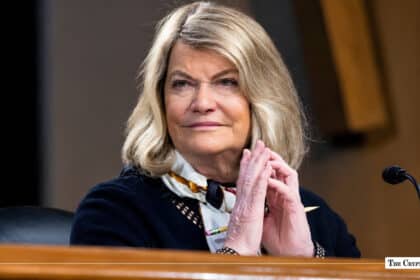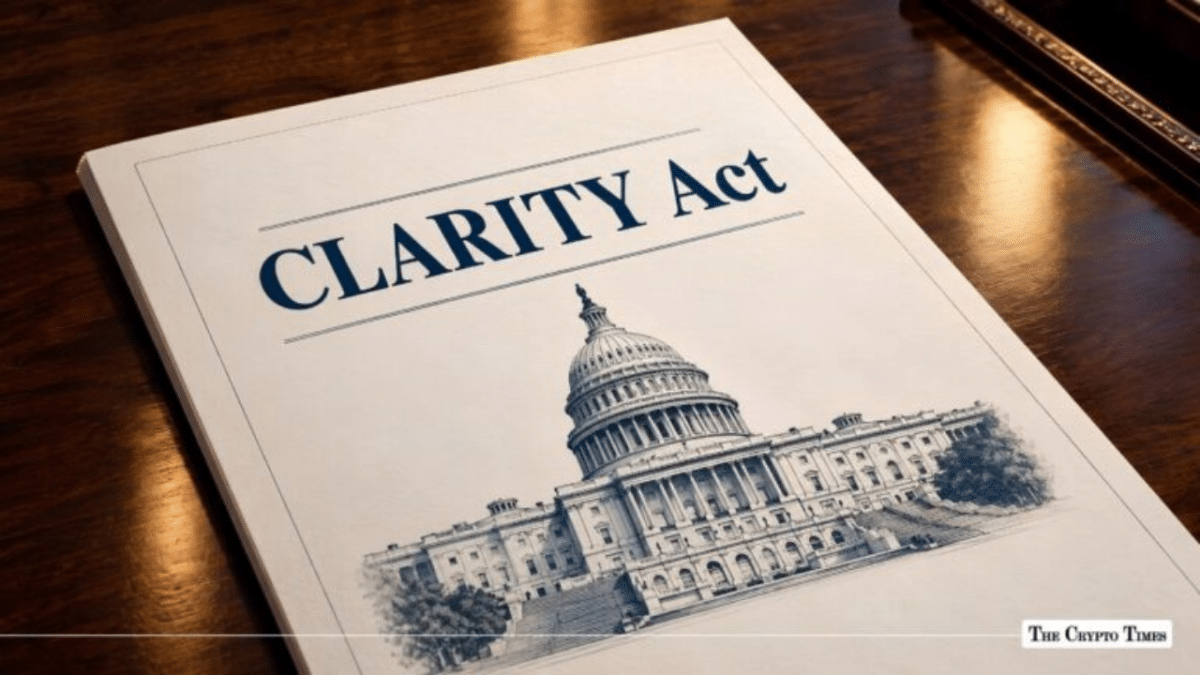
Seven Senate Democrats who spent the past two years at the negotiating table on crypto market structure said late Wednesday that Tuesday’s failed cloture vote on the Digital Asset Market Clarity Act, commonly referred to as the CLARITY Act, was a setback rather than the end of the effort, and pledged to keep working across the aisle to get the bill passed.
The joint statement, issued barely a day after the Senate blocked the motion to proceed on the crypto market structure legislation, is the clearest public signal yet that the Democratic bloc that has carried the negotiations is not walking away from the table.
The statement was released Wednesday night by Sens. Kirsten Gillibrand of New York, Angela Alsobrooks of Maryland, Cory Booker of New Jersey, Catherine Cortez Masto of Nevada, Ruben Gallego of Arizona, Mark Warner of Virginia, and Raphael Warnock of Georgia.
According to the statement released through Gillibrand’s Senate office, the group said Democrats had spent the last two years “working to pass crypto legislation that would expand opportunity, protect consumers, punish bad actors, create regulatory certainty, and include strong, commonsense ethics provisions for elected officials.”
The single new line in the text was direct: “This week was a setback, but not the end of that important work. We remain committed to working in a bipartisan fashion to get this legislation passed.”
Tuesday’s Vote
The Senate voted 49 in favor and 50 against on Tuesday afternoon on the motion to invoke cloture on the motion to proceed to H.R. 3633, the CLARITY Act, well short of the three-fifths supermajority of 60 votes required to end debate and open the floor to consideration of the bill.
As Crypto Times reported after the tally, the motion to invoke cloture failed to reach the 60-vote threshold with every Democrat present voting no. Four Republicans joined them: Sens. Susan Collins of Maine, Josh Hawley of Missouri, Jerry Moran of Kansas, and Thom Tillis of North Carolina. Sen. Chris Coons of Delaware did not vote. Cloture is the Senate procedure used to limit debate and advance a bill to a final vote, and its 60-vote threshold has been the sticking point on the CLARITY Act since Republican leadership first began counting.
The Restart Signal
Journalist Eleanor Terrett, host of the show Crypto in America, reported that the joint statement reflects more than public positioning.
According to three people familiar with the discussions cited in her post on X, staffs on both sides of the aisle are already testing whether the two parties still have the appetite to return to the negotiating table with the goal of passing the CLARITY Act before the end of the calendar year.
That is a narrower window than it may appear. The midterm elections are roughly six weeks away, and floor time after the November vote belongs to whatever Senate leadership treats as worth the political capital. Sen. Cynthia Lummis of Wyoming, the bill’s chief Senate architect, said after the vote she thought the effort was over. Other Republicans, including Sens. John Kennedy of Louisiana and Ted Cruz of Texas, left the door cracked for a lame-duck attempt after the midterms.
The Same Seven, the Same Asks
The seven senators have been the core Democratic bloc negotiating the CLARITY Act since the bill began moving through committee. Alsobrooks and Gallego were the only two Democrats to vote the legislation out of the Senate Banking Committee in May. Gillibrand has been the Democratic co-architect of market structure talks for years. Warner, Booker, Cortez Masto, and Warnock have been in the room for the ethics, illicit finance, and Agriculture title fights that took up much of 2026.
Their demands have not shifted much since the summer. In a joint statement on July 22, the same seven Democrats said the Republican-proposed text of the CLARITY Act “falls short” on ethics, consumer protection, and illicit finance tools, and pressed for tighter language covering elected officials and their family members. Wednesday’s statement added no new demands, named no target date, and claimed no votes. It simply refused to close the file on Tuesday’s tally.
The Republican Position
Republicans said the final draft, released on September 14, already absorbed 126 substantive Democratic requests, including a role for state attorneys general on ethics enforcement and a Treasury Department circuit breaker on stablecoin rewards. Democrats sent a last-night counteroffer. Republicans rejected it.
In a statement circulated before the vote, a spokesperson for Sen. Lummis said Democrats “have not budged an inch,” and added that Democrats “need to actually start negotiating instead of resubmitting the same demands and calling it progress.” Crypto Times previously reported the exchange between the two camps in its coverage of the rejected Democratic counterproposal.
Political Calculus: Why the Statement Matters More Than It Reads
The wording of Wednesday’s statement is careful, and its timing sits inside a political calendar that gives it a second reading. Gillibrand chairs the Democratic Senatorial Campaign Committee (DSCC), the party’s Senate election arm, and the midterms are less than two months away.
A decision to reopen negotiations before November would put a subset of Democrats on record with a bipartisan crypto framework at a moment when the industry has become one of the most active donor blocs on the ballot. A decision to hold until a lame-duck session would push the work into a period when floor time is typically reserved for whatever leadership treats as the highest priority, and when the senators who lose in November no longer face electoral consequences for the votes they cast.
That mix is a large part of the reason the group has moved together. A single member breaking early would carry a different electoral risk than the others. The joint statement does the opposite of breaking: it holds the bloc in place while opening a corridor for staff-level talks that neither party has yet publicly committed to.
The Agencies Are Not Waiting
While the seven Democrats work out whether Congress can be brought back to the table, the two agencies most directly affected have already signaled they intend to move on the substance without a statute.
Securities and Exchange Commission (SEC) Chair Paul Atkins said the Commission will keep writing crypto rules under existing authority after the Senate vote. Commodity Futures Trading Commission (CFTC) Chair Michael Selig said Americans still deserve regulatory clarity and that his staff would proceed with rulemaking. Former CFTC Chair J. Christopher Giancarlo told Terrett the Senate result was a disappointment, but said it would not stop “the march of innovation.”
Together, the agency signals raise the possibility that the CLARITY Act itself, whatever form it ultimately takes on the floor, may end up ratifying decisions the SEC and CFTC have already made, rather than setting the terms in advance.
What Comes Next
Wednesday’s statement did not include a schedule, a text, or a whipped vote count. What it did do is decline to close the file. Whether that becomes actual legislative work or remains a placeholder will be visible in the next few weeks, not in the statement itself.
The Senate’s calendar is short before the midterm break. Any post-election effort would need at least seven Democrats to switch to yes on cloture, and would need either the four Republican no votes to move back into the yes column or new Republican support to replace them. Neither of those has happened. Neither has been ruled out.
The seven Democrats have said they are still at the table. The industry, the agencies, and the market will now wait to see whether anyone from the other side of the table sits back down.
Also Read: Lummis Challenges Alsobrooks After CLARITY Act Vote Fails