India’s Parliamentary Standing Committee on Finance completed its final oral evidence session on Virtual Digital Assets on Wednesday, closing a study that began in September 2025 without producing either a bill or a policy announcement.
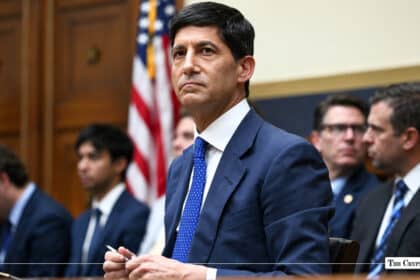
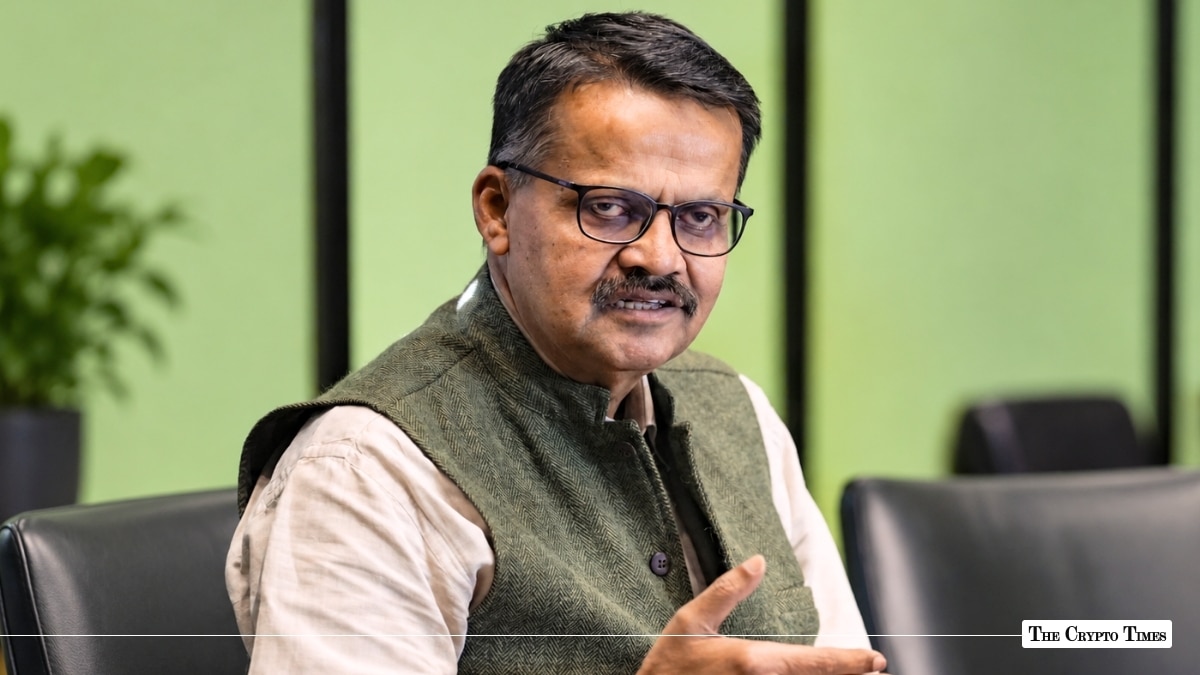
Panel chairman Bhartruhari Mahtab, the Bharatiya Janata Party (BJP) Member of Parliament from Cuttack, told reporters after the sitting that the committee is now waiting for a written response from the government before it prepares and submits its report, and that the country’s continued non-recognition of crypto combined with non-regulation is beginning to leave, in his words, “greater scope for different types of indulgences.”
The sitting took oral evidence from representatives of the Ministry of Finance’s Department of Economic Affairs (DEA) on the subject A Study on Virtual Digital Assets (VDAs) and Way Forward, as listed on the committee calendar maintained by PRS Legislative Research.
The meeting was held at 11:00 a.m. in Committee Room D, Parliament House Annexe, in line with the Lok Sabha Secretariat notice dated September 3, 2026 (File No. LAFEAS-SCF015(11)/13/2026-SCF), signed by Director Bharti Sanjeev Tuteja.
What Mahtab said on the record
Speaking to reporters afterward, Mahtab placed Wednesday’s sitting inside a full year of work. His remarks were carried by Press Trust of India (PTI) at 07:53 GMT (1:23 p.m. Indian Standard Time, IST).
“Other than the Department of Economic Affairs, we had a series of discussions during the last one year. As I remember, the first meeting that we had on virtual digital assets was last September, 2025,” he said. “In between, we have interacted with a number of stakeholders, with RBI, with CBDT and with others who have registered themselves in different capacities to deal with virtual assets.”
He added, “Today, we had a round up discussion. We still have certain theories. The basic question that arises before this committee is, the government is not accepting virtual digital assets, does not want to regulate it, but not regulating it is also leaving greater scope for different types of indulgences.”
Asian News International (ANI) posted a slightly fuller cut at 08:34 GMT, which carried the procedural next step. “That actually is the point of concern. These are the grey areas that need to be addressed. We are expecting a response from the government next week, and by then we will be preparing a report and submitting it,” Mahtab said.
Asked separately about freezes on Unified Payments Interface (UPI) transactions linked to peer-to-peer crypto sales, the chairman was explicit that the issue had not been part of the day’s proceedings. “That was not part of the proceedings today, but concerns were expressed. And after the new committee comes into existence in the month of October, I believe that committee will be taking it,” he told PTI.
A study that has slipped more than once
Wednesday’s sitting was itself a rescheduled date. A Lok Sabha Secretariat notice dated August 20, 2026 (File No. LAFEAS-SCF015(11)/12/2026-SCF) said the earlier DEA evidence session on August 27 “stands CANCELLED,” and shifted the panel’s September 3 slot to direct-tax reforms instead. That slip, documented earlier by The Crypto Times, was one of several delays that pushed the standalone VDA report past the monsoon session in which it had originally been expected.
The documentary trail behind Wednesday’s sitting is long. According to PRS Legislative Research, the study was picked up as a standalone subject for 2024 to 2025 after industry delegations met Mahtab in August 2025. The first ministry briefing with DEA was reported around September 8, 2025, matching Mahtab’s memory of a first VDA meeting “last September, 2025.”
Financial Intelligence Unit India (FIU-IND) and the Central Board of Direct Taxes (CBDT) deposed on January 7 and 8, 2026, in a sitting where the panel was told that fraudulent transfers and conversions of income or assets abroad were being tracked, with identified undisclosed VDA income above ₹888 crore.
The panel’s seventh sitting on May 20, 2026 heard from domestic exchange ZebPay, offshore majors Binance and WazirX, along with the International Financial Services Centres Authority (IFSCA), the Department of Revenue and the Ministry of Corporate Affairs. Mahtab that day described “thousands of crores” flowing into VDAs and leaving the country as “very alarming,” as detailed in The Crypto Times’ coverage of that meeting.
On July 2, 2026, the panel heard the Reserve Bank of India (RBI) and the Institute of Chartered Accountants of India (ICAI). Mahtab told ANI that day that the RBI had not suggested legal status for private crypto, and said the central bank’s own e-rupee was “not flourishing” compared with private digital assets, in what The Crypto Times reported as the sharpest official restatement of the central bank’s position.
In its 36th Report on the Securities Markets Code, 2025, presented on July 23, 2026, the same committee recommended that the government “comprehensively examine the need for an appropriate statutory and regulatory framework for Virtual Digital Assets,” and, pending that statute, consider an interim Self-Regulatory Organisation (SRO) under a designated regulator such as the Securities and Exchange Board of India (SEBI) or the RBI.
The Crypto Times covered that recommendation the next day as the first time the panel formally put on record that tax circulars and anti-money-laundering (AML) notices alone were not sufficient.
The existing legal box, unchanged
Nothing said on Wednesday altered the legal architecture around crypto in India. Virtual digital assets are neither legal tender nor prohibited. Gains on transfer are taxed at a flat 30% plus applicable cess under Section 115BBH of the Income-tax Act, 1961, with a 1% Tax Deducted at Source (TDS) on specified transfers under Section 194S. Losses generally cannot be set off against other income or carried forward. The Union Budget for 2026 did not amend those provisions.
VDA service providers are also treated as reporting entities under the Prevention of Money Laundering Act (PMLA), 2002, and are required to register with FIU-IND. According to The Crypto Times’ pre-hearing briefing published on September 8, 2026, the mid-2026 register listed 54 Virtual Digital Asset Service Providers (VDASPs), covering domestic platforms such as CoinDCX, CoinSwitch, WazirX, ZebPay and Mudrex, along with selected offshore names.
The same piece cited ₹28 crore in FIU-IND penalties in FY 2024-25, and an industry estimate of ₹2,634 crore in TDS owed but uncollected on roughly ₹2.63 lakh crore traded on offshore platforms between December 2023 and October 2024. Industry briefings circulating before Wednesday’s sitting placed the FY 2024-25 offshore share of Indian trading volume at about 91.5 percent. Those figures did not feature in Mahtab’s remarks to reporters on Wednesday.
Sitting underneath all of this is the Supreme Court’s March 2020 judgment in Internet and Mobile Association of India v. Reserve Bank of India, which struck down the RBI’s April 2018 banking circular against crypto and left private virtual assets in a space the state can tax and monitor without being required to treat them as currency.
Why UPI walked into a crypto hearing
Mahtab’s brief remark on UPI is the detail most likely to be lost in short social-media clips of Wednesday’s press interaction, and the one that connects the committee room most directly to retail users.
Five days before the sitting, on September 11, 2026, the Central Bureau of Investigation (CBI) issued a public advisory warning that above-market offers for Tether (USDT) in peer-to-peer deals often move fraud proceeds, and that a single careless sale can turn a retail seller into a suspect in a money-laundering probe.
The advisory urged users to trade only through FIU-IND-registered exchanges, to avoid settling deals over Telegram or WhatsApp, and to refuse third-party bank transfers. The Crypto Times reported the advisory the same week.
Freezes on UPI inflows linked to peer-to-peer crypto sales have been a persistent retail complaint through 2025 and 2026, with sellers finding their bank accounts blocked when a counterparty’s funds are later flagged in an unrelated investigation. That is the concern Mahtab said had been raised but was outside Wednesday’s agenda, and which he expects the successor committee, to be constituted in October, to take up.
What Wednesday actually changed
In law, very little. In tone, something meaningful.
For the past year, the panel has been collecting the same triangle of facts: a large retail market, a hostile central bank, and a tax and AML perimeter that does not amount to a market regulator. What Wednesday added was the chairman’s plainest formulation of the underlying problem to date.
Non-recognition combined with non-regulation, in his framing, is not a neutral holding pattern. It is a widening space for what he called “indulgences,” a term that has taken on a specific shape in a year of hearings that has covered offshore leakage, undisclosed income, and peer-to-peer fraud rings.
The next checkpoints on the public record are narrower than some of the “policy next week” framing circulating on X. The government has yet to file its written response, which Mahtab said he expects within a week. Only after that will the panel finalise and submit its report.
A new Finance Committee is to be constituted in October, and both the UPI file and any policy questions triggered by the CBI advisory will pass to that panel. The DEA’s own long-deferred discussion paper on crypto, referenced internally since 2024, is still unpublished.
What it means for exchanges, retail users and investors
For the 54 FIU-IND-registered exchanges operating in India, Wednesday’s sitting does not change compliance obligations under the PMLA framework and does not alter tax treatment. It does, however, harden the political line that a market law is an active question rather than a deferred one, which is likely to influence how domestic platforms plan capital raises, custody arrangements and offshore partnerships over the next two quarters.
Industry executives who spoke on background before the sitting said the July 23 SRO recommendation is still their preferred bridge, on the argument that even a light-touch statutory backbone would help reopen banking channels that closed after the April 2018 circular and never fully reopened after the 2020 Supreme Court judgment.
For retail users, the practical situation on the ground is unchanged for now. Peer-to-peer trades continue to carry the risk of downstream UPI freezes, tax on gains remains at a flat 30%, and 1% TDS continues to apply on specified transfers. The CBI advisory, read together with Mahtab’s remarks, points toward tighter enforcement rather than looser rules in the immediate term, particularly around above-market USDT quotes and third-party bank settlements.
Sellers who route trades through unregistered platforms remain exposed to account freezes even where their own funds are clean, because the freeze mechanism operates on the counterparty’s history rather than the individual transaction.
For investors, the reading is more ambiguous. A committee that has, over a year, spoken to the RBI, the CBDT, FIU-IND, ICAI, IFSCA, the Ministry of Corporate Affairs and both domestic and offshore exchanges has produced one on-record recommendation, in its 36th Report, for a phased framework under SEBI or the RBI.
Whether the government’s forthcoming response engages with that recommendation, defers it to the successor committee, or reasserts the status quo will set the direction of any statute that eventually emerges.
The risk of doing nothing
Mahtab’s language on Wednesday is worth reading twice. His concern is not that regulation is coming too slowly. It is that the absence of a market law is itself starting to produce the outcomes the state was worried about when it declined to grant recognition.
Offshore trading share above 90%, TDS gaps in the thousands of crores, FIU-IND registers that catch domestic platforms but reach only selected offshore names, and a UPI freeze problem that pushes ordinary sellers into legal grey zones are not, on his account, separate stories. They are the same story of a market growing inside a legal vacuum.
Until the government files its response and the panel submits its report, Wednesday’s sitting is precisely what the record shows it to be: a completed evidence session and two news-agency videos. It is not, on its own, a crypto law. It is, however, the closest a sitting parliamentary panel has come to saying that the cost of not writing one is now being paid by someone.
Also Read: Indian Crypto Exchanges to Absorb 0.4% UPI Charge From October 15, Users Pay Nothing Extra