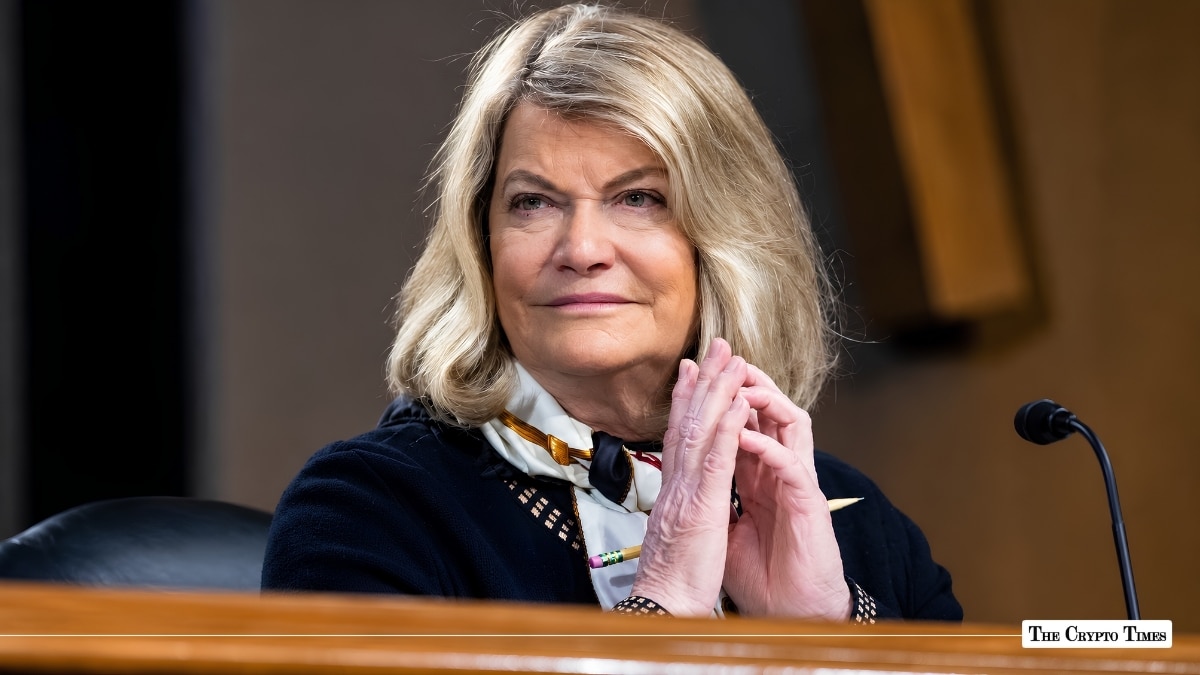
Senator Cynthia Lummis (R-Wyo.) has criticized Senator Angela Alsobrooks (D-Md.) over her vote against advancing the CLARITY Act, after the Senate failed to secure the 60 votes needed to move forward with the crypto market structure legislation.
In a post on X on September 16, Lummis argued that Republicans had accepted ethics restrictions concerning crypto investments and activities by President Donald Trump and other elected officials.
The comments came after the Senate’s failed procedural vote, as lawmakers offered competing accounts of why negotiations over the final ethics language broke down.
https://twitter.com/SenLummis/status/2100262335856202019
Lummis says Ethics deal was already reached
Lummis argued that Republicans had accepted substantial changes during negotiations, including provisions addressing ethics and crypto holdings by federal officials.
In her post, she said Republicans had “pushed hard on ethics” and reached what she described as a “historic agreement.”
Lummis questioned why Alsobrooks voted against the bill after those changes were incorporated.
Lummis and other Republican sponsors said the revised text incorporated 126 changes requested by Democrats, including new ethics restrictions and enforcement provisions.
That figure reflects the Republican account of the negotiations.
Lummis previously called vote a “Now-or-Never” moment
Before the Senate vote, Lummis had urged lawmakers to advance the legislation, describing the vote as a “now or never” moment.
In remarks published by The Crypto Times on September 14, she cited regulatory uncertainty, consumer protection and illicit finance concerns as reasons to move the bill forward.
She argued that Congress needed to establish clearer rules for the digital-asset industry rather than leave those issues to regulatory agencies alone.
The comments came before the final dispute over the scope and enforcement of the ethics provisions became a central issue in the Senate negotiations.
Alsobrooks gives a different account
Alsobrooks offered a different explanation for her vote in a CNBC interview following the Senate vote.
She said she supports establishing a regulatory framework for crypto and had participated in negotiations over both the GENIUS Act and CLARITY Act.
However, Alsobrooks said she was not prepared to support the legislation without stronger ethics restrictions covering Trump and other federal officials with crypto interests.
She also sought broader enforcement authority, including a role for state attorneys general.
Alsobrooks said Republican leadership ultimately moved toward a vote before her concerns had been resolved.
Her account differs from Lummis’ characterization that Democrats rejected an agreement after Republicans accepted changes sought during negotiations.
Senate vote falls short of 60 votes
The dispute followed the Senate’s failure to advance the CLARITY Act through a procedural cloture vote.
The motion failed 49–50, falling short of the 60 votes required to invoke cloture. Four Republicans — Susan Collins, Josh Hawley, Jerry Moran and Thom Tillis — voted against the motion, while Democrats present also voted no.
Tillis initially voted yes before switching to no, allowing him to seek reconsideration under Senate procedure.
The vote concerned whether to proceed to consideration of the legislation, rather than final passage of the CLARITY Act.
Senate Majority Leader John Thune subsequently filed a motion to reconsider, leaving a procedural route for the Senate to revisit the cloture question.
Bill can still be reconsidered
The failed procedural vote did not itself end consideration of the CLARITY Act.
Alsobrooks said the legislation was “not going to die,” arguing that Congress still needs to establish rules for the crypto industry.
Thune’s motion to reconsider also leaves a mechanism for the Senate to bring the measure back for another vote. Any renewed attempt would still require lawmakers to address the disagreements that prevented the bill from reaching the cloture threshold.
What happens to the CLARITY Act now?
The failed vote leaves the CLARITY Act’s immediate path uncertain after more than a year of negotiations.
Lummis and Alsobrooks continue to offer different accounts of why the ethics talks broke down.
Thune’s motion to reconsider leaves a procedural route for another vote, but lawmakers would still need to resolve the remaining disagreements over ethics and enforcement and secure enough support to invoke cloture.
Also Read: FOMC Live: Federal Reserve Raised Interest Rates by 25 Basis Points