Key Highlights
- Aave is developing an RWA lending market through Aave V4 on Avalanche.
- Eligible tokenized financial assets could be used as collateral for stablecoin borrowing.
- Tether’s USAT is planned as the initial dollar liquidity asset.
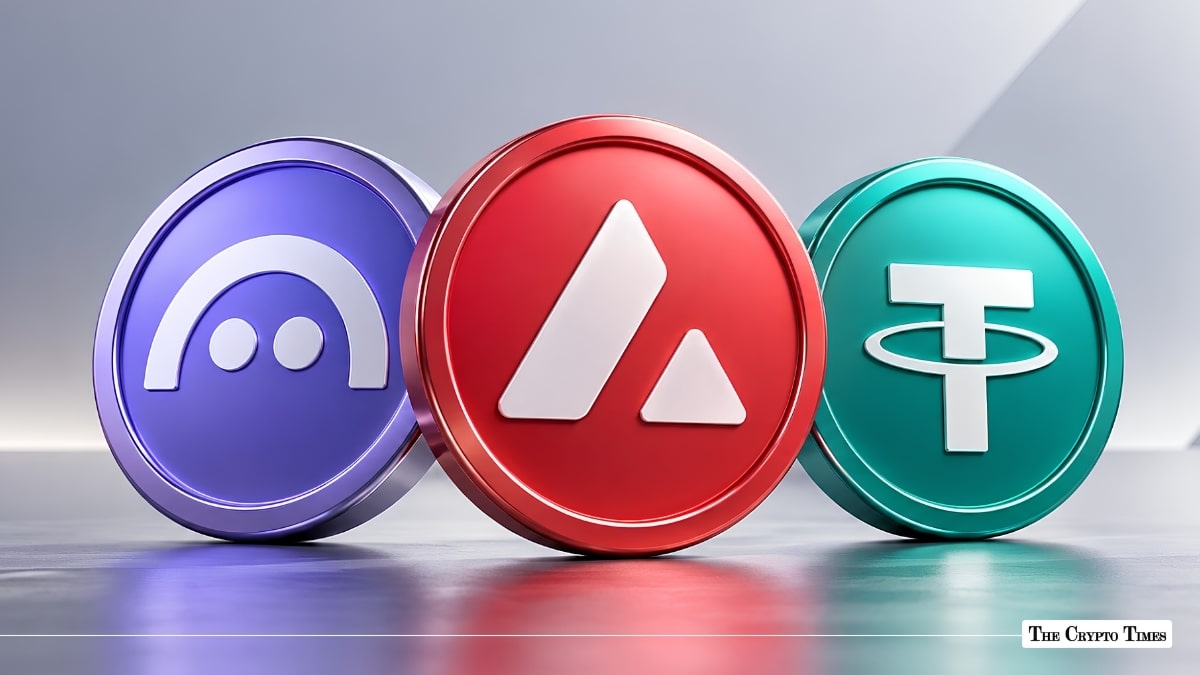
Aave is developing a lending market for tokenized real-world assets (RWAs) on Avalanche, with Tether’s USAT planned as the initial dollar liquidity asset.
According to an announcement on X on September 16, as part of its Aave V4 deployment on Avalanche, the market would allow eligible tokenized financial assets to be used as collateral for stablecoin borrowing.
Aave has not disclosed which assets would qualify as collateral or when the proposed market could launch.
Tokenized assets could become new Aave collateral
Aave’s existing lending markets primarily use cryptocurrencies as collateral. The proposed RWA Hub would add tokenized financial assets to that model.
Under the planned structure, borrowers could use eligible tokenized assets as collateral while obtaining stablecoin liquidity.
The arrangement would introduce additional requirements beyond those involved in crypto-backed lending, including how assets are valued, who legally owns the underlying assets, where they are held, and how they can be liquidated.
Aave has not yet provided details on how those processes would operate.
USAT planned as initial liquidity asset
Aave said USAT, Tether’s dollar-backed stablecoin for the U.S. market, is planned to provide the initial dollar liquidity for the RWA Hub.
The announcement does not specify how much USAT liquidity would be available or whether other stablecoins could be supported later.
The use of USAT would give the proposed market a stablecoin-based borrowing component, while the collateral side would consist of tokenized financial assets.
Aave V4 is already live on Avalanche
The proposed RWA market would operate through Aave V4, which is already deployed on Avalanche.
Aave said the V4 deployment has recorded more than $20 million in deposits since launching roughly two months ago.
That figure applies to the broader V4 deployment and does not represent funds committed to the proposed RWA Hub.
Avalanche separately highlighted the planned market in a September 16 post on X, describing the proposed use of tokenized financial assets as collateral for stablecoin borrowing.
RWA lending adds legal and liquidity questions
Tokenized real-world assets can remain dependent on infrastructure outside the blockchain.
A token may represent an interest in a fund, private credit instrument, treasury product, or another asset whose ownership and transfer rights depend on legal agreements and third-party entities.
That creates additional considerations for a lending market, particularly around pricing, custody, and defaults.
Liquidation could also be more complicated if a tokenized asset has limited secondary-market liquidity.
Aave has not published the proposed market’s loan-to-value ratios, borrowing limits, liquidation rules, or custody arrangements.
Other Aave V4 developments
The RWA proposal follows several recent changes across the Aave ecosystem.
On September 9, Aave introduced an MCP server that allows compatible AI applications to access Aave data and prepare transactions. Transactions generated through the system are returned unsigned, leaving users responsible for signing them.
Aave also introduced a USDe market from Ethena on Ethereum earlier in September.
The proposed RWA Hub differs from those deployments because it would bring tokenized real-world assets into the collateral side of an Aave lending market.
Tokenization meets onchain credit
The proposal comes as tokenization expands across government securities, investment funds, and private credit.
Putting these assets on blockchain infrastructure can make them compatible with onchain settlement and financial applications. However, tokenization does not remove the legal and operational requirements attached to the underlying assets.
For lending markets, those requirements include establishing enforceable ownership rights, reliable pricing, and procedures for handling defaults or liquidations.
These issues become particularly relevant when tokenized assets are used as collateral by institutional borrowers.
Market details have yet to be announced
Aave has identified Avalanche, tokenized assets, and USAT as the initial components of the proposed RWA Hub, but several important details remain undisclosed.
Aave has not yet disclosed which RWA assets will be accepted, the loan-to-value requirements, borrowing limits, liquidation procedures, custody arrangements, or the launch date.
The RWA Hub therefore remains a proposed market rather than a live institutional lending product.
Further details will determine how Aave plans to handle the legal, pricing, custody, and liquidity issues associated with tokenized collateral.
Also Read: DTCC Adds Ondo’s Oasis Pro Markets to Fund/SERV Network