Key Highlights
- Bitcoin traded near $75,900, about 1% below Glassnode’s $76.7K True Market Mean for active investors.
- On-chain capital inflows stopped after 27 consecutive days, with September 15 marking the first net outflow in four weeks.
- U.S. spot Bitcoin ETFs recorded about $334 million in outflows between September 8 and 14, while BTC and ETH products lost roughly $592 million on September 15.
Bitcoin has fallen below the True Market Mean, an on-chain cost-basis level tracked by Glassnode, as several measures of market demand have weakened.
In its latest report published Wednesday, Glassnode said Bitcoin was trading near $75,900, below the $76.7K average acquisition price of coins held by active investors.
The decline came as investors monitored weaker capital inflows, ETF outflows, corporate accumulation, and changing expectations around U.S. monetary policy.
Bitcoin moves below $76.7K cost basis
Glassnode’s True Market Mean currently stands at approximately $76.7K, near the lower end of Bitcoin’s August trading range.
Bitcoin previously tested the level on August 23 and September 10, with the level holding on both occasions. September 15 marked the first daily close below it, according to Glassnode.
The weekly decline remains relatively limited, with Bitcoin down about 4.6% over the period covered by the report.
Glassnode’s framework treats the move below the True Market Mean as a change in the current price structure rather than confirmation of a longer-term trend.
Further daily closes will show whether Bitcoin can recover the level or continue trading below it.
Failed CLARITY vote adds to market uncertainty
The Senate’s failure to advance the Digital Asset Market Clarity Act (H.R. 3633) added another source of uncertainty for crypto markets.
The bill failed to clear a procedural vote with a 49–50 result, below the 60 votes required to invoke cloture.
Three Republicans — Susan Collins, Josh Hawley and Jerry Moran — voted against the motion, while Senator Thom Tillis introduced a separate procedural motion that could leave room for reconsideration.
The vote followed unresolved disagreements over ethics provisions governing cryptocurrency-related dealings by public officials.
The regulatory process continues outside the legislation. The SEC’s Regulation Crypto Assets proposal remains open for public comment through October 20, while the SEC and CFTC continue their respective regulatory work.
Fed decision puts rates back in focus
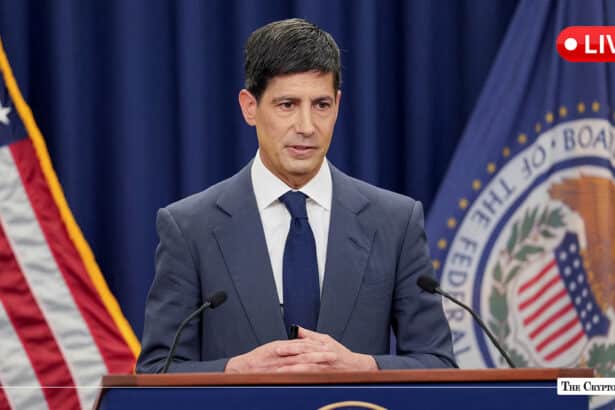
The Federal Reserve was scheduled to announce its policy decision on September 16 at 2:00 p.m. ET, followed by Chair Kevin Warsh’s press conference 30 minutes later.
Markets had been pricing in a 25-basis-point increase, which would move the federal funds target range to 3.75% – 4.00% and mark the first rate increase since 2023.
Glassnode also pointed to broader financial conditions.
Core inflation had fallen to 2.4%, while the federal funds rate had remained unchanged since December 2025. The two-year Treasury yield was trading nearly one percentage point above the Fed’s policy rate, reflecting expectations for tighter monetary conditions.
The Bank of Japan was also scheduled to announce its policy decision on Thursday.
On-Chain capital inflows stop rising
Glassnode identified a change in Bitcoin’s realized-capital trend.
Realized Cap increased for 27 consecutive days through September 14 before recording its first net outflow in four weeks on September 15.
The September 16 reading was also negative at the time of the report.
Realized Cap values Bitcoin based on the price at which individual coins last moved onchain. An increase can indicate capital entering the market, while a decline can indicate capital leaving or a reduction in the value of recently moved coins.
The latest readings therefore mark a break from the steady increase seen through most of the previous four weeks.
Bitcoin ETF demand turns negative
The U.S. spot Bitcoin ETF market has also weakened.
Spot Bitcoin ETFs recorded approximately $334 million in net outflows between September 8 and 14, following nearly $1 billion of inflows during the opening days of September.
On September 15, Bitcoin and Ether ETFs together recorded approximately $592 million in outflows, according to figures cited by Glassnode.
ETF flows have become an important source of spot-market demand, making the recent reversal relevant to Bitcoin’s market structure.
The available figures, however, do not establish whether the outflow trend will continue.
Stablecoin supply remains flat
Stablecoin liquidity has also stopped expanding at its previous pace.
The total stablecoin supply stood near $301 billion, around 4% below its April peak and little changed over the week.
Glassnode said the 30-day growth rate had fallen below the range historically associated with stronger performance in the following month.
The figures indicate that substantial stablecoin liquidity remains in the market, but the amount of new liquidity entering the ecosystem has slowed.
Corporate bitcoin buying slows
Corporate treasury purchases have weakened compared with earlier periods of accumulation.
Listed companies added approximately 5,900 BTC over the past three months, compared with about 89,000 BTC in July 2025 alone.
The average entry price of those recent corporate holdings was approximately $80.5K, around 6% above Bitcoin’s current price.
Glassnode noted that Bitcoin has tested the level twice since falling below it in January and declined on both occasions.
The slowdown in corporate purchases means this investor group is currently contributing less additional Bitcoin demand than during earlier accumulation periods.
Altcoins see broader weakness
Altcoins have experienced a sharper decline than Bitcoin during the latest move.
Glassnode said the median top-100 cryptocurrency fell roughly two percentage points more than Bitcoin, while the share of top-100 assets trading above their 20-day moving average dropped from 56% to 19% in a single session.
The deterioration has not yet extended to longer-term breadth measures.
Most top-100 assets remained above their 50-day moving averages, while relatively few had reached new 30-day lows.
Glassnode compared the current market structure with the May 2026 market top, when the percentage of assets above their 50-day averages declined sharply within a week.
Options positioning shifts toward downside protection
Options markets also changed following the failed Senate vote.
Before the result, the one-week 25-delta skew was below zero, indicating relatively stronger demand for calls.
Within hours of the vote, the measure moved above zero and continued rising, showing increased demand for downside protection relative to calls.
Implied volatility also increased around the event before declining afterward.
For the September 25 expiry, the options market currently places Bitcoin’s max pain near $72K.
Above the current spot price, large call concentrations are located around $85K and $90K, while Glassnode has previously identified an $83K–$86K supply zone.
Liquidity below bitcoin remains uneven
Glassnode’s order-book data shows that liquidity is concentrated relatively close to Bitcoin’s current price.
Nearly two-thirds of resting bids within 20% of spots are concentrated in the 1%–10% range, compared with about half at the beginning of the year.
Liquidity is thinner in the deeper 10%–20% range than during previous market sell-offs.
Nearby bids extend toward approximately $68K, with thinner liquidity below that area until around $61K.
Bitcoin’s Short-Term Holder Cost Basis of $71.3K sits within the nearer support region.
Glassnode identifies the $62K–$65K range as another area where liquidity could become relevant if lower bids are consumed.
What the current data shows
Several market-demand indicators have weakened at the same time.
On-chain capital inflows have turned negative, Bitcoin ETF flows have reversed, stablecoin supply growth has slowed, and corporate accumulation is running below earlier levels. Options positioning has also shifted toward greater demand for downside protection.
The immediate reference points in Glassnode’s analysis are the $76.7K True Market Mean and the $71.3K Short-Term Holder Cost Basis, with deeper liquidity identified around $62K–$65K.
These indicators describe the current market structure but do not establish how Bitcoin will trade next. For now, the data shows a market with reduced demand across several previously important sources of capital.
Also Read: FOMC Live: Meeting Rate Decision, Time, Schedule, Kevin Warsh Announcement