Key Highlights
- The White House is reviewing a bipartisan CLARITY Act ethics proposal from Senators Ruben Gallego and Thom Tillis, according to reports.
- The proposal would allow state attorneys general to enforce certain crypto-related ethics rules instead of relying only on the Justice Department.
- Democrats previously rejected an earlier ethics proposal, arguing it lacked independent enforcement measures.
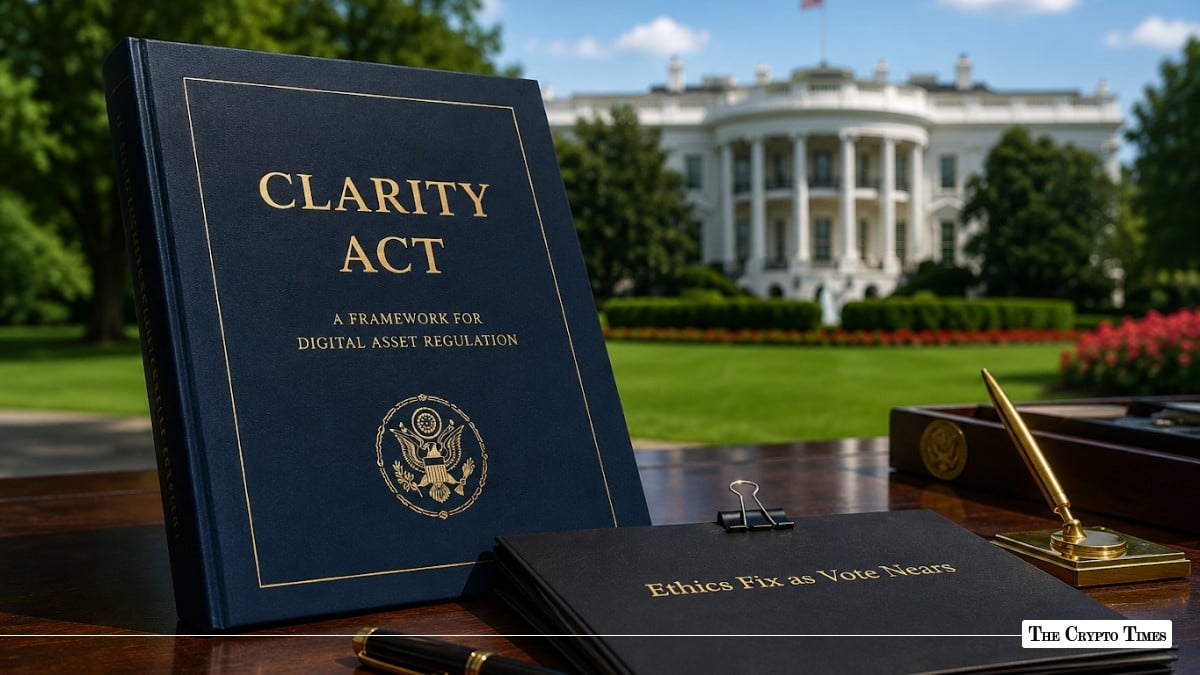
The future of the CLARITY Act remains uncertain as the White House reviews a bipartisan proposal to resolve the bill’s ongoing ethics dispute.
In an X post on Monday, journalist Eleanor Terrett reported the White House had not yet responded to a counterproposal submitted by Senators Ruben Gallego and Thom Tillis after lawmakers attempted to reach a compromise on enforcement rules.
The proposal has become a key factor in determining whether the crypto market structure bill can move forward before the Senate leaves for its August recess.
Dispute over CLARITY’s ethics rules
The disagreement focuses on how ethics rules covering federal officials and potential crypto-related conflicts should be enforced.
Under the latest compromise, state attorneys general would reportedly be able to take action if federal agencies fail to enforce certain ethics requirements. Supporters of the proposal argue that the approach would add another layer of oversight beyond existing federal enforcement channels.
The dispute emerged as lawmakers debated restrictions related to government officials’ involvement in digital assets.
Earlier this month, Senate Republicans introduced an updated CLARITY Act draft with ethics provisions aimed at addressing concerns over government officials’ crypto activities while keeping the bill’s broader market structure and stablecoin framework intact.
However, Democrats argued that the enforcement language did not provide enough independence. Senator Ruben Gallego criticized the earlier proposal, saying it was “not a serious effort” because it relied too heavily on existing federal enforcement channels.
Why previous White House proposal fell short
The latest negotiations follow an earlier attempt to resolve the dispute through a White House-supported ethics framework. Reports in July indicated that President Donald Trump approved ethics language negotiated with Senators Cynthia Lummis and Bernie Moreno as part of efforts to move the CLARITY Act forward.
The proposal was intended to address concerns around conflicts of interest while preserving momentum for the wider crypto legislation.
However, Democrats raised enforcement concerns, arguing that the framework did not create sufficient safeguards.
Tillis-Gallego proposal awaits White House response
After disagreements over the earlier language, Gallego and Tillis worked on a bipartisan alternative. The compromise would shift some enforcement authority to state attorneys general, allowing them to challenge potential failures by federal agencies to act on ethics violations.
The proposal is now under White House review, and its reception could determine whether lawmakers are able to advance the bill before the August deadline. Neither the White House nor lawmakers have confirmed whether the proposal has secured enough support to move forward.
CLARITY Act faces narrow window
With the Senate scheduled to leave Washington on August 7, lawmakers face limited time to resolve the remaining disagreement.
Senate Majority Leader John Thune has lowered expectations for final passage before the recess, although he has indicated that debate on the legislation could still begin.
The CLARITY Act has already faced multiple delays as lawmakers negotiate not only crypto market oversight rules but also broader political concerns tied to ethics provisions.
For now, the bill’s next step depends on whether lawmakers can reach an agreement on enforcement language that satisfies both parties.
Also Read: CLARITY Act Absent From Senate Schedule as 72-Hour Deadline Looms