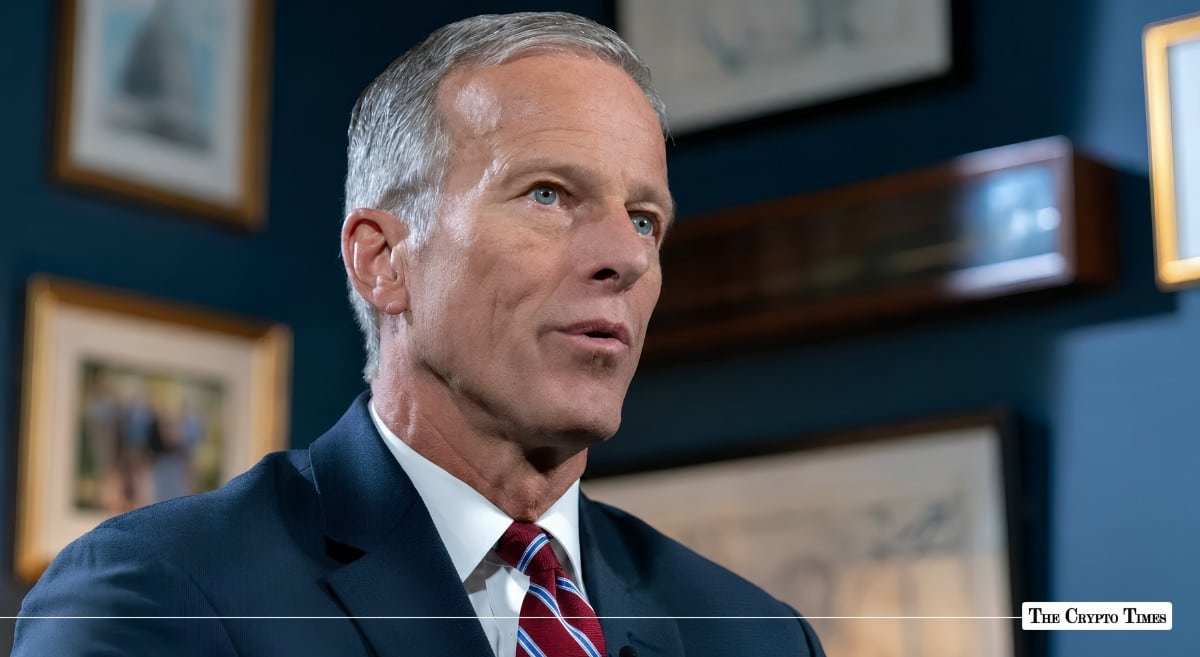
Senate Majority Leader John Thune said the Digital Asset Market CLARITY Act is unlikely to clear the Senate before lawmakers leave for the August recess, signaling that negotiations over the crypto market structure bill will likely continue beyond the current legislative window.
According to an X post by journalist Brendan Pedersen, speaking to reporters, Thune said he does not expect either the CLARITY Act legislation to be completed before recess. “I don’t think we’ll be able to get them done. I would like to at least get Clarity started. We’ll see where the votes are,” he said.
His comments indicate Senate leadership is still assessing whether the bill has enough bipartisan support to advance to the floor.
Negotiations over ethics rules drag on
The CLARITY Act has been delayed by ongoing negotiations over ethics provisions governing elected officials’ involvement in digital asset projects. Earlier this week, Senate Republicans released an updated draft of the legislation that introduced new ethics restrictions while preserving the bill’s broader framework for crypto market regulation.
The proposal would prohibit the president, vice president, members of Congress, federal judges, and other covered officials, along with their spouses, from issuing or sponsoring digital assets for compensation while in office. It would also require certain officials to divest crypto holdings or place them in qualified blind trusts, require disclosure of crypto sales exceeding $1,000, and grant the Department of Justice civil enforcement authority over ethics violations.
However, Democrats have objected to giving the DOJ sole enforcement authority and continue to push for stronger ethics and conflict-of-interest provisions.
Democratic support remains uncertain
Seven Senate Democrats whose votes are considered important for reaching the 60-vote threshold said the latest Republican draft does not yet address several key concerns.
In a joint statement, Senators Angela Alsobrooks, Cory Booker, Catherine Cortez Masto, Ruben Gallego, John Hickenlooper, Mark Warner, and Raphael Warnock said the proposal “falls short,” citing ethics rules, consumer protection, illicit finance, conflicts of interest, and market integrity as areas requiring further revisions.
At the same time, the lawmakers said they remain committed to negotiations, stating they have worked with Republican colleagues over the past year and intend to continue efforts to move the legislation forward.
Their statement leaves the bill under negotiation rather than signaling outright opposition.
Wall Street backs the legislation
While lawmakers continue negotiating, support for the CLARITY Act has expanded beyond the crypto industry.
Earlier on Thursday, Goldman Sachs Chairman and CEO David Solomon endorsed the legislation, saying it would provide long-needed market structure for digital assets despite acknowledging that the bill is not perfect. Solomon said the legislation would create a more level regulatory environment, improve market stability, and help digital asset markets develop under a clearer federal framework.
What’s next for the CLARITY Act?
The updated Senate draft continues to preserve the legislation’s core framework, including provisions defining regulatory responsibilities between the SEC and CFTC, protections for non-custodial blockchain developers through the Blockchain Regulatory Certainty Act (BRCA), stablecoin rules, and expanded law enforcement tools for crypto-related crimes.
With Thune indicating the bill is unlikely to pass before August, negotiations over the remaining bipartisan issues are expected to continue before the Senate decides whether to bring the CLARITY Act to the floor.
Also Read: Lummis Cites BlockFi, Genesis to Push CLARITY Act Protections