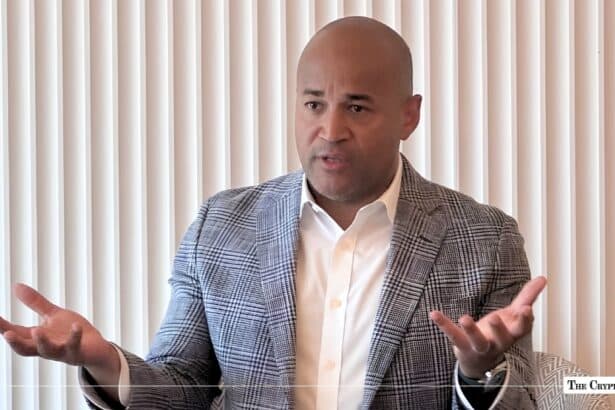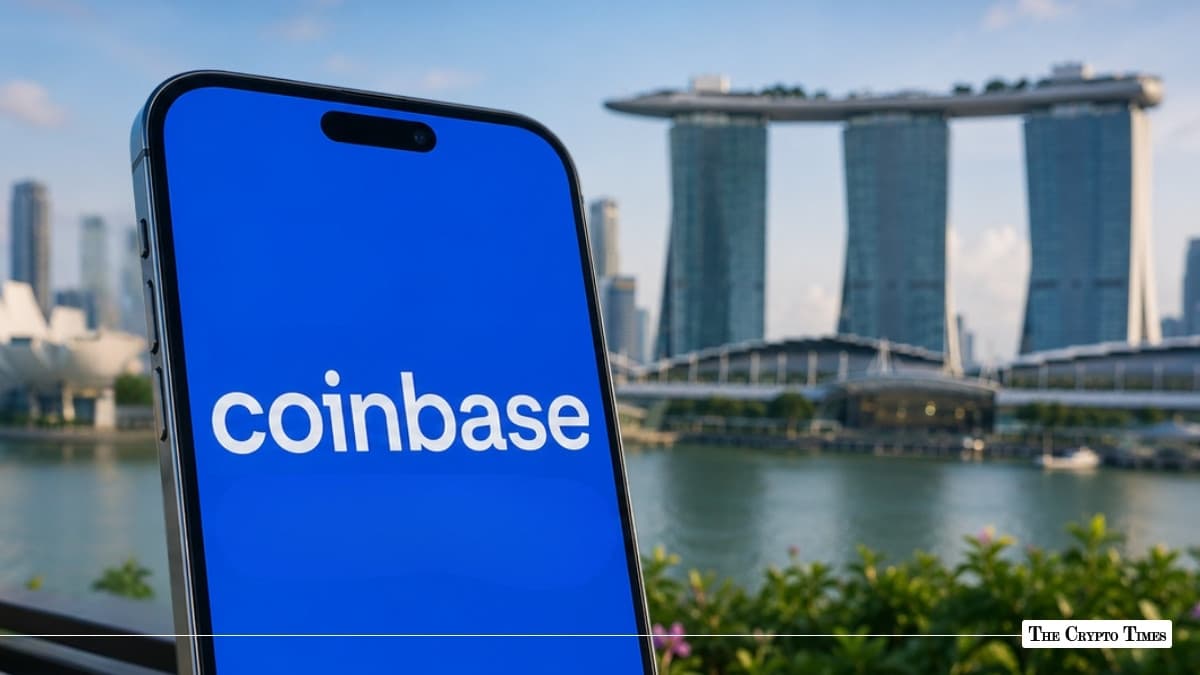
While Coinbase Global has spent much of 2026 explaining to investors why it is shedding staff, its Singapore country director Hassan Ahmed spent Wednesday explaining why the Republic is getting more of them.
The Nasdaq-listed exchange plans to grow its Singapore headcount to roughly 200 by the end of 2026, up from around 150 today, Ahmed told The Business Times on the same day the company officially opened its new office at One Raffles Quay. The functions in line for the biggest lift are engineering, customer service, relationship management and institutional sales, which read together as a wager on both retail depth and institutional plumbing in the same market.
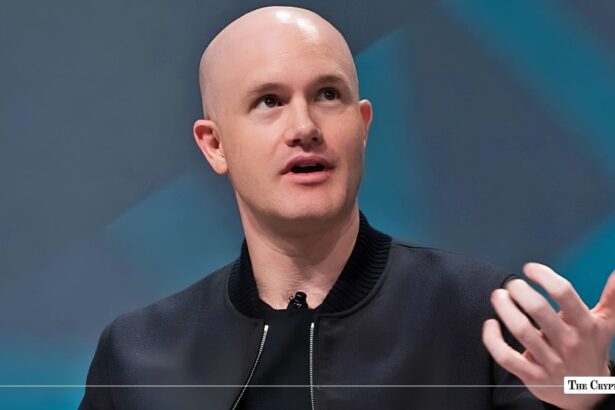
The numbers deserve to be read against a starker backdrop. On May 5, Coinbase said it would cut about 14% of its global workforce, or roughly 700 people, with CEO Brian Armstrong framing the exercise as an attempt to make the company “lean, fast, and AI-native” and pointing to volatile crypto markets and rapid advances in artificial intelligence as the twin pressures forcing the redesign. The cuts landed hardest on tech workers on visas, and Indian H-1B holders in particular were left with just 60 days to find new sponsorship.
On July 23, Coinbase’s total headcount stood at about 4,950. Fifty new hires in Singapore will not offset the 700 lost jobs elsewhere, but the geography of the reshuffle is itself the message.
Why Singapore keeps winning the internal argument
Ahmed’s pitch for the Republic is by now familiar in the crypto industry but rarely delivered with as much company money behind it. He described Singapore as “one of the world’s most trusted financial hubs” and “one of Coinbase’s fastest-growing international markets”, and pointed to the regulatory framework being “much ahead of other jurisdictions and hubs that were also vying to be digital asset hubs at that time.”
Coinbase received its full Major Payment Institution license under the Payment Services Act from the Monetary Authority of Singapore in October 2023, a milestone that turned a conditional footprint into a licensed operating base.
Since then, the Singapore unit has become a live laboratory for products that Coinbase later exports. In late September 2025, the exchange added XSGD, the Singapore dollar-backed stablecoin issued by StraitsX, to its main platform and Coinbase Advanced. XSGD had earlier extended to other rails as well, with StraitsX launching the token on the XRP Ledger in partnership with Ripple in May 2025, underscoring how quickly Singapore-issued stablecoins are becoming multi-chain infrastructure.
XSGD is recognized under MAS’s Single Currency Stablecoin framework and, in Coinbase’s telling, allows local fiat to flow into the on-chain economy without a compulsory detour through the US dollar. In November 2025, the company launched Coinbase Business in Singapore with Standard Chartered as its banking partner, targeting corporate treasury, cross-border settlement and payroll workflows in USDC and, increasingly, XSGD.
The Coinbase Business rollout was itself teed up during the company’s November “System Update” livestream, which Armstrong framed as the beginning of a “new era” built around token sales, tokenisation, and international expansion.
The tailwinds Ahmed is counting on
Ahmed cited a “huge swell of interest” in tokenisation as regulators pivoted from wariness to active support. He pointed to the GENIUS Act in the United States, Europe’s Markets in Crypto-Assets regulation and Hong Kong’s Stablecoins Ordinance as the trio setting the tone for 2026. The context is fuller than a passing mention allows. The GENIUS Act was signed by President Trump on July 18, 2025, after the Senate cleared it 68 to 30, and one year later, federal regulators had blown past the statutory deadline to finalise its rulebook, leaving a $310 billion stablecoin market still waiting for detailed compliance guidance.
Hong Kong’s regime, in contrast, handed out its first two stablecoin licences to HSBC and Anchorpoint in April and signalled it will keep issuers few and closely watched rather than rushing the market. Singapore’s answer, described by Chainalysis’s regional director as the region’s most mature regime, with a full activity-based licensing regime and both a stablecoin framework and a tokenized-bills pilot, is what Coinbase is now betting a headcount and an office lease on.
His read of the demand side splits neatly into two buckets, accredited investors and institutions, both of which he said have “increased their focus on both digital assets as an asset class and blockchain as a technology.”
The interesting piece is what Coinbase intends to do with an office full of engineers in this environment. Ahmed talked about “equipping AI agents with stablecoin wallets, and using these to track and audit the blockchain as the agent acts”, a reference to the emerging category of agentic commerce that the industry has begun to build around Coinbase’s own x402 payment protocol and Base network. In that framing, the AI story that cost jobs in the United States is also the story funding new ones in Raffles Place.
The larger APAC map
Singapore’s headcount push does not sit in isolation. In April, Coinbase secured an Australian Financial Services Licence and signalled plans to move into equity trading and payments there. In June, the exchange went live with INR rails for spot trading and perpetual futures in India, the first fully functional fiat integration since its aborted 2022 launch.
Speaking to The Crypto Times that same month, Coinbase’s APAC managing director John O’Loghlen described India as the entirety of the company’s international launch pipeline for the coming year, telling the publication that “we haven’t had an international launch in the last 12 months and we don’t have one scheduled for the next 12 months. That means the focus is really on Coinbase India.”
Read alongside that comment, the Singapore expansion looks less like a discrete country play and more like reinforcement of the regional command post. Engineering hires in Singapore build the rails that go to Sydney, Mumbai, Tokyo and Manila. Institutional sales in Singapore cover family offices, sovereigns and asset managers whose booking centres sit in the same square kilometre as Coinbase’s new office.
Relationship management out of Singapore lands the corporate treasury mandates that Coinbase Business was designed to service. And the Singapore engineers are, in effect, building for the country that O’Loghlen has publicly designated as the priority launch.
The stock price problem the expansion has to answer
The bet is being placed against a share price that has done Coinbase few favours. COIN closed at $176.50 on July 21 after briefly rallying, but TradingView data show the stock down more than 25% year to date and close to 59% lower over the past 12 months, well below its July 2025 all-time high near $420.
The first quarter delivered a $394.1 million net loss, part of what The Crypto Times called Coinbase’s “brutal week” when layoffs, the earnings miss, and an AWS outage all landed together. Revenue fell to $1.43 billion from $2.03 billion, and analysts have been trimming estimates.
Piper Sandler recently cut its price target to $155, and JPMorgan reduced its outlook on Coinbase and Circle a week earlier. The Crypto Times has laid out the technical picture around the $158 to $180 range, noting how much rides on Coinbase converting its geographical bets into revenue that does not depend on retail volumes rebounding at home.
That is where the Singapore hires acquire strategic weight beyond their absolute number. If Coinbase is going to become the “everything exchange” that Armstrong keeps invoking, it needs the products that will get it there: tokenised equities, prediction markets, stablecoin rails, agentic payments – to be built in and pushed out from a jurisdiction where regulators are already writing the rules the rest of the world is copying. Singapore is that jurisdiction.
The company’s second-quarter earnings are due on July 30. The number the market will chase is transaction revenue. The number Ahmed is quietly building toward is the one that shows up two or three quarters after the Raffles Quay office has filled up.
Also Read: Coinbase CEO Brian Armstrong Says Crypto Clarity Act Is at the ‘One-Yard Line’