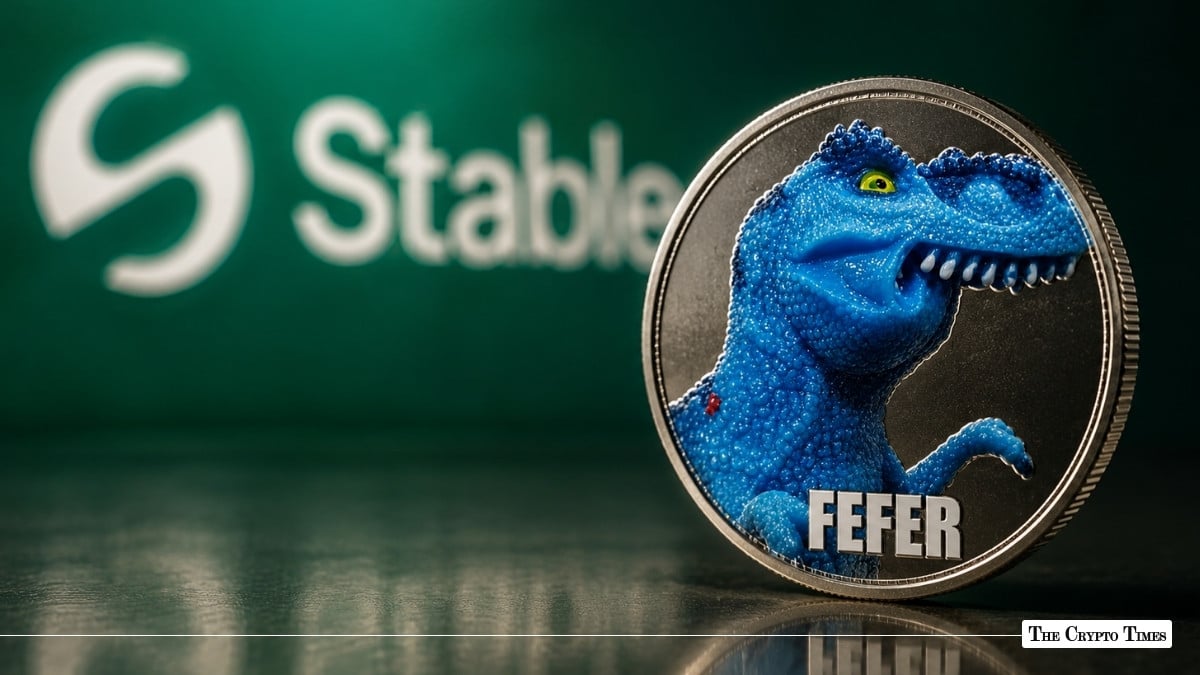
StableChain, the USDT-native Layer 1 blockchain backed by Bitfinex, PayPal Ventures, and Tether affiliates, announced surging on-chain activity on July 23, 2026. In an official post on X, the project reported over 167,000 transactions in the past 24 hours, largely fueled by growing interest in $FEFER, widely regarded as the chain’s breakout memecoin.
“Over 167K transactions in the past 24 hours as Fefer activity continues to grow on Stable,” the Stable team stated. “Deeper liquidity for bridging is coming to improve the experience. We’re also strengthening RPC performance to meet the growing demand. Thank you for your patience.”
The surge marks a significant milestone for StableChain, which launched its mainnet in late 2025 with a focus on stablecoin-powered payments, sub-second finality, and high throughput.
Designed to eliminate gas fee volatility by using USDT directly for transactions, the network has positioned itself as infrastructure for both institutional payments and retail DeFi activity. Early traction included over $2 billion in pre-deposit commitments and thousands of smart contracts deployed shortly after launch.
$FEFER has emerged as the catalyst. Community discussions identify it as one of the first major memecoins on the chain, with endorsements appearing from prominent crypto voices including Tether CEO Paolo Ardoino.
Official website data shows that FEFER quickly surged to $11 million in market cap before cooling down, with onchain data from StableScan showing over 5,000 holders.
Its rapid rise has drawn traders seeking early liquidity on the new ecosystem, pushing daily activity far beyond initial expectations and highlighting the network’s capacity to handle meme-driven volume alongside its payment-focused architecture.
In response to the influx, Stable said that it’s prioritizing infrastructure upgrades. Enhanced bridging liquidity will ease asset transfers between StableChain and other networks, while RPC improvements aim to reduce latency and support higher concurrent users. These steps address common pain points seen during hype cycles on newer chains.
Meme Coins Power Early Adoption on Emerging Chains
New blockchain launches in 2026 are increasingly relying on meme coin hype to bootstrap liquidity and user activity. Robinhood Chain, an Arbitrum-based network launched on July 1 with a primary focus on tokenized real-world assets (RWA), quickly pivoted into a meme coin battleground. Within weeks, its flagship token CASHCAT, nostalgically tied to Robinhood’s early “Cash Cat” mascot, surged to over $100 million market cap, pushing daily DEX volume past $560 million and TVL above $210 million. Thousands of new tokens launched daily, drawing over 190,000 active addresses and turning the chain into one of the hottest speculative venues alongside Solana.
This mirrors the momentum now building on StableChain, where $FEFER has driven over 167,000 transactions in 24 hours as the first major memecoin on the USDT-powered L1. Like Robinhood’s experience, StableChain—backed by Bitfinex and focused on stablecoin payments—is seeing retail frenzy accelerate adoption ahead of planned upgrades in bridging liquidity and RPC performance. Both cases highlight a recurring 2026 pattern: institutional-grade chains first attract users through viral memes before maturing into broader ecosystems.
As StableChain continues refining its performance, the coming weeks may determine whether the current momentum translates into deeper liquidity pools and broader utility beyond viral tokens. The project’s ability to balance explosive retail interest with reliable infrastructure will be key to its long-term success in the competitive Layer 1 arena.
Also read: Viral Bali 189 Solana Robbery Victim Linked to Federal Crimes and Memecoin Scams