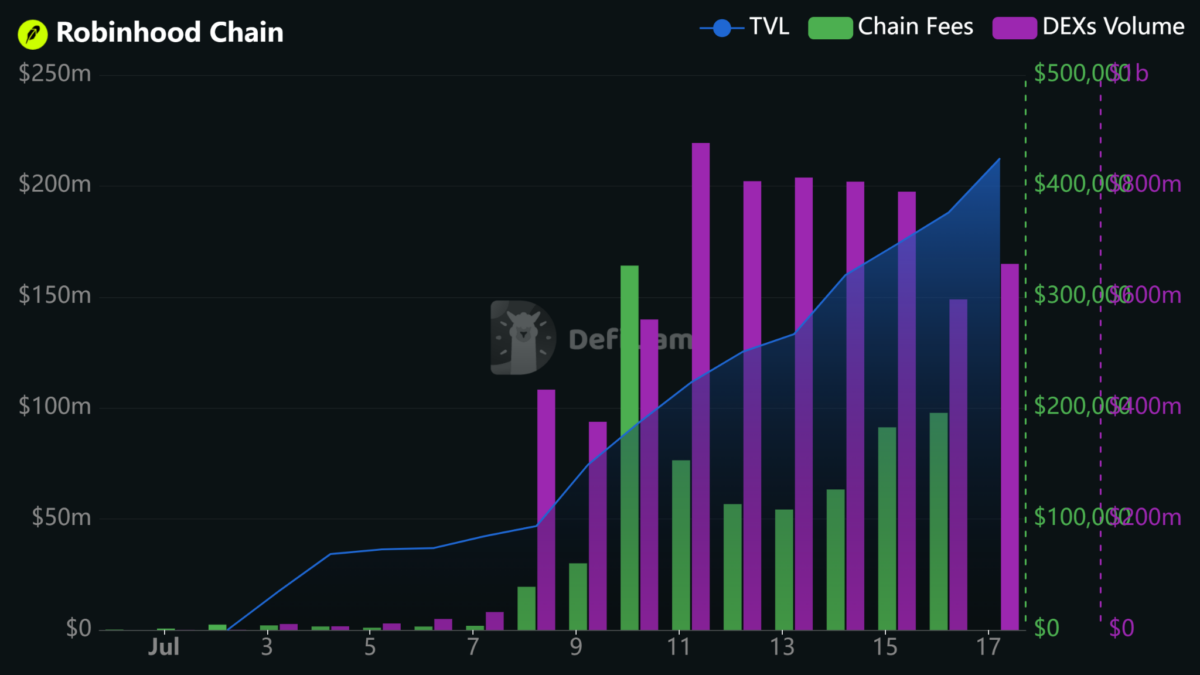
Robinhood Chain, the Arbitrum-based Ethereum Layer-2 blockchain that launched its public mainnet on July 1, 2026, has achieved one of the fastest total value locked ramps in recent crypto history. Within roughly two weeks of going live, its DeFi total value locked (TVL) crossed the $200 million mark.
This impressive growth stems from a powerful combination of institutional lending inflows and a viral meme coin boom that caught the market by surprise. The network’s rapid ascent has quickly positioned it as one of the most discussed Layer-2 projects of 2026, successfully blending Robinhood’s mainstream retail brand with permissionless decentralized finance infrastructure.
Robinhood officially unveiled the public mainnet of its blockchain during a high-profile keynote event titled “The World Is Flat” held in London. Built on Arbitrum’s Orbit technology stack, Robinhood Chain functions as a high-performance Ethereum-compatible Layer-2 network featuring approximately 100-millisecond block times and using ETH as its native gas token.
Explosive TVL Growth Timeline
The speed at which capital flowed into Robinhood Chain has been remarkable even by Layer-2 standards. The network crossed $100 million in TVL within its first week of operation. By mid-July, data from DefiLlama and various on-chain dashboards indicated that DeFi TVL had surpassed $200 million, with some reports citing protocol values nearing or exceeding $250 million during peak periods. This growth trajectory stands out as one of the strongest early performances for any new blockchain in recent memory.
Much of the locked value concentrated in lending protocols, particularly Morpho, which powered Robinhood Earn and attracted significant institutional inflows. Large seed deposits, including contributions from Ethena into USDG yield vaults, provided a solid foundation for TVL.
Stablecoin market capitalization on the chain also expanded dramatically, frequently exceeding $300 million, with USDG maintaining a dominant share typically between 65% and 70%. Bridged assets, especially ETH, saw robust inflows of more than $70 million during the opening week alone.
This combination of lending activity and stablecoin parking created a relatively sticky capital base, although headline figures received an additional boost from intense trading volumes across the network.
The Meme Coin Catalyst Driving Viral Momentum
Although lending protocols built the structural foundation, meme coins delivered the explosive momentum that captured widespread attention and drove network activity to new heights. The standout performer was CASHCAT, a community-created memecoin inspired by “Cash Cat,” an early mascot from Robinhood’s founding era before the company settled on its current branding. Deployed shortly after mainnet went live, CASHCAT experienced extraordinary price action, with gains reported between 700% and over 1,700% in single-day periods at its peak.
The token’s market capitalization surged well above $100 million during its most intense rallies, creating substantial wealth for early participants. Notable on-chain success stories included individual traders turning modest investments of around $838 into over $1 million in a matter of weeks.
Robinhood CEO Vlad Tenev amplified the phenomenon with a widely discussed post on X acknowledging that while the chain was built primarily for real-world assets, “it works great for memes too.”
This comment, combined with the nostalgic branding tie-in, helped transform CASHCAT into a cultural focal point for the young network.
The meme coin surge produced measurable effects across key metrics. Daily decentralized exchange volumes repeatedly shattered records, often ranging from $500 million to more than $800 million on peak days.
Robinhood Chain frequently appeared among the global leaders in 24-hour DEX activity. Daily active addresses climbed into the hundreds of thousands, supported by a high proportion of new users exploring the ecosystem. Several other Robinhood-themed tokens also gained traction, but CASHCAT remained the primary driver of hype and liquidity during the initial wave.
Read: The Robinhood Chain Paradox: Built for Tokenized Stocks, Dominated by Memecoins
Broader Ecosystem Activity and User Engagement
Beyond the headline TVL and meme coin narratives, Robinhood Chain demonstrated strong overall network vitality in its formative weeks. Transaction counts exceeded 17 million during the first seven days, while unique addresses reached hundreds of thousands. Bridging activity remained robust, and stablecoin supply continued expanding as users parked capital in anticipation of further opportunities. Integrated protocols recorded elevated spot and perpetuals trading volumes, with Uniswap and other DEXs benefiting directly from the heightened interest.
The network’s technical advantages, including fast block times and initial gas subsidies, lowered entry barriers for both experienced DeFi users and retail participants new to blockchain. This accessibility created a powerful flywheel where meme-driven attention led users to explore lending products and other DeFi primitives, further increasing overall liquidity and engagement.
The combination of Robinhood’s trusted brand and permissionless infrastructure proved particularly effective at attracting capital and activity in a competitive Layer-2 landscape.
Also Read: Uniswap Eyes to Expand Protocol Fees to Robinhood Chain, Voting Begins
Challenges, Risks, and Future Outlook
Despite the impressive early results, several challenges could shape the chain’s longer-term trajectory. TVL remains somewhat concentrated within a limited number of protocols, and a meaningful portion of initial volume originated from highly volatile meme coin trading that may prove less sustainable once the novelty subsides.
Real-world asset tokenization, the network’s core strategic focus, still constitutes a relatively modest share of total activity compared to stablecoins and speculative tokens. Expanding utility and liquidity for Stock Tokens and other RWAs will be essential for maturing beyond the hype phase.
Regulatory considerations surrounding tokenized securities and global accessibility will also require careful navigation as the ecosystem scales. Concentration risks associated with dominant stablecoins like USDG represent another area worth monitoring.
Nevertheless, the early success demonstrates Robinhood’s ability to leverage its massive user base and brand recognition to bootstrap a competitive blockchain. The permissionless design ensures that innovation can continue from the broader developer community, potentially leading to more diverse applications over time.
Also read: Robinhood Files to Launch Internal Employee Investment Fund