Key Highlights
- Sen. Kirsten Gillibrand renewed her call to ban elected officials and their spouses from issuing digital assets.
- The proposal follows President Donald Trump’s disclosure of roughly $636 million in income from the TRUMP memecoin during 2025.
- Gillibrand said the legislation would prohibit the president, members of Congress, and their spouses from issuing or sponsoring cryptocurrencies.
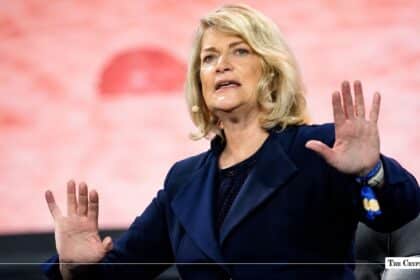
US Senator Kirsten Gillibrand today renewed her call for legislation barring elected officials and their spouses from issuing or sponsoring digital assets after newly released financial disclosures showed President Donald Trump reported more than $600 million in income from his $TRUMP memecoin in 2025.
According to an official release, Gillibrand’s renewed push follows disclosures showing that Trump’s largest reported source of income in 2025, approximately $636 million, came from the memecoin.
Gillibrand calls for stronger crypto Ethics rules
Gillibrand said legislation she has championed alongside several Senate colleagues would prohibit the president, members of Congress, and their spouses from issuing or sponsoring cryptocurrencies, including memecoins. If enacted, the proposal would apply to both President Trump and First Lady Melania Trump, who separately disclosed approximately $6 million in income from NFTs and other digital collectibles.
Gillibrand said public officials should not personally profit from digital assets while serving in office, arguing that stronger ethics standards are necessary as Congress continues debating broader cryptocurrency legislation. She added that establishing clear ethical boundaries would help strengthen consumer protections, combat illicit finance, and preserve public confidence in future crypto regulation.
Trump’s financial disclosure rekindles debate
The renewed proposal follows the release of Trump’s annual financial disclosure, which identified income from the $TRUMP memecoin as his largest single reported revenue source in 2025. According to the filing released by the U.S. Office of Government Ethics, the president earned more than $635 million from the $TRUMP memecoin in 2025.
The disclosure indicates that the earnings came primarily from royalties under a licensing agreement tied to the Solana-based memecoin rather than from trading the token itself. Because the project pays licensing revenue to Trump-linked entities, the income was generated through the commercial use of his brand rather than gains from holding the asset.
The disclosures have intensified debate over whether public officials should be permitted to sponsor or profit from crypto-related projects while holding office. Supporters of stricter ethics rules argue that such activities create potential conflicts between public responsibilities and private financial interests, while critics of additional restrictions contend that existing disclosure requirements already provide sufficient transparency.
Proposal comes as crypto legislation advances
The renewed push arrives as lawmakers continue working on legislation to establish comprehensive rules for digital asset markets. Gillibrand has been one of Congress’s leading voices on cryptocurrency policy, helping shape discussions around market structure legislation and stablecoin regulation.
She argued that stronger ethics standards should accompany broader crypto reforms to ensure responsible innovation while maintaining public trust in policymakers overseeing the industry. Unlike broader cryptocurrency legislation, the proposal specifically targets elected officials and their spouses rather than restricting private companies or individual investors from participating in digital asset markets.
Proposal emerges amid broader scrutiny
Gillibrand’s renewed ethics push also comes as attention has turned to reports involving her family. Recent reports indicate that her son has raised funding for a perpetual futures exchange. According to those reports, the planned platform is not expected to involve cryptocurrency or blockchain technology, although one of its reported backers is Chris Larsen, co-founder of Ripple.
The developments have renewed discussion around ethics standards for lawmakers and their families as Congress continues considering legislation that would establish a broader regulatory framework for digital assets.
Also read: ZachXBT Questions Circle’s Delayed $280M USDC Freeze Amid OUSD Rivalry Debate