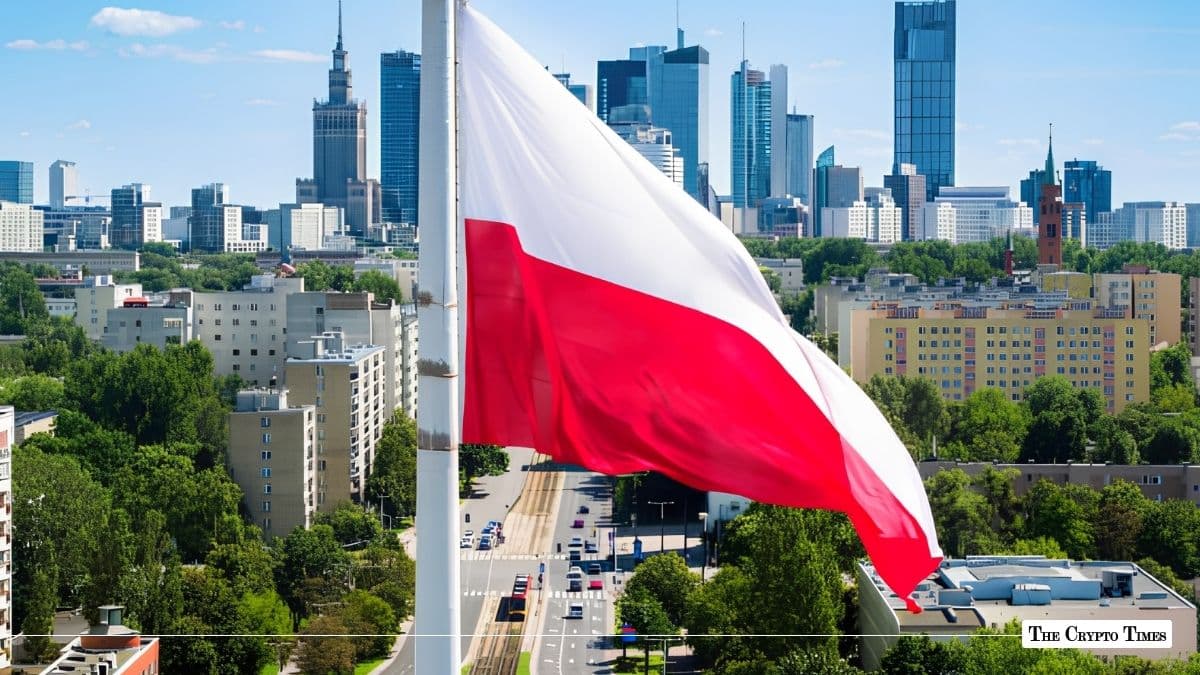
As the Markets in Crypto-Assets (MiCA) Regulation came fully into force on July 1, Poland stood alone: the only European Union member state without a functioning way to license crypto firms, after its president repeatedly refused to sign the law that would let it.
A veto, and a deadlock
The distinction is precise, and it matters. MiCA applies in Poland like everywhere else in the bloc—Polish crypto companies are bound by its substantive obligations. What Poland lacks is the domestic machinery to grant a MiCA license. Because the country never enacted its implementing legislation, no Polish authority has been designated as the competent regulator for most crypto services.
As the Polish Financial Supervision Authority (KNF) confirmed, no public body has been named to supervise activities covered by MiCA, with the narrow exception of e-money token issuers, which fall under a separate framework. Several other member states have yet to issue their first license, but Poland is the only one that structurally cannot issue one at all.
The cause is a political standoff. President Karol Nawrocki, aligned with the right-wing populist opposition, has repeatedly vetoed the implementing bill introduced by Prime Minister Donald Tusk’s government, and parliament has been unable to assemble the three-fifths majority needed to override him.
Nawrocki’s stated objection was not to MiCA itself but to how the Polish draft implemented it: he argued the law went beyond the EU regulation, granting the KNF power to freeze customer funds for months and block company websites before firms had exhausted their legal appeals, provisions he framed as “a real threat to the freedoms of Poles and the stability of the state.”
Critics of the draft echoed concerns about steep compliance costs and criminal-liability provisions for executives. The government, in turn, argued the law was necessary to protect consumers and let Poland benefit from a regulated market. The result of that impasse is that the deadline arrived with no regime in place.
2,000 firms, one hard choice
The practical fallout lands on what was one of Europe’s largest crypto sectors. Poland hosted well over 1,400 registered virtual asset service providers under the old national regime — by some counts around 2,000 — and almost none of them can now obtain the authorization required to operate legally across the EU from home soil.
Industry figures have been blunt about the stakes. Mateusz Kara, CEO of Morphic Financial Group, which has deep operations in Poland, warned that the combination of political deadlock and high compliance costs could “wipe out Polish crypto,” noting that of the roughly 2,000 Polish VASP entities, he was aware of only a handful that had secured a MiCA license anywhere.
For most, the options narrow to three: relocate, obtain a license in another member state, or wind down. Smaller startups, least able to absorb the cost and complexity of a foreign application, are the most exposed; a dynamic that industry executives note tends to advantage larger firms that can spread compliance costs, even among those who otherwise support a common European rulebook.
Licensed abroad, passported home
There is a legal path through, and it doubles as the sharpest irony of Poland’s predicament. MiCA’s passporting principle means a license issued by any single member state grants access to all 27 EU countries plus Iceland, Liechtenstein, and Norway. So Polish firms are expected to apply in jurisdictions such as Lithuania, Latvia, or Germany and then passport their services back into Poland, legally serving Polish customers under a license their own regulator was never empowered to grant.
That outcome sits awkwardly against the broader MiCA picture, in which licensing has consolidated around a handful of hubs. Roughly 230 to 244 crypto firms have secured MiCA authorization across the bloc, out of more than 3,000 pre-MiCA registrations, an attrition rate near 80%, with Germany alone holding about a quarter of all licenses, followed by France.
Major exchanges have anchored themselves in specific states, from Coinbase in Luxembourg to OKX in Malta and Kraken in Ireland. Poland, despite its outsized crypto population, has become a jurisdiction that firms passport into rather than from.
Whether the deadlock breaks soon is unclear. A revised bill, informally known as Bill 2050, has been advanced as an “improved” successor to the vetoed version, and some in the industry hope the pressure of the missed deadline will push Nawrocki toward a compromise, possibly on an alternative draft with more favorable terms. Until one version becomes law, Poland’s crypto sector operates in a strange limbo—governed by rules it must follow, in a country with no one authorized to license it under them.
Also Read: MiCA Deadline Hits: Top Safe Crypto Platforms for EU Users in July 2026