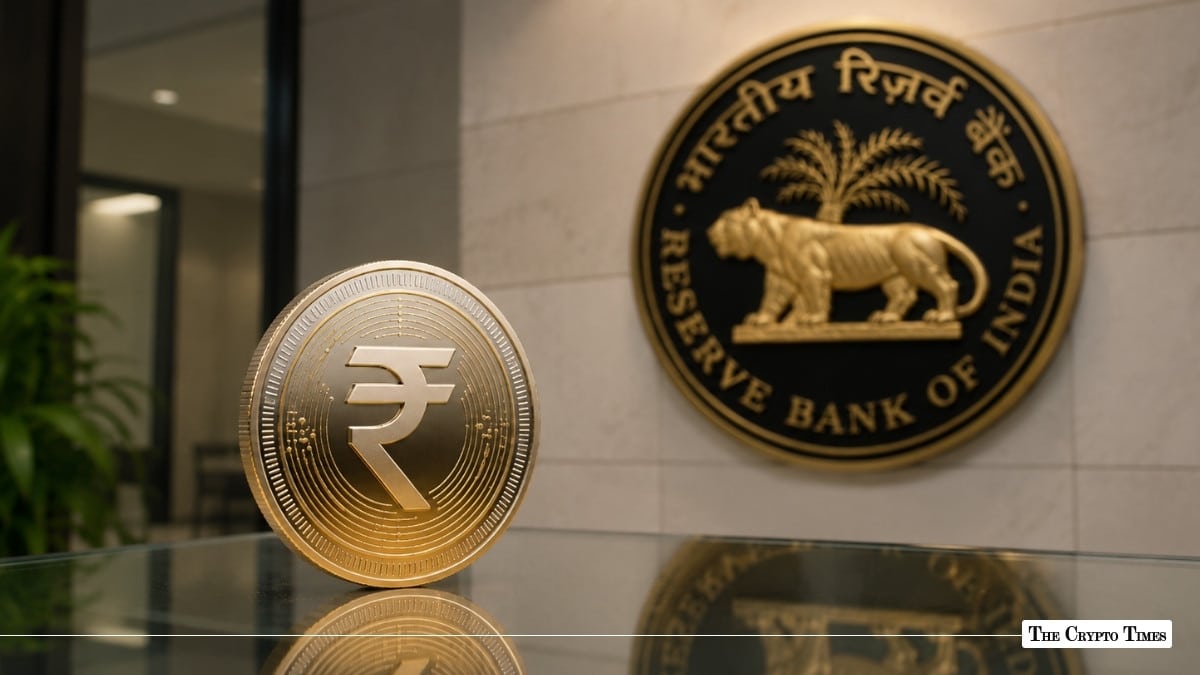
The Reserve Bank of India (RBI), in its Financial Stability Report (FSR) released on June 30, 2026, has formally acknowledged the growing regulatory momentum around stablecoins worldwide, referencing the United States’ GENIUS Act, the European Union’s (EU) Markets in Crypto-Assets (MiCA) framework, and the United Kingdom’s (UK) evolving stablecoin regime as “important steps towards clearer regulatory perimeters.”
The report arrives on the same day the EU’s MiCA regulation reaches its hard enforcement deadline of July 1, 2026, ending the 18-month grandfathering period for crypto asset service providers (CASPs) across all 27 member states.
What the RBI said
The June 2026 FSR includes a dedicated section under Chapter III that directly addresses stablecoins and the broader crypto asset ecosystem. The RBI observed that, “Stablecoin flows remain closely linked to broader crypto asset market activity, while also exhibiting an association with remittance and trade flows.”
The central bank further noted that “demand for stablecoins has often been stronger in economies with weaker institutional and political stability and limited access to short term dollar-denominated assets,” highlighting both their potential role in cross-border transactions and dollar exposure, alongside “concerns relating to currency substitution and financial stability.”
This marks a notable shift from the December 2025 FSR, which included a dedicated chapter titled “Financial stability implications of stablecoins” and stated that “currently, risks from stablecoins to macrofinancial stability outweigh their purported benefits.” That edition strongly advocated for central bank digital currencies (CBDCs) over privately issued stablecoins.
The June 2026 edition, by contrast, leans more toward observation than prescription. While the risks remain flagged, the explicit mention of the GENIUS Act, MiCA, and the UK regime without accompanying criticism suggests the RBI is tracking global developments more closely and may be calibrating its own stance accordingly.
The RBI’s May 2026 Payment Systems Report had taken a firmer position, arguing stablecoins fail the core test of money, specifically “singleness, elasticity and integrity,” while positioning the digital rupee (CBDC) as the preferred alternative with over 8 million pilot users.
The three frameworks the RBI cited
GENIUS Act (US): The Guiding and Establishing National Innovation for U.S. Stablecoins Act (GENIUS ACT) was signed into law by U.S. President Donald Trump on July 18, 2025, after passing the Senate 68-30 and the House 308-122.
It requires 100% reserve backing with liquid assets, classifies stablecoin issuers as financial institutions under the Bank Secrecy Act (BSA), and excludes compliant payment stablecoins from the definitions of “security” and “commodity.” Final implementing rules from the OCC, Federal Reserve, FDIC, and Treasury are expected by July 2026.
MiCA (EU): Regulation (EU) 2023/1114 entered into force in June 2023 and rolled out in phases. Today, July 1, 2026, is the absolute deadline. Over 80% of formerly registered Virtual Asset Service Providers (VASPs) had not obtained full MiCA authorization by May 2026. Tether’s USDT faces delisting risks on EU-regulated venues after not pursuing MiCA authorization, while Circle’s USDC and EURC are expected to remain available.
UK Regime: The Cryptoassets Regulations 2026 were made in February 2026 and come into force in October 2027. On June 22, the Bank of England (BoE) published its policy statement for systemic stablecoin issuers, introducing a 40 billion pound issuance guardrail per systemic stablecoin. The BoE and Financial Conduct Authority (FCA) are jointly building an integrated two-part regime.
Meanwhile, Hong Kong granted its first stablecoin licenses in April 2026 to HSBC and a Standard Chartered-led joint venture under the Stablecoins Ordinance that took effect in August 2025.
India’s domestic reality
While the RBI monitors global frameworks, India’s own approach remains a study in contrasts. The country imposes a flat 30% tax on all virtual digital asset (VDA) gains plus 4% cess, alongside a 1% tax deducted at source (TDS) on transfers, both unchanged in the Union Budget 2026-27.
New penalties for reporting failures, including a 200-rupee daily fine and a flat 50,000-rupee penalty for incorrect filings, took effect from April 1, 2026.
Industry leaders have been vocal. Sumit Gupta, CEO of CoinDCX, noted that “high 1% TDS and a 30% flat tax have pushed many users toward offshore platforms, reducing both visibility and potential tax revenue for India.”
Despite this aggressive tax regime, India still lacks a comprehensive regulatory framework for digital assets. Crypto exists in a regulatory grey zone, not recognized as legal tender yet generating taxable economic value.
The bigger picture
The stablecoin market now sits at approximately $309 billion in total market capitalization, with Tether’s USDT commanding roughly $188 billion (59% dominance) and Circle’s USDC at around $79 billion. Transaction volumes exceeded $33 trillion in 2025, surpassing Visa and Mastercard combined.
By naming the GENIUS Act, MiCA, and the UK regime in a single paragraph, the RBI has effectively mapped the regulatory coordinates shaping global stablecoin governance. The observational tone, markedly different from December 2025’s warnings, suggests a phase of more measured engagement, even as the central bank maintains its CBDC preference.
For India’s crypto industry, the gap between how aggressively crypto is taxed and how sparsely it is regulated remains the central challenge. The rest of the world is building frameworks. India, for now, has a tax code and a series of warnings.
Also Read: India’s USDT Premium Jumps to 8.5% Amid ED Raids & Stablecoin Shortage