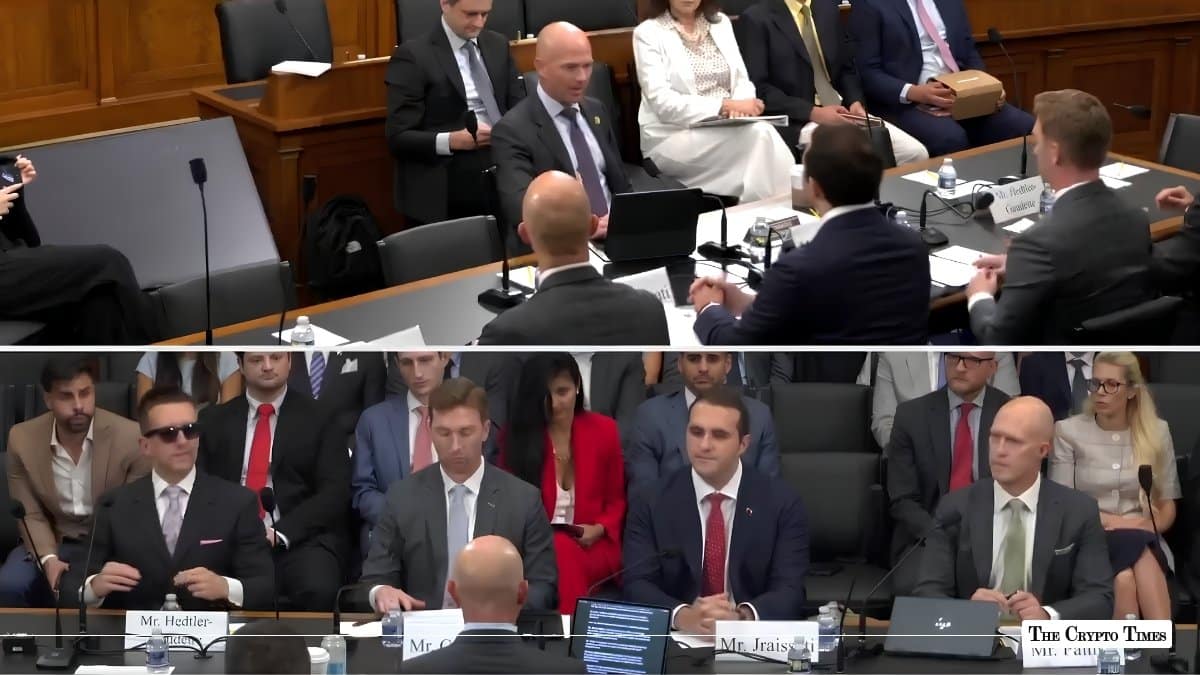
Members of Congress examined the role of digital assets in advancing U.S. national security objectives during a roundtable on Thursday, with witnesses arguing that blockchain technology can support financial freedom abroad while strengthening efforts to combat illicit finance.
The discussion took place at a hearing titled “Two Sides of a Digital Coin: Protecting U.S. Security by Challenging the Power of Repressive Foreign Regimes,” chaired by Rep. William Timmons.
Participants said digital assets are increasingly becoming part of broader geopolitical and economic debates, particularly in regions where access to banking services remains limited and governments exert tight control over financial systems.
Timmons links digital assets to financial freedom
Opening the discussion, Timmons argued that digital assets can provide an alternative financial channel for people living under authoritarian governments.
He said individuals facing political repression often struggle to store wealth, receive financial support, or move funds without government oversight. According to Timmons, technologies that enable value transfer outside state-controlled systems can be critical for those living under restrictive regimes.
The hearing highlighted a growing policy shift in Washington, where digital assets are increasingly being discussed not only as a financial innovation but also as a strategic tool that could influence economic competition, sanctions enforcement, and global financial access.
Witnesses highlight global banking gaps
Jorge Jraissati, president of the Economic Inclusion Group, argued that much of the world remains outside the traditional banking system.
He noted that while unbanked rates in the United States and Europe are relatively low, access to financial services remains limited across parts of Africa and Latin America. In many countries, people continue to rely heavily on cash transactions, reducing financial transparency and limiting participation in the formal economy.
Jraissati also pointed to barriers facing women in developing nations, noting that many lack formal identification documents required to open bank accounts. He said digital financial tools could provide alternative pathways to economic participation for populations excluded from traditional banking systems.
Blockchain transparency highlighted as security tool
Witnesses also challenged the notion that digital assets inherently make law enforcement more difficult. Cody Carbone, chief executive officer of the Digital Chamber, argued that blockchain networks provide levels of transparency that can help authorities identify and disrupt illicit activity.
Carbone cited recent actions involving cryptocurrency-linked funds connected to sanctioned entities, saying authorities have been able to trace and freeze assets through cooperation between blockchain analytics firms, law enforcement agencies, and digital asset service providers.
According to Carbone, blockchain records allow investigators to follow the movement of funds in ways that are often impossible with cash transactions. He pointed to efforts targeting Iranian-linked assets and the tracking of funds associated with North Korean cyber activity as examples of how blockchain data can support enforcement actions.
Lawmakers examine balance between innovation and security
The hearing reflected an ongoing debate in Washington over how digital asset policy should address both innovation and national security concerns. Supporters of the technology argue that blockchain networks can expand financial access, increase transaction transparency, and strengthen enforcement capabilities. Critics have warned that cryptocurrencies can also be exploited by sanctions evaders, cybercriminals, and hostile state actors.
Witnesses maintained that regulatory frameworks should focus on addressing illicit activity without restricting the underlying technology itself.
Crypto policy debate continues on Capitol Hill
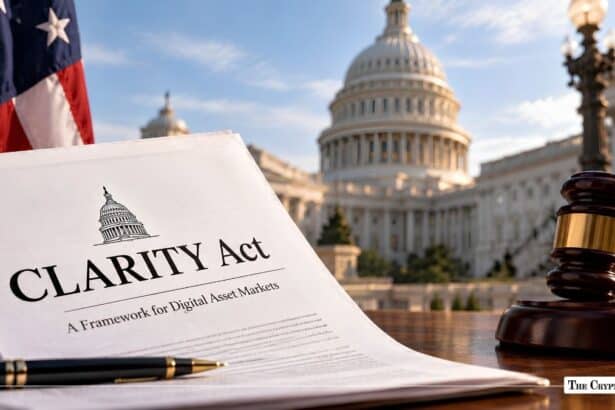
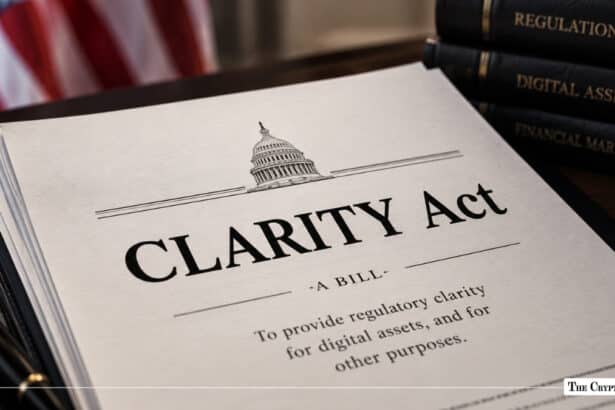
The roundtable comes as Congress continues to consider broader digital asset legislation, including proposals aimed at clarifying regulatory oversight and strengthening compliance requirements.
While lawmakers remain divided on several aspects of crypto regulation, the hearing underscored a growing view among some policymakers that digital assets are becoming part of larger discussions about economic security, financial inclusion, and the United States’ strategic position in an increasingly digital global economy.
Also Read: Congress Told U.S. Needs Rules as Tokenization Moves Overseas