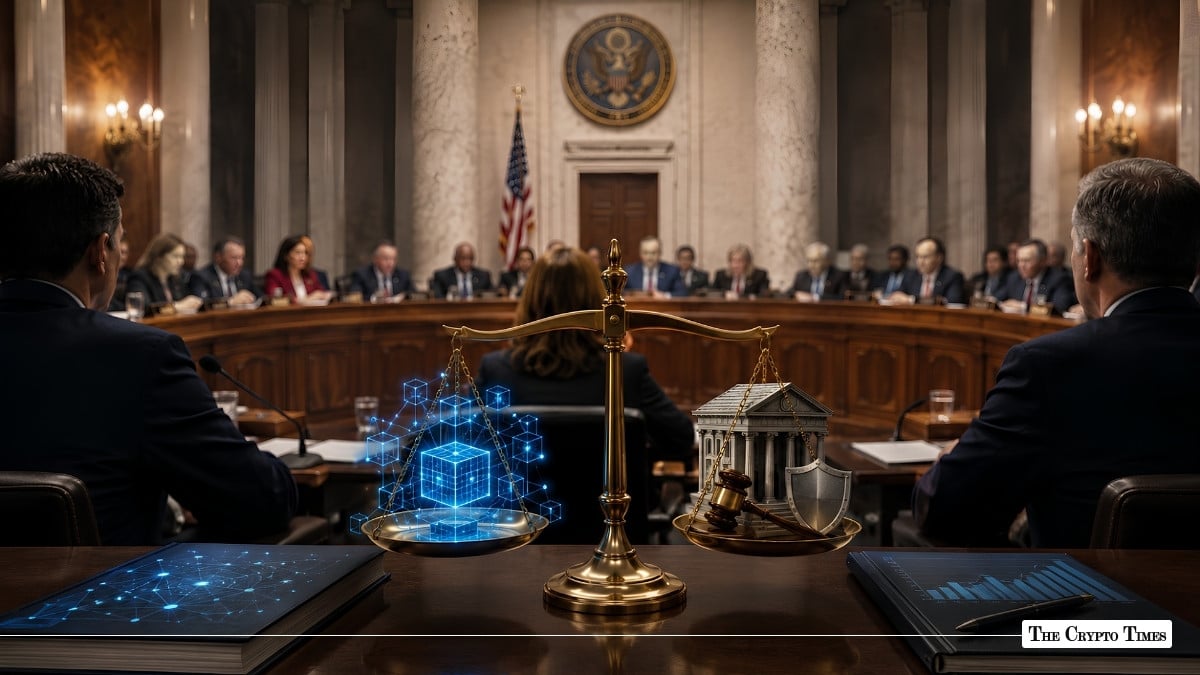
The United States needs a clear regulatory framework for tokenized securities or risk watching more activity move abroad, witnesses told lawmakers during a House hearing on the future of investing.
Speaking at the hearing, “From Wall Street to Main Street: The Future of How America Invests,” Thomas Quaadman, executive vice president of the U.S. Chamber Center for Capital Markets Competitiveness, said a growing share of tokenization involving U.S. securities is already taking place in Europe.
His comments came in response to questions from Rep. Bryan Steil, who asked how policymakers should balance the efficiency gains of tokenization with potential risks to financial markets.
U.S. risks falling behind in tokenized securities
Quaadman pointed to the role of SEC Commissioner Hester Peirce in advancing discussions around digital assets, but warned that regulatory clarity remains a pressing issue.
“A lot of activity in tokenization with U.S. securities is actually happening in Europe,” Quaadman said, arguing that U.S. regulators need a framework capable of addressing the growth of tokenized financial products.
Tokenization converts ownership rights in traditional assets such as stocks, bonds, and funds into blockchain-based tokens. Supporters argue it can reduce settlement times, lower operational costs, and improve market efficiency. However, regulatory uncertainty has left many firms testing products in jurisdictions that already have dedicated digital asset rules.
Settlement speed brings new questions
Steil highlighted one of tokenization’s most frequently cited benefits: near-instant settlement.
While acknowledging the efficiencies of moving toward T+0 settlement, Quaadman cautioned that policymakers must also consider unintended consequences. He said industry participants are evaluating how faster settlement cycles could affect existing market infrastructure and stressed the importance of avoiding disruptions to systems that currently support large-scale securities trading.
Quaadman added that tokenization raises broader questions, including the feasibility of extended trading hours and potential shifts in market operations.
Asset managers still assessing adoption timeline
Rep. Steil also asked industry witnesses when tokenization could become broadly adopted across financial markets. Jody Jonsson, vice chair of Capital Group and president of Capital Research and Management Company, said the firm is actively researching tokenization but believes adoption remains in its early stages.
According to Jonsson, widespread implementation would require coordination across the broader financial industry before the technology becomes practical at scale. When pressed on a timeline, she said adoption appears more a question of “when” rather than “if,” but declined to predict how quickly the transition could occur.
ETF growth offers lessons for future innovation
The hearing also touched on the rapid expansion of exchange-traded funds and how regulatory changes can accelerate innovation. Jonsson cited the SEC’s 2019 ETF rule, which enabled broader access to actively managed ETFs. She argued that the rule helped create a more level playing field between active and passive investment strategies, contributing to strong growth in the active ETF market.
According to Jonsson, the success of active ETFs demonstrates how regulatory adjustments can expand investor choice while maintaining market protections.
Tokenization debate gains momentum in Washington
The discussion reflects growing interest among policymakers as financial institutions increasingly explore blockchain-based infrastructure for traditional assets. While witnesses generally agreed that tokenization could improve efficiency and lower costs, lawmakers focused on how regulators should address operational, compliance, and market-structure challenges before adoption becomes widespread.
For now, industry participants continue to push for clearer rules, arguing that without them, tokenized securities activity may continue shifting to jurisdictions that have already established dedicated regulatory frameworks.
Also Read: Europe’s Wealth Advisers Are Flying Blind on Client Crypto: CoinShares