The European Union is preparing to implement one of the strictest anti-money laundering (AML) frameworks ever applied to the cryptocurrency industry, introducing major restrictions on privacy-focused digital assets and anonymous crypto services.
According to the official report, under the Regulation (EU) 2024/1624, the bloc’s new Anti-Money Laundering Regulation (AMLR), crypto-asset service providers operating within the EU will face significantly expanded compliance obligations when the framework takes full effect on July 10, 2027.
The regulation forms part of the EU’s broader effort to strengthen oversight of digital assets alongside the Markets in Crypto-Assets (MiCA) framework and the newly established Anti-Money Laundering Authority (AMLA).
Privacy coins face effective delisting
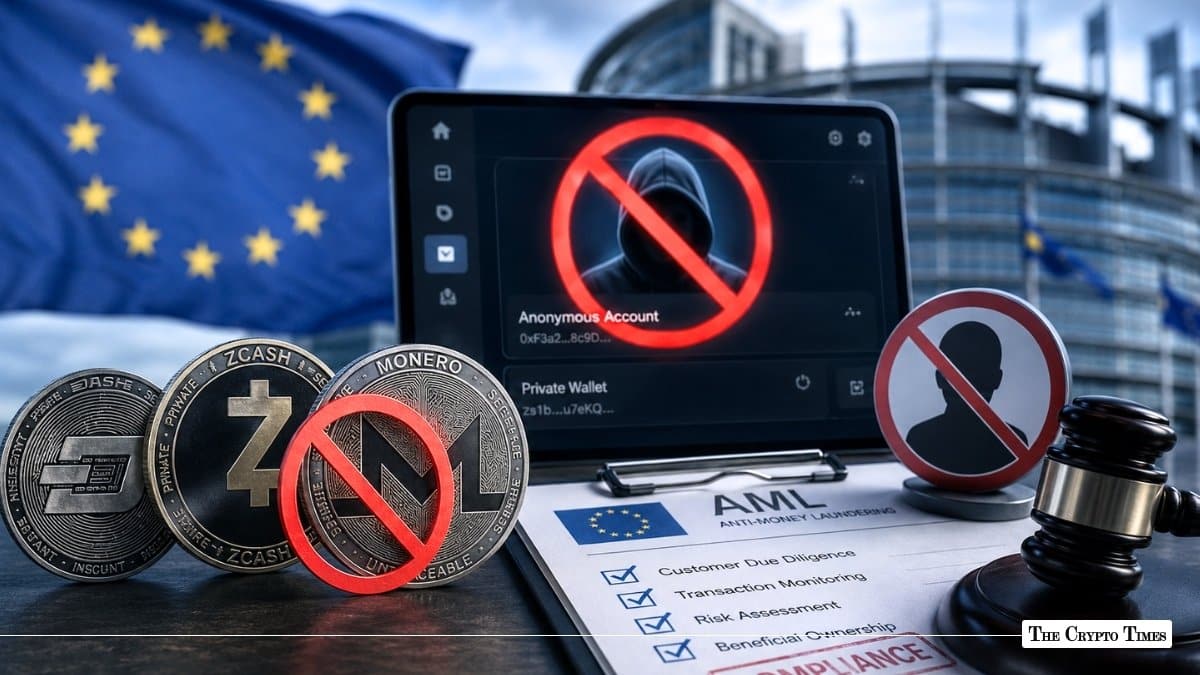
One of the most notable provisions targets privacy-focused cryptocurrencies. The regulation prohibits crypto-asset service providers from maintaining anonymous crypto accounts or offering services that enable transaction anonymization. It specifically restricts support for “anonymity-enhancing coins,” which are crypto assets designed to obscure transaction information either by default or through optional privacy features.
As a result, regulated exchanges, custodians, and other licensed crypto firms operating within the European Union will be unable to list, custody, or facilitate trading of privacy coins once the rules become fully applicable.
The regulation does not ban individuals from owning or using privacy coins privately. However, access to such assets through regulated crypto platforms will become significantly restricted.
Anonymous crypto accounts officially banned
Under Article 79 of the regulation, crypto firms will no longer be permitted to maintain anonymous crypto accounts or provide services that conceal customer identities.
The rule mirrors existing restrictions on anonymous bank accounts and anonymous financial products, extending similar standards to the digital asset sector.
European lawmakers argue that anonymous crypto products create significant challenges for law enforcement agencies attempting to trace illicit financial activity.
Stricter verification for crypto transfers
The regulation also introduces enhanced customer due diligence requirements for crypto transactions. Crypto-asset service providers will be required to conduct full customer verification procedures for occasional crypto transactions exceeding €10,000 (~$11,468).
Even for transfers below that threshold, providers may still need to perform identity checks, depending on the circumstances and the transaction’s risk profile.
The requirements are designed to align crypto transfers more closely with existing anti-money laundering standards applied across the traditional financial sector.
Self-hosted wallets regulated, but not banned
Despite concerns from parts of the crypto industry, the regulation stops short of banning self-custody. Direct peer-to-peer (P2P) transfers between private wallets remain outside the scope of the identity verification requirements because the regulation primarily targets regulated intermediaries rather than blockchain transactions themselves.
However, when transfers exceeding €10,000 involve a self-hosted wallet and a regulated crypto service provider, additional compliance obligations apply.
Crypto firms must assess money laundering risks associated with transactions involving self-hosted wallets and may be required to verify the identities of both senders and recipients, collect information about the source and destination of funds, and implement enhanced monitoring measures.
EU expands AML rules beyond crypto
The AML framework reaches far beyond the digital asset industry. Several sectors considered vulnerable to money laundering risks will now be subject to AML obligations, including professional football clubs and football agents, crowdfunding platforms, investment migration operators, luxury goods dealers, and precious metals and precious stone traders.
These businesses will be required to implement customer due diligence procedures, monitor transactions, and report suspicious activity to authorities.
Beneficial ownership transparency strengthened
The regulation also strengthens corporate transparency requirements across the European Union. Companies will be required to disclose their ultimate beneficial owners based on a 25% ownership threshold. For structures deemed higher risk, the threshold is reduced to 15%.
Trusts, foundations, and similar legal arrangements involved in business activities or real estate transactions within the EU must update beneficial ownership information within 28 days of any change.
The European Commission said these measures are intended to prevent criminals from hiding behind complex ownership structures when moving illicit funds.
Part of Europe’s broader crypto regulatory strategy
The AMLR complements existing European crypto legislation, including MiCA and the Transfer of Funds Regulation, creating a comprehensive regulatory framework for digital assets across the bloc.
European policymakers say the goal is not to prohibit cryptocurrency activity but to ensure that crypto markets operate under standards comparable to those applied to traditional financial institutions.
With restrictions on privacy coins, enhanced transaction monitoring, self-hosted wallet oversight, and expanded reporting requirements, the EU is continuing its push toward one of the world’s most comprehensive regulatory environments for digital assets.
This version reads much more like a major crypto news story and puts the privacy coin ban at the center, which is what will attract the most reader interest.
Also read: EU Eyes Country-Wide Crypto Bans Under New Russia Sanctions Package