In a dramatic turn that has sent shockwaves through the cryptocurrency community, Arichain—once touted as a promising Layer 1 blockchain project—has effectively collapsed. The project’s Ari Wallet app went offline in June 2026, following months of radio silence from the team.
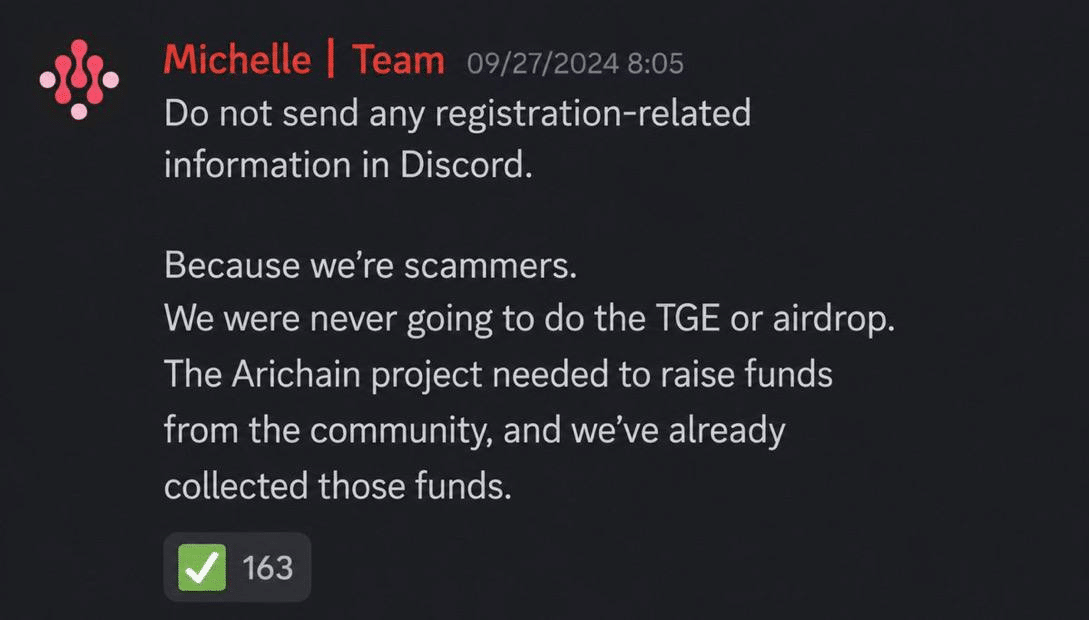
Adding insult to injury, an old Discord channel (now deleted) message from the team openly admitting to scamming users has resurfaced, going viral across social media platforms.
This incident underscores the vulnerabilities in the crypto space, where enthusiasm for potential rewards can blind participants to red flags, allowing those with illicit intentions to defraud thousands.
The Shocking “We Are Scammers” Admission
The controversy centers on a Discord post dated September 27, 2024, from an account identified as “Michelle | Team.” The message read, “Do not send any registration-related information in Discord. Because we’re scammers. We were never going to do the TGE or airdrop.”
The message further blatantly clarified, “the Arichain project needed to raise funds from the community, and we’ve already collected those funds.”
This blunt confession was reportedly removed quickly, and many users dismissed it as a hack, troll, or joke at the time. However, with the recent app shutdown and no further communication, the message now appears prophetic—or damning evidence of intent. Screenshots have flooded X, with users expressing disbelief at a team publicly admitting deception.
“Arichain spent months saying they were preparing for launch, then suddenly disappeared without any meaningful updates,” said user Wyne on X, “Over 2M users spent nearly 2 years farming Ari Wallet through quizzes, referrals, check-ins, and daily tasks.”
Rise of Arichain: Hype Meets Community Grinding
Arichain positioned itself as an innovative multi-VM Layer 1 blockchain, aiming to bridge various ecosystems with enhanced compatibility and user accessibility. The Ari Wallet app, launched around early 2025, served as the gateway. It featured email-based login to lower barriers for newcomers, daily check-ins, quizzes, referral programs, and point-farming tasks.
The project aggressively promoted an airdrop and Token Generation Event (TGE), initially teased for late 2025 and later pushed to Q1 2026. Marketing highlighted a massive community allocation—reportedly 77% of the 500 million ARI token supply—to reward loyal users. This narrative resonated widely. Reports indicate the project amassed over two million users at its peak, drawn by the promise of free tokens for simple activities.
Users dedicated countless hours to completing daily quizzes on crypto topics, referring friends to boost points, performing routine tasks like check-ins and engagement missions, and farming ARI points in anticipation of conversion to real tokens upon mainnet launch.
Many viewed it as low-effort passive income in a bull market. Influencers and community channels amplified the hype, with speculation about listing prices ranging from $0.15 to $0.25. For a time, Arichain felt like one of the more accessible airdrop plays, especially compared to more technical DeFi projects.
The Grinding Reality: Years of Effort for Nothing
For participants, the experience was one of prolonged anticipation mixed with growing frustration. The app remained active through 2025, with features like quizzes ending in September 2025 as the team hinted at “next phases.”
Users continued farming even after the 2024 Discord post, clinging to hope amid occasional vague updates about mainnet progress and multi-chain upgrades.
By early 2026, delays mounted. Promised Q1 listings never materialized. Community channels saw declining activity, and official X and Telegram accounts went quiet. Then, in June 2026, the Ari Wallet app stopped functioning entirely.
Discord access was reportedly restricted or closed, and no official statements addressed the shutdown. The combination of the resurfaced “scammers” message and total disappearance has left thousands feeling betrayed. Claims suggest the project raised funds through community engagement, data collection, or indirect means without delivering value. While no large-scale on-chain rug pull has been confirmed, the pattern fits classic exit scam tactics: build hype, harvest participation, then vanish.
Broader Implications: Crypto’s Vulnerability to Illicit Actors
The Arichain saga highlights a troubling aspect of cryptocurrency’s decentralized, permissionless nature. Without stringent regulation or verifiable team identities, projects can launch with little more than a whitepaper, slick marketing, and social media buzz.
Airdrop farming has become a cultural phenomenon, attracting millions seeking “free” gains. Yet this environment also attracts bad actors who exploit optimism and FOMO (fear of missing out). People with an illicit mindset find it relatively easy to defraud investors here.
Arichain is far from isolated. Similar stories have plagued projects promising airdrops or mainnets only to deliver silence or abrupt closures. This erodes trust in legitimate innovations and deters mainstream adoption. Regulators worldwide are scrutinizing such practices, but enforcement lags in the borderless crypto world.
Lessons Learned and the Road Ahead
As the crypto community processes Arichain’s collapse, discussions on X and forums emphasize resilience. Many users express disappointment but vow to continue engaging selectively, applying harder filters. “Never trust a project until they list,” has become a rallying cry.
This event may accelerate calls for better transparency tools, such as on-chain proof-of-reserves or decentralized identity verification for teams. Established exchanges and launchpads could impose stricter listing criteria to weed out high-risk ventures.
For now, Arichain serves as a cautionary tale. What began as an accessible entry to blockchain innovation ended in betrayal for hundreds of thousands who invested their time and trust. The “We Are Scammers” message, once perhaps overlooked, now stands as a bold—if cynical—epitaph for the project.
The broader crypto industry must confront these failures to mature. Innovation thrives on trust, and incidents like this chip away at it.
Also read: Bitbank Warns Users Against Polymarket, Threatens Account Suspensions