Key Highlights
- Over 270 former users are suing Tokenize Xchange founder Hong Qi Yu for S$60.5 million.
- The lawsuit alleges fraudulent asset misappropriation, with over S$266 million in user funds missing.
- The allegations include mixing up user funds and running a deceptive crypto order book.
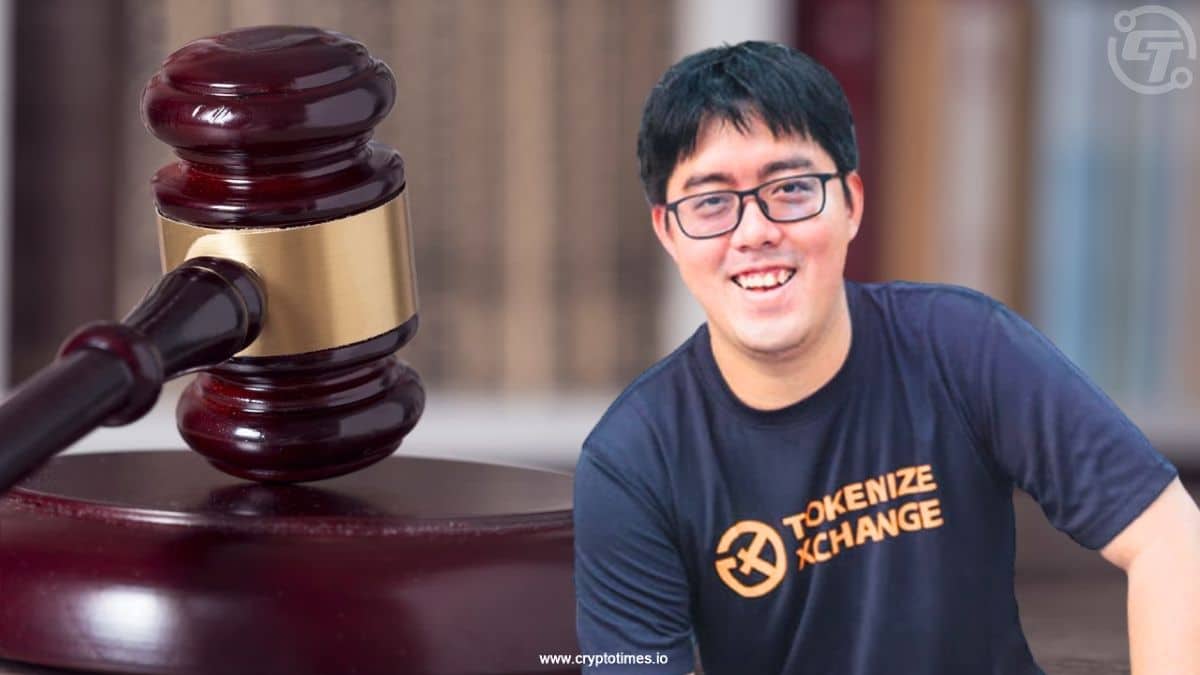
More than 270 former users of Tokenize Xchange have filed a S$60.5 million (US$46.65M) lawsuit against founder Hong Qi Yu and his wife, Erin Koo Kee Hoon, the exchange’s COO. The class-action filing accuses the pair of fraudulent asset misappropriation, claiming customer assets worth over S$266 million have disappeared.
The suit was filed shortly after revelations that Tokenize’s parent firm, AmazingTech, held only around S$2.6 million in assets, despite user balances indicating liabilities exceeding S$266 million.
Main allegations of the lawsuit
The suit alleges that Hong and Koo improperly transferred customer funds that should have been kept in segregated accounts. A report in September by court-appointed interim judicial managers showed AmazingTech owed its users about S$266 million but had only a portion of that in realizable assets.
The respective damages of the claimants stand at S$60.5 million, calculated per the balance each held on the exchange before trying to withdraw or as of July 31, 2025.
Additional allegations state that Tokenize Xchange operated under inadequate standards and lacked transparency. As per the lawsuit, the site did not provide trading via a regular central limit order book but instead allegedly carried out the transactions directly between itself and its users.
The order book shown to the customers was reportedly from the Binance crypto exchange and included an undisclosed mark-up on the spread, giving the appearance of high trading volume.
The class-action lawsuit also alleges a breach of contractual representations, including that the firm commingled company funds with user funds instead of holding them in a trust.
Lead lawyer Suresh Divyanathan, managing director of Dauntless Law Chambers, said his clients were devastated by the discovery. “The interim judicial managers’ report that AmazingTech appears to be holding less than 1 per cent of customers’ total assets came as a deep shock to my clients,” he said. “They are incensed that practically all their assets on Tokenize Xchange have disappeared. Some of them have lost their entire life savings.”
Regulatory timeline and criminal charges
AmazingTech, which operates Tokenize Xchange, was set up in Singapore in 2016. The exchange had earlier operated under an exemption from the Payment Services Act 2019 while its application for a Major Payment Institution license was being processed by the Monetary Authority of Singapore.
This period of regulatory uncertainty concluded in July 2025, when the Monetary Authority of Singapore (MAS) rejected AmazingTech’s license application. The company was mandated to stop offering payment services and reimburse all clients’ money and cryptocurrency.
In August 2025, the Commercial Affairs Department (CAD) started an investigation into AmazingTech and entities associated with the firm. Authorities reported that there were problems with not having enough money to pay user claims and potential issues with customer money separation.
Due to Hong’s separate charges for fraudulent trading under the Insolvency, Restructuring and Dissolution Act in July 2025, the regulatory collapse was accompanied by criminal charges. The High Court ultimately wound up the business in September 2025.
The lawsuit also mentioned the company’s past claims of obtaining a license in Labuan and being at the “final phase” of securing a license in the Abu Dhabi global market. The judicial manager’s report stated that neither license was passed due to the fraud allegations against Hong.
Legal proceedings
The trial is expected to be lengthy. Hong Qi Yu is represented by lawyers Nichol Yeo and Clement Julien Tan of Nine Yards Chambers, while Erin Koo Kee Hoon has her own set of lawyers.
The result of this lawsuit will define the degree to which founding executives will be held personally liable for financial losses that users suffer from alleged mismanagement and fraud. For the wider crypto industry, the case underlines the requirement for regulatory oversight and the strict segregation of customer and company funds if retail investor confidence is to be rebuilt after a spate of high-profile exchange collapses.
Also Read: Binance Faces Anti-Terror Lawsuit From Hamas Victims