Key Highlights
- The New Oligopoly: Governments and corporations now control approximately 15% of the total Bitcoin supply, replacing early retail adopters as the market’s dominant force.
- Three Paths to Wealth: These fortunes were built via three distinct strategies: Seize (criminal forfeiture by the US/China), Mine (Bhutan/Russia), and Buy (El Salvador/MicroStrategy).
- The Supply Shock: Unlike retail traders who sell volatility, these “Super Holders” are now creating a liquidity crisis by locking away billions in Bitcoin for the long term, fundamentally altering the asset’s scarcity mechanics.
In the early days of cryptocurrency, the “whales” were easy to identify. They were the idealists, the cypherpunks, and mostly the black market operators. They were part of an era that was defined by individual accumulation.
Back then, if you had 10,000 Bitcoin (BTC), it was likely because you mined it on a laptop in 2010 or bought a pizza with it!
Now, fast forward to 2026. The board has been flipped. The whales are no longer just early adopters hiding behind pseudonyms. They are G7 governments, publicly traded software companies, and a sovereign nation in the Himalayas using hydroelectric dams to print digital money.
Today, a staggering amount of the global Bitcoin supply has migrated into the hands of a few massive entities. But unlike gold, which is almost exclusively acquired through mining or purchase, these digital fortunes have been built through three distinct, often conflicting, methods.
Some paid for it, some worked for it, and some simply took it.
Elaborating this bewildering line, let’s delve into the three great paths to Bitcoin holdings dominance: The Seizure, The Mine, and The Buy.
The Seizers (The Accidental Billionaires)
For the last decade, the most successful Bitcoin accumulation strategy for governments wasn’t “buy low, sell high.” It was “carry a badge and a warrant.”
Governments around the world stumbled backwards into becoming crypto-whales. They didn’t acquire these assets because they believed in the technology. Instead, they acquired them because they were dismantling the criminal empires that did.
The United States: The Two-Face of the Treasury
The United States government is the ultimate example of the “Seizer.”
For years, Uncle Sam was a seller. The US Marshals Service (USMS) famously auctioned off 50,000 Bitcoin seized from the Silk Road in 2014 and 2015. In what has been cited as one of the worst financial trades ever, they sold them for pennies on the dollar compared to today’s value.
But this didn’t deter the government from seizing more digital assets. Rather, the seizures accelerated.
As of January 2026, the US government effectively controls a hoard of 328.37K BTC, at a market price of roughly $93,000. To put it in perspective, that is a massive holding of $30.54 billion sitting on the public balance sheet.
But this is the point where the story starts to get murky—and fascinating for anyone watching the blockchain.
In 2025, a massive discrepancy emerged. On-chain analytics firms like Arkham Intelligence tracked over 328k coins sitting in government-controlled addresses. However, a Freedom of Information Act (FOIA) request revealed that the US Marshals Service officially held only 28,988 BTC in their “forfeited” inventory.
Where are the missing 170,000 coins?
They aren’t lost. They are trapped in legal purgatory. These coins, mostly originating from the massive Bitfinex hack seizure (recovered from Ilya Lichtenstein and Heather Morgan) and the James Zhong Silk Road seizure, are technically “evidence”.
Until a judge signs the final forfeiture order, the Department of Justice is merely the custodian, not the owner. The US government is like a repo man driving a Ferrari he isn’t allowed to sell yet.
However, the strategic wind has changed. With the introduction of the BITCOIN Act of 2025 and the executive order establishing a Strategic Bitcoin Reserve, the US is pivoting its strategy. The days of “seize and dump” have ended. The narrative has now shifted toward “seize and save,” turning criminal contraband into a national nest egg.
Read: The Raid of the Century? Trump, Maduro, And The Rumored $60B BTC
China: The Silent Giant
If the US is the loud, conflicted holder, then China is the silent whale.
First China banned Bitcoin trading, then they banned Bitcoin mining, and then also made it clear that private crypto ownership was persona non grata.
Yet, ironically, the People’s Republic of China sits on one of the largest Bitcoin stacks in existence—approximately 194,000 BTC. At current prices, it is worth about $17.68 billion. The nation acquired the entirety of this fortune from the 2019 crackdown on the PlusToken Ponzi scheme. This massive crypto scheme, with investors mainly from China and South Korea, defrauded over 2 million investors of billions of dollars between 2018 and 2019. When authorities arrested the ringleaders, they seized billions in crypto assets.
Unlike the US, which releases transparency reports and holds auctions, China’s wallet management is opaque. These coins have largely remained dormant but some findings have suggested that this whole stake may have been sold without any public announcement. However, the vast majority of analysts believe that the Chinese government has not sold any coins and they are hiding it all across multiple wallets.
Therefore, this creates a strange geopolitical paradox. On one hand, China aggressively promotes its digital yuan (e-CNY), a centralized tool for monetary control. Yet, by holding nearly 1% of the total Bitcoin supply, they have potentially hedged their bets. If the USD falters and Bitcoin succeeds, China wins. If their own ban succeeds and Bitcoin fails, they lose nothing but seized contraband.
It is the ultimate “free roll.”
The United Kingdom and the Hospitality Worker
The “Seize” model isn’t unique to superpowers. The United Kingdom holds roughly 61,000 BTC, a fortune worth nearly $5.7 billion. And the origin story of this fortune is straight out of a movie.
Last year, a hospitality worker in London, living a seemingly modest life, was found attempting to buy multi-million dollar mansions. The ensuing investigation unraveled a massive investment fraud originating in China. The investigation on the matter led the UK police seizing multiple devices and suddenly, His Majesty’s Treasury became a crypto whale.
Read: UK Court Convicts Chinese Woman in Largest Crypto Raid
Just like the US, the UK is also facing the “liquidate or hold” dilemma. Selling 61,000 coins would impact the market and anger voters who hold crypto. Alternatively, holding them requires a level of visionary policy that most bureaucracies lack.
Ukraine: The Hybrid Player
Notably, the story of Ukraine’s Bitcoin stash is fundamentally different from all the nations on this list. While nations like the US and China built their reserves through law enforcement, Ukraine built it through survival instinct.
Ukraine represents a unique “hybrid” model in the global reserve landscape. In early 2022, as the country faced an unprecedented crisis, the traditional banking system felt too slow for the speed of modern conflict. To combat this, the Ministry of Digital Transformation did something unheard of: they tweeted.
By posting their crypto wallet addresses, they bypassed the red tape of international finance. It became the world’s first Donation State and resultingly, the “Aid For Ukraine” initiative was born.
The global response was instant. Millions of dollars in Bitcoin, Ethereum (ETH), and stablecoins poured in from donors ranging from anonymous individuals to industry titans. Unlike other nations that hold Bitcoin as a passive asset, Ukraine utilized high-velocity crypto to fund immediate defense needs.
However, they didn’t spend it all. Through a mix of ongoing donations and seizures of illicit Russian-linked illicit assets, Ukraine emerged in 2026 with a formidable reserve of 46,000 BTC, a valuation of over $4.6 billion.
The Miners (The Industrialists)
While some were seizing coins from evidence lockers, a different group was building infrastructure to pull them out of thin air.
This is the “Mining” strategy. It is capital intensive, energy-heavy, and geographically ruthless. In 2026, the map of mining is no longer just about private companies, it is that of Sovereign Miners.
Bhutan: The Kingdom of Hydro
Perhaps the most remarkable “Bitcoin player” of the 2025 cycle was Bhutan.
This small Himalayan kingdom, famous for measuring “Gross National Happiness,” realized that its rushing mountain rivers could do more than just export electricity. They could export value!
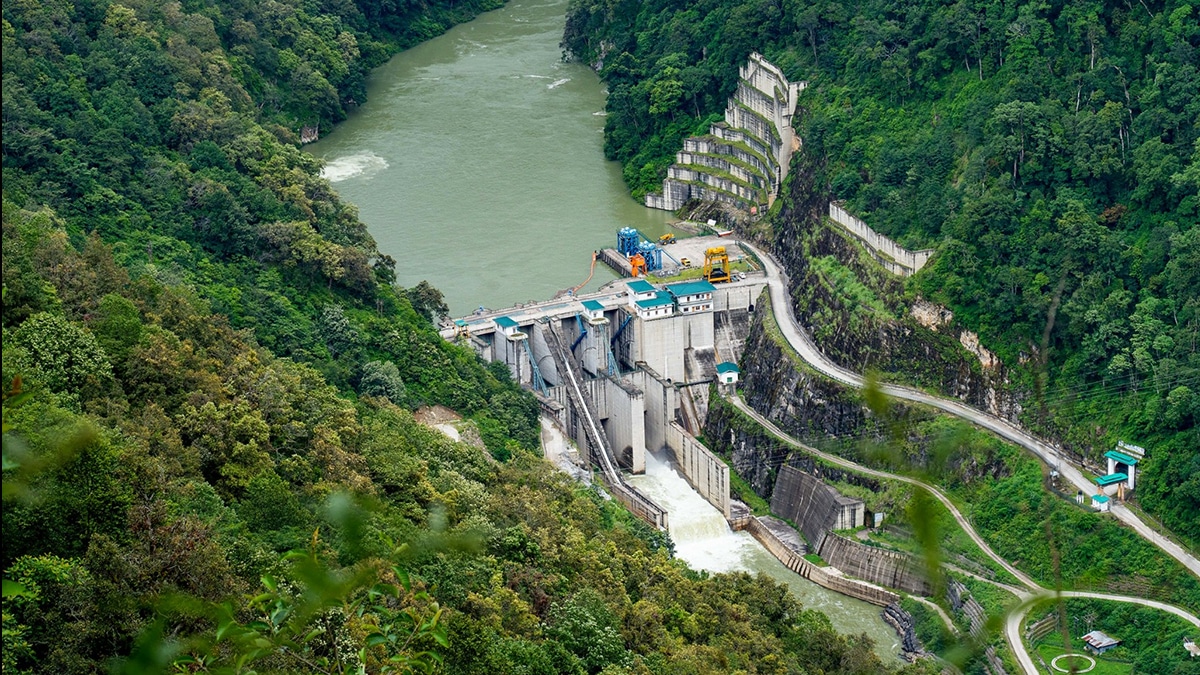
Bhutan has massive hydroelectric potential. For decades, they sold excess electricity to India. But in recent years, they realized that electricity is difficult to transport over long distances. It loses voltage, and requires expensive transmission lines. Hence, they decided to convert that electricity into something weightless and frictionless: Bitcoin. Through its sovereign investment arm, Druk Holding & Investments, Bhutan built massive data centers in the mountains.
As a result, Bhutan now holds approximately 6,000 BTC, worth approximately $557 million. This number might sound small compared to the US or China, but relative to their economy, it is colossal, as these holdings represent roughly 25% of Bhutan’s GDP.
Imagine if the US government held an asset worth 25% of its GDP—that would be trillions of dollars. Bhutan has leveraged the bitcoin mining strategy to leapfrog traditional economic development models. They aren’t waiting for foreign aid; they are hashing their way to economic independence.
Read Also: Exclusive: How India can use its rivers to mine Bitcoin like Bhutan
The Corporate Miners: HODL as a Business
In the private sector, the “Mine” strategy has evolved into a treasury strategy.
Companies like Marathon Digital (MARA) and Riot Platforms are ostensibly mining companies. But in reality, they are holding companies. Marathon, the largest of the bunch, holds over 53,200 BTC while Riot has nearly 18,000 BTC in its holdings.
In the past, miners would sell the coins they mined immediately to pay for electricity and hardware. Now, they raise capital by selling stock or debt to pay their bills, and they hoard the Bitcoin.
Why? Because these players now believe the asset appreciation will outpace their cost of capital. They are betting that the Bitcoin on their balance sheet is worth more than the dollars in their bank account. They are not just transaction processors anymore; they are liquidity sponges.
Russia: The Sanctions Evasion Engine
Russia represents the darker side of the “Mining” strategy. Cut off from much of the global banking system (SWIFT) due to sanctions, Russia turned to its natural resources.
The freezing stretches of Siberia are ideal for cooling servers along with its energy-rich resources, i.e. cheap gas and hydro. This has eventually led Russia to be positioned second biggest Bitcoin mining country by hashrate, after the U.S.
As of 2026, Russia controls roughly 15% of the global Bitcoin mining hashrate. This isn’t just a business venture; it’s a geopolitical survival tactic. Mined Bitcoin is fresh, it has no transaction history, and can be used for international settlement outside the watchful eye of the U.S. Treasury.
While the official amount of Bitcoin held by Russian entities is not publicly known, its significant share in global hashrate suggests miners within the country have notable holdings.
The Buyers (The Believers)
Finally, we have the actual “Buy” strategy. This is the most honest, yet the most risky path. It requires putting real skin in the game and convincing taxpayers or shareholders to trade fiat currency for digital scarcity.
MicroStrategy: The Company That Ate the World
No discussion of buying Bitcoin is complete without the mention of Michael Saylor and Strategy (formerly MicroStrategy).
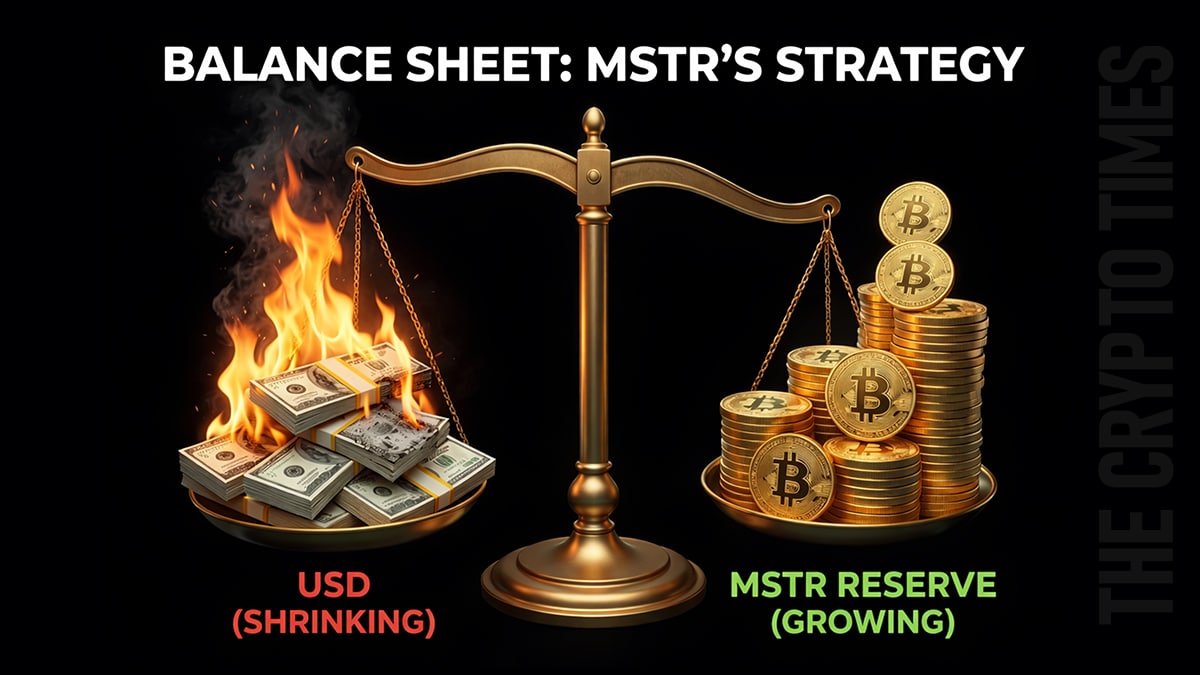
What started in 2020 as a way to protect a software company’s cash reserve from inflation has morphed into the most aggressive financial engineering experiment of the 21st century.
As of latest market data by January 2026, MicroStrategy holds 709,715 BTC.
To understand the weight of that number, consider this:
- That is more than 3% of all Bitcoin that will ever exist.
- That is three times more than what the US Government has in its vaults.
- That is 10 times more than the United Kingdom’s stash.
How did a mid-sized software company end up as a company that holds more Bitcoin than most world powers? They didn’t just use their profits; they bet the house. Saylor pioneered a “flywheel” effect: MicroStrategy issued convertible notes—essentially sophisticated IOUs—to institutional investors.
They took that cash and bought Bitcoin. As Bitcoin’s price rose, their stock price rose. This higher stock price allows them to borrow more cash to buy more Bitcoin.
MicroStrategy has effectively become a “Corporate Central Bank.” They are issuing their own equity to absorb the world’s premier pristine collateral. In doing so, they have outperformed the S&P 500, gold, and almost every other asset class on earth.
El Salvador: The DCA-king Nation
While MicroStrategy bought with leverage, El Salvador bought with ideology.
In 2021, under President Nayib Bukele, this small Central American nation did the unthinkable. It became the first country ever to make Bitcoin legal tender. But they didn’t stop there. They launched a Dollar Cost Averaging (DCA) program, committed to buying exactly 1 BTC every single day. Today, that persistence has built a treasury that holds above 7,500 BTC.
Although, unlike the “Seizers” (who got it for free) or the “Miners” (who got it for cost of production), El Salvador paid market price for each Bitcoin. They endured the brutal bear market of 2022, where their portfolio was deeply in the red and global media mocked the experiment. Their portfolio was underwater, and international leaders warned of financial ruin.
But El Salvador didn’t flinch.
Today, with Bitcoin prices stabilizing well above previous highs, the gamble appears to have paid off. The country has used the profits to fund veterinary hospitals and schools.
But for El Salvador, the “Buy” strategy was never just about profit. It was about independence. By holding a reserve asset that no other country can debase, the nation bought an insurance policy against their own dollarized economy.
The ETF Giants: The Custodians of the Crowd
The ETF giants represent something much more personal. They are the “Proxy Buyers.”
As of January 2026, ETFs issuers in the U.S. combined hold over 1.315 million BTC in their vaults. But all the funds in the BlackRock ETF (IBIT) and Grayscale ETF (GBTC) technically don’t “own” the institutions—their customers do.
These entities represent the “Buy” strategy of the common man. They are the aggregation of millions of retail investors and pension funds allocating 1% or 2% of their portfolio to crypto.
While they don’t control the coins in the same way MicroStrategy or the US Government does, they have created a “black hole” for supply. Every time a boomer buys IBIT in their 401k, a coin is taken off the market and locked in a digital vault. They have turned Bitcoin into a necessary portfolio allocation, moving it from the fringes of the internet to the center of the global financial system.
More Read





The Great Convergence
As we look at the landscape in 2026, we are witnessing a convergence. The lines between the three strategies of Seize, Mine, and Buy are starting to blur into a single, common mission: Hold.
The United States is moving from “Seize” to “Buy.” The Strategic Bitcoin Reserve legislation proposes acquiring up to 1 million coins, mirroring the MicroStrategy playbook but on a sovereign scale.
Meanwhile, Bhutan is moving from “Mine” to “Hold,” refusing to sell their production even as prices reach all-time highs, and instead using their coins as infrastructure rather than paying for infra with them. Corporations are also moving from “Business” to “Banking,” using their Bitcoin reserves to secure loans and finance expansion.
The Scarcity Squeeze
The most important takeaway for anyone reading this from the sidelines in 2026 is simple: The supply shock is real.
In 2015, if you wanted Bitcoin, you could buy it from a panicked seller on an exchange.
In 2020, you could buy Bitcoin from a miner who needed to pay bills.
But in 2026? You are trying to buy Bitcoin from governments that view it as a national security asset and corporations that view it as a hundred-year treasury reserve.
The “Seizers” are legally gridlocked or strategically hoarding. The “Miners” are leveraging their stacks. And the “Buyers” are doubling down.
So when you add up the holdings of the entities we’ve discussed, nearly 15% of the total supply is locked in the hands of “Super Holders” who have no intention of selling.
The game has clearly changed. The era of “magic internet money” is over. The era of “strategic national reserves” has begun. And whether they seized it, mined it, or bought it, the entities on this list all agree on one thing: They aren’t letting go.
Data Appendix: Global Bitcoin Reserves 2026
The following table summarizes the primary acquisition methods and estimated holdings of the world’s largest Bitcoin holders as of January 2026. This data highlights the massive concentration of wealth among sovereigns and corporations.
| Entity | Type | Acquisition Method | Estimated Holdings (BTC) | Value (USD Billions @ $100k) |
|---|---|---|---|---|
| MicroStrategy | Corporation | Buy (Leveraged) | ~709,715 | $63.93 |
| BlackRock (IBIT) | ETF (Custodial) | Buy (Client Flow) | ~748,423+ | $69.60+ |
| United States | Government | Seize (Criminal) | ~328,372 | $30.53 |
| China | Government | Seize (PlusToken) | ~190,000 | $17.67 |
| Grayscale (GBTC) | ETF (Custodial) | Buy (Client Flow) | ~167,683 | $15.58 |
| United Kingdom | Government | Seize (Fraud) | ~61,245 | $5.7 |
| Marathon Digital | Corporation | Mine (Industrial) | ~53,250 | $4.95 |
| Ukraine | Government | Seize/Donate | ~46,351 | $4.31 | El Salvador | Sovereign | Buy (Treasury) | ~7,536 | $0.70 |
| Bhutan | Sovereign | Mine (Hydro) | ~5,958 | $0.557 |
Disclaimer:
Some elements of this content may have been enhanced with the help of our artificial intelligence (AI) assistants for purposes such as basic refinement, review, image generation, and translation to deliver high-quality news in a shorter time frame. However, all AI-assisted content is reviewed and approved by our team to ensure accuracy, fairness, and editorial integrity.