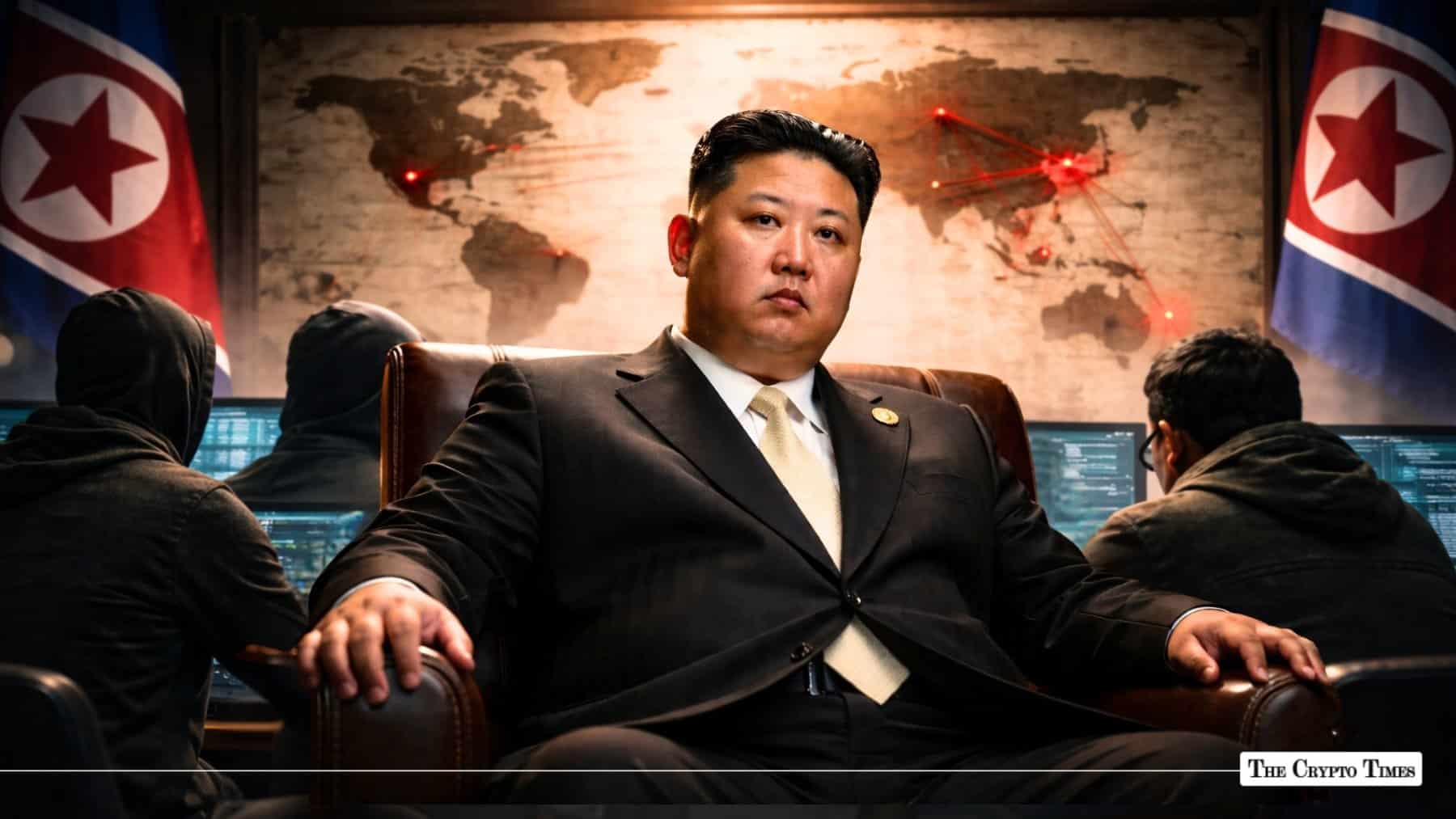
On April 1, 2026, between 16:06:09 UTC and 16:06:19 UTC, attackers drained the major vaults of Drift Protocol, the largest decentralized perpetual futures exchange on Solana, of approximately $285 million in user assets. The first withdrawal moved 41.72 million JLP tokens. The last primary withdrawal moved 2,200 wETH. The entire treasury was emptied in roughly the time it takes to send a text message.
In the days that followed, Drift’s team described the operation as “highly sophisticated,” involving “multi-week preparation and staged execution.” The protocol’s post-mortem later revealed that the attackers had spent six months posing as a quantitative trading firm, onboarding an Ecosystem Vault, depositing over $1 million of their own capital, and meeting Drift contributors face-to-face at multiple industry conferences.
By the time the exploit was triggered, the attackers were not strangers — they were established working partners with a six-month relationship.
Blockchain forensics firms TRM Labs and Elliptic rapidly attributed the attack to North Korean state-sponsored actors. The attribution surprised no one. What it did do, however, was reignite a conversation the cryptocurrency industry has been avoiding for years: when companies say they were taken down by an unstoppable, hyper-advanced nation-state, are they describing what actually happened or are they describing what is most convenient to say?
Because the mechanical reality of the Drift exploit tells a very different story. The attackers did not break Solana’s consensus mechanism. They did not discover a zero-day in a smart contract. They did not crack any cryptography. What they did was trick two human beings into cryptographically signing a malicious payload; and the protocol’s governance structure was so brittle that the signatures were enough.
That is the central tension of the modern DPRK threat discourse, and it is the reason the Drift incident has triggered a recalibration that earlier, larger incidents somehow failed to trigger. The dollar figure is not unprecedented — the $1.5 billion Bybit hack in February 2025 dwarfed Drift by a factor of five. What is unprecedented is the clarity of the post-mortem.
For the first time, a major DeFi protocol has publicly admitted that the attackers were welcomed in through the front door, offered coffee at industry conferences, and handed administrative access by a multisig that had been deliberately stripped of its safeguards five hours before the drain began.
There is no smart contract bug to blame. There is no oracle manipulation to patch. There is only the uncomfortable conclusion that the security model failed at the human layer, and that the human layer is exactly where the DPRK has been winning for years.
The $285 million Drift Protocol exploit has actively reignited the global discourse around DPRK cyber operations. But the real story isn’t a faceless army of digital super-soldiers wielding zero-days. It’s an industrialized, two-tier apparatus that pairs elite malware engineers with an infinite-patience workforce of social engineers and the gap between how hacked companies describe these attacks and how they actually happen has never been wider.
Anatomy of a 12-Minute Heist
To understand why the Drift incident catalysed an industry-wide reckoning, the anatomy of the attack matters.
The vector was a Solana developer feature called “durable nonces.” In normal Solana operations, transactions require a recent blockhash to be processed, which natively prevents replay attacks but limits how long a transaction can sit unsigned. Durable nonces bypass this restriction by using a dedicated on-chain account, allowing a transaction to be signed at one point in time and executed indefinitely later.
Between March 23 and March 30, the attackers used social engineering and deliberate transaction misrepresentation to deceive members of the Drift Security Council into pre-signing nonce-bound transactions. To the human signers reviewing the requests, the payloads looked entirely benign. In reality, they encoded a malicious administrative transfer that would hand the attackers total control of the protocol.
The fatal blow was delivered by a governance oversight. Five hours before the final execution, Drift underwent a scheduled Security Council migration to a new multisig configuration. The new structure required only two of five keyholders to authorize critical changes — and crucially, it implemented a zero-timelock mechanism. Without a timelock to delay administrative changes and allow for human intervention, the protocol’s final line of defence was eliminated.
With administrative control secured, the attackers moved to phase two. They deployed a fictitious digital asset called the CarbonVote Token (CVT), minted weeks earlier. By seeding it with minimal liquidity and conducting extensive wash trading on Raydium, they artificially inflated its perceived value until Drift’s pricing oracles treated it as legitimate collateral worth hundreds of millions. Using this manufactured collateral and their hijacked admin privileges, the attackers removed all withdrawal limits across the protocol’s vaults.
Then they pulled the trigger.
According to forensic analysis from PIF Research Labs, the major vaults were emptied in roughly 10 seconds. Stolen USDC was rapidly bridged from Solana to Ethereum via Circle’s Cross-Chain Transfer Protocol across more than 100 transactions over the next six hours — a window during which Circle did nothing to intervene, drawing sharp criticism from on-chain investigator ZachXBT. Network-level indicators, including the deployment of CarbonVote at exactly 09:30 Pyongyang time, corroborated the attribution to the DPRK.
A Pattern, Not an Anomaly
The temptation, in the days after a major heist, is to treat each incident as a one-off catastrophe. Drift’s post-mortem invites that framing by emphasising the bespoke, six-month duration of the social engineering operation. But step back and look at the previous three years of major DeFi exploits attributed to DPRK actors, and the same architectural fingerprints appear over and over: a compromised human signer, a weakened multisig configuration, a delayed or nonexistent timelock, and a malicious payload disguised as a routine operation.
The $1.5 billion Bybit hack in February 2025 remains the largest crypto theft in history, and the FBI publicly attributed it to TraderTraitor, an RGB sub-cluster of the broader Lazarus apparatus. The attack vector was identical in spirit to Drift’s. Bybit’s signers believed they were approving routine cold wallet operations using Safe’s multisig infrastructure. In reality, they were signing transactions that drained roughly $1.4 billion in Ethereum to attacker-controlled wallets. There was no smart contract bug. The Safe contracts performed exactly as designed. The compromise occurred at the developer machine layer, where a compromised Safe contributor pushed malicious frontend code that misrepresented the transaction details to the human reviewers. The signers saw a benign payload on screen and authorised something else entirely.
The $235 million WazirX hack in July 2024 followed the same playbook with grim precision. ZachXBT publicly attributed the breach to Lazarus within hours of the incident, tracing test transactions that began on July 10, 2024, i.e. eight days before the actual drain, and noting the use of Tornado Cash to fund the attacker addresses. The hackers gained access to the multisig cold wallet operated through custody partner Liminal and emptied it within minutes, dumping UNI, LINK, and SAND tokens onto the open market. WazirX has been suspended ever since, holding roughly ₹2,500 crore of Indian user funds in legal limbo for nearly nine months while restructuring proceedings drag through the Singapore High Court.
The Radiant Capital exploit in October 2024, in which $51.5 million was drained from user accounts on Arbitrum and BNB Chain, was eventually attributed by Mandiant to UNC4736, the same DPRK cluster later linked to Drift. The vector, again, was a compromised developer environment. Three trusted Radiant developers had malware silently installed on their machines through a Telegram message impersonating a former contractor that delivered a malicious ZIP file. The malware manipulated transaction data displayed in the Gnosis Safe wallet interface so that when the developers approved what they believed were routine administrative changes, they were actually authorizing the deployment of a backdoor contract. The attackers then used the TransferFrom function to drain user accounts that had granted token allowances to Radiant’s lending markets.
And then there is DMM Bitcoin, the Tokyo-based exchange that lost $305 million in May 2024 in what was at the time the largest Japanese crypto heist on record. After a seven-month investigation, Japanese authorities and the FBI concluded that Lazarus had targeted an executive at Ginco, DMM’s custody partner, stolen the executive’s wallet management credentials, and moved the funds out within hours. DMM ultimately shut down operations in December 2024. An entire mid-size exchange was destroyed because one executive had their machine compromised.
Bybit. WazirX. Radiant. DMM. Drift. Five major incidents, five different protocols, five different jurisdictions, and one identical attack architecture. The dollar figures and post-mortem language vary, but the underlying mechanism does not. In every case, the breach occurred not in the code but in the chair in front of the screen.
The ZachXBT Paradigm: Deconstructing the Sophistication Myth
The aftermath of the Drift exploit followed a familiar script. The victimized entity issued statements emphasising the “novel” and “highly sophisticated” nature of the attack, deliberately invoking the spectre of an unstoppable state-sponsored Advanced Persistent Threat to explain the catastrophic loss of user funds. This corporate framing has become standard practice in the aftermath of major breaches. Attributing a devastating exploit to a monolithic, hyper-advanced nation-state serves a dual purpose: it mitigates reputational damage and subtly deflects accountability away from internal security failures, inadequate governance, or simple human error.
On-chain investigator ZachXBT has been publicly challenging this narrative. His core argument, echoed by numerous security professionals tracking DPRK activity, is that the Lazarus Group is not a unified phalanx of digital super-soldiers. The organization is profoundly segmented and operates on a distinct two-tier threat model.
And the actual point of compromise in these billion-dollar heists, ZachXBT contends, is almost invariably a strikingly simple low-tech attack vector — rarely anything as extreme or technically insurmountable as the breached companies publicly claim.
This is not a semantic distinction. It has direct consequences for how the industry defends itself, how regulators allocate enforcement resources, and how protocols structure their governance.
If the prevailing belief is that DPRK exploits are unblockable acts of cryptographic genius, then security spending flows toward more audits, more formal verification, and more zero-day bounties. If the prevailing belief is that DPRK exploits are patient social engineering operations targeting human signers, then the spending should flow toward operational security, hardware-backed key management, mandatory timelocks, and identity verification.
Ledger CTO Charles Guillemet drew the parallel explicitly after the Drift incident, comparing the attack pattern directly to the Bybit hack. “The signers may have believed they were signing a legitimate operation while unknowingly authorizing the drain,” he said. “Patient, sophisticated supply-chain-level compromise.” That is the DPRK playbook in one sentence.
The Two-Tier Threat Model
Tier-1 constitutes the technical elite. These are state-trained malware engineers, cryptologists, and operational commanders primarily housed within the Reconnaissance General Bureau (RGB) and its specialised sub-units like Lab 110. They run what security researchers describe as a perpetual “factory of malware,” continuously compiling custom, heavily obfuscated payloads designed to evade commercial endpoint detection. Their internal motto, according to multiple researchers, is “Keep morphing.” They develop platform-specific malware families like RustBucket, KANDYKORN, NimDoor, and the AppleJeus suite. They orchestrate sophisticated supply chain attacks like the 3CXDesktopApp tampering and the compromise of widely used npm packages such as axios. They design the automated, high-speed laundering pipelines that move billions across decentralized mixers and cross-chain bridges before investigators can react.
Tier-2 is the frontline infantry. This is where the vast majority of victims actually encounter the DPRK apparatus, and it relies on hustle, sheer volume, and psychological manipulation rather than deep technical exploitation. Tier-2 is heavily populated by social engineers, fake recruiters, and the DPRK’s hidden IT workforce. They scour LinkedIn, Braintrust, and Telegram, posing as venture capitalists, technical recruiters, or fellow founders. They craft personas with names like “Lucas Sousa Santos,” “Maria Mercedes Gonzalez,” and “Trevor Greer,” the latter of which was tied directly to infrastructure registered just hours before the $1.5 billion Bybit heist. They target developers with fake job interviews, malicious coding assessments, and PDFs disguised as risk reports.
The success of the model lies in its operational synergy. Tier-2 actors perform the grueling, low-tech, high-rejection work of mapping human networks, building artificial rapport, and ultimately tricking a target into performing a fatal action — downloading a backdoored video conferencing app, executing a rigged Python script during a technical interview, or, in the case of Drift, co-signing a misrepresented multisig transaction. Once the human firewall is breached, Tier-1’s sophisticated infrastructure takes over seamlessly. Backdoors are deployed via DLL loaders, persistence is established, and automated drains execute in seconds.
When ZachXBT and other independent researchers point out the inherent simplicity of these attacks, they are correctly highlighting Tier-2 reality. The initial vector is rarely a cryptographic breakthrough — it is almost always a human vulnerability. The true “sophistication” of North Korea lies not in unblockable technical prowess but in operational discipline, infinite patience, and ruthless exploitation of human error.
Tayvano’s Research and the Systemic Infiltration of DeFi
The strategic pivot of North Korean cyber operations toward DeFi represents one of the most significant geopolitical financial shifts of the 21st century. As tracked extensively in the open-source research repository maintained by Tayvano — the MetaMask security researcher behind the lazarus-bluenoroff-research GitHub project — the DPRK’s infiltration of Web3 is systemic, relentless, and highly organized.
Tayvano’s repository serves as a definitive aggregated record of how the DPRK has embedded itself into the very fabric of the cryptocurrency industry. The infiltration is not limited to external smash-and-grab attacks. It heavily features insidious internal compromises, supply chain poisoning, and deep social engineering.
As Tayvano noted on X this week, DPRK IT workers have been quietly building the protocols crypto users rely on every day, going “all the way back to DeFi summer.” More than 40 DeFi platforms, by her count, have at some point unknowingly employed state-sponsored North Korean developers.
A prominent operational cluster in Tayvano’s research is dubbed “SquidSquad,” also tracked under aliases like Sapphire Sleet, CryptoCore, BlueNoroff, and DangerousPassword. SquidSquad targets the executive layer of DeFi protocols through venture capital impersonation. Operating with deep reconnaissance and patience, the group clones the digital identities of real VCs or invents credible boutique investment firms, then approaches founders with lucrative investment proposals. To finalize these deals, the attackers insist on video calls using fake, backdoored software: “Fake Teams,” “Fake Zoom,” and customized “Fake Zoom SDKs,” all of which Tayvano’s research catalogues. Alternatively, they distribute malicious investment documents like AppleScript-laced PDFs that silently install modular malware while the victim reads a seemingly legitimate term sheet.
The pattern is not new. In December 2025, Security Alliance flagged daily DPRK attempts to spread malware. Once a founder’s machine is compromised, the attackers hunt for the ultimate prize: administrative private keys or high-level API credentials. The stolen assets are then funneled into networks of “dust collector” addresses designed to quietly aggregate small balances across thousands of separate compromises before bulk laundering procedures begin.
Adding to the DPRK hiring information, ZachXBT also highlighted this in a post on X, where he replied to Elemental Founder Moo’s lengthy rant criticizing Drift Protocol’s security failures and leadership’s lack of accountability by calling out Moo’s hypocrisy. He revealed that Elemental had employed a suspected DPRK IT worker named Keisuke Watanabe (whose social media profiles and aliases were also shared in the same post) on payroll for years, sharing screenshots of Moo praising him as a key dev along with associated crypto addresses.
Weaponizing the Developer Environment
Beyond targeting executives, the Lazarus Group has tailored its tooling to exploit standard software engineering workflows. Developers hold the keys to the kingdom — they manage CI/CD pipelines, hold deployment keys, and possess deep access to protocol infrastructure — and the DPRK has built an entire delivery infrastructure around them.
Tayvano’s repository details a steady stream of malicious GitHub repositories pushed under innocuous names like “Du-store,” “BbaudConferenceDV,” “Store-V,” and “Blackbaud Moon Monkey.” Developers are tricked into cloning and executing these repos during normal work or fake coding interviews. A particularly stealthy tactic involves Visual Studio Code: attackers engineer repositories containing customized .vscode/tasks.json files that exploit the native runOn: folderOpen configuration to execute the malicious payload the moment a developer opens the cloned repository in their IDE. No further interaction is required for total system compromise.
Because most Web3 developers operate on macOS, Lazarus has invested heavily in Mac-specific malware. Tools like NimDoor, which is a Nim-based malware specifically tailored for Web3 platforms, and RustBucket are continuously refined with custom packers and obfuscation to bypass Apple’s native Gatekeeper and commercial Mac antivirus solutions. Each campaign discards old tooling and rebuilds, in keeping with the apparatus’s “Keep morphing” doctrine.
The Insider Threat: DPRK IT Workers as Trojan Horses
Perhaps the most alarming infiltration vector documented in Tayvano’s research is the organized deployment of the DPRK IT workforce. To evade UN sanctions and generate hard currency, North Korea trains thousands of capable software developers, cryptographers, and IT administrators, dispatching them into the global freelance and remote work market. Using cultivated stolen identities, forged portfolios, and sophisticated network routing through proxies and commercial services like Astrill VPN, these individuals pass technical interviews and secure employment at legitimate cryptocurrency startups, DeFi protocols, and Web3 infrastructure providers.
Once inside, the threat is existential. These workers map internal networks, gain access to CI/CD pipelines, and silently embed backdoors into production code. The 2024 Munchables exploit, where $62 million was drained from the platform, was traced back to a North Korean developer who had spent months gaining the trust of the core team before embedding malicious logic directly into the protocol’s upgradeable smart contracts. Similar insider compromises have plagued projects including ConcentricFi, Wall Street Memes, MurAll, Nexera, and Favrr.
“The ‘seven years blockchain dev experience’ on their résumé is not a lie,” Tayvano wrote on X. That is the genuinely uncomfortable truth: many of these operatives are skilled engineers. They have legitimately contributed to open-source projects. They have shipped working code. The attack surface is not their incompetence — it is their access. And it blurs the line between traditional statecraft espionage and organised cybercrime, turning the global remote tech talent pool into a hostile attack surface.
Mapping the Adversary
To fully understand the efficacy and resilience of North Korea’s cyber operations, the structure of its state-sponsored apparatus matters. Unlike decentralized cybercriminal syndicates, DPRK cyber operations are an explicit, formal extension of the state’s military and geopolitical strategy. North Korea’s Supreme Leader Kim Jong-Un has formally described cyberwarfare as follows: “Cyberwarfare is an all-purpose sword that guarantees the North Korean People’s Armed Forces ruthless striking capability, along with nuclear weapons and missiles.”
The Reconnaissance General Bureau is the vanguard. Its Lab 110 unit, frequently referred to as Bureau 121, often acts as the umbrella “Lazarus Group,” handling strategic intelligence, global defence networks, and major financial heists like the 2016 Bangladesh Bank SWIFT compromise. Bureau 325, originally formed for COVID-19 vaccine espionage, has expanded into cryptocurrency targeting. The 3rd Bureau houses the financially motivated units — BlueNoroff, Sapphire Sleet, Alluring Pisces, and the SquidSquad cluster on one side, and the so-called “Big Boys” TraderTraitor, Jade Sleet, and Slow Pisces on the other, the latter responsible for massive centralised exchange hacks and supply chain compromises like the 3CX and JumpCloud incidents. The 5th Bureau, Kimsuky, focuses on inter-Korean affairs and geopolitical intelligence collection.
Outside the RGB, the Ministry of State Security runs APT37 as a counterintelligence service, while the United Front Department operates an “army of cyber trolls” focused on online information operations and pro-regime propaganda. Resource sharing across these groups is significant. The FudModule rootkit, for example, has been observed in operations attributed to both Diamond Sleet, traditionally focused on espionage, and Citrine Sleet, focused on cryptocurrency theft. APT45, historically confined to military espionage and critical infrastructure targeting like the 2019 Kudankulam Nuclear Power Plant breach in India, has shifted aggressively toward financially motivated cybercrime, including custom ransomware clusters like MAUI and SHATTEREDGLASS.
North Korea’s $6.7 Billion Crypto War Chest
The ultimate objective of North Korea’s cyber apparatus is not disruption or espionage. It is the generation of hard currency to sustain the Kim regime, bypass UN sanctions, and fund its ballistic missile and weapons of mass destruction programs. Over the past decade, the DPRK has executed what is arguably the largest unauthorised transfer of wealth via cybercrime in human history.
By early 2026, the cumulative total stolen by DPRK actors across approximately 270 documented incidents sits at an estimated $6.71 billion. The escalation correlates directly with the rise of the cryptocurrency market, demonstrating the regime’s extreme agility in pivoting from traditional banking hacks like the 2016 Bangladesh Bank attempt to the vastly more lucrative, borderless world of digital assets.
In 2022, the DPRK stole roughly $810 million across 16 documented incidents, including the $625 million Ronin Bridge hack and the $100 million Harmony Bridge attack. In 2023, the total dropped slightly to $647 million across 27 incidents, including Atomic Wallet and the Alphapo / Coinspaid breaches. In 2024, the figure climbed back to $975 million across 62 incidents — a year that included the $305.8 million DMM Bitcoin breach, the $230 million WazirX exploit, and the $50 million Radiant Capital attack.
Then 2025 broke every record. According to the Chainalysis 2026 Crypto Crime Report, DPRK actors stole approximately $2.06 billion across 80 incidents — a 51% year-over-year increase — driven primarily by the catastrophic $1.5 billion Bybit compromise in February, the largest crypto heist in history. The Bybit attack was attributed by the FBI to TraderTraitor operators and similarly targeted the human and operational layer rather than smart contracts, compromising a developer at multisig wallet provider Safe. The first quarter of 2026 has already seen another $309 million stolen across 12 incidents, with the Drift Protocol exploit alone accounting for $285 million of that figure.
Individual wallet compromises also surged dramatically. In 2025, there were approximately 158,000 incidents affecting 80,000 unique victims, demonstrating that the DPRK is simultaneously executing massive centralized exchange hacks and running high-volume automated phishing campaigns against retail users. The statistical trend is unambiguous: while the broader cryptocurrency industry attempts to implement better security practices and smart contract auditing, the DPRK is achieving exponentially larger thefts with brutal efficiency.
The Industrialization of Money Laundering
Stealing the cryptocurrency is only the first phase. Liquidating billions of dollars in highly traceable digital assets on public, immutable ledgers without triggering global asset freezes requires an industrialised laundering pipeline, and the DPRK has perfected this art across a regimented 45-day cycle that follows every major theft.
The first phase is rapid obfuscation. Stolen assets are immediately swapped from volatile altcoins or platform-specific tokens into stablecoins like USDC, or into highly liquid core assets like Ethereum and Bitcoin. The swaps are almost always executed via decentralized exchange aggregators to minimize slippage and avoid centralized exchange blacklists.
The second phase is bridging and mixing. Funds are pushed across multiple blockchains via liquidity bridges and deposited into decentralised mixing protocols. Despite international sanctions against platforms like Tornado Cash, the DPRK continues to use it heavily, alongside services like Chipmixer and the Renbridge protocol, to cryptographically sever the deterministic link between stolen funds and destination addresses.
The third phase is address proliferation. To mitigate the risk of centralized exchanges identifying and freezing large inbound deposits, the DPRK algorithmically spreads stolen funds across thousands of newly generated addresses. Following the 2023 Atomic Wallet hack, attackers used over 3,248 distinct EVM addresses; over 1,000 addresses were used in the Poloniex laundering operation via Tornado Cash in 2024. The Bybit launderers even used PumpFun memecoins to manufacture artificial trading volume and obscure the trail. The final phase is fiat off-ramping. The DPRK shows a documented preference for routing cleaned cryptocurrency through Chinese-language OTC brokers, underground banking networks, and complicit exchanges in Southeast Asia, ultimately converting digital assets into hard currency that is repatriated to Pyongyang.
This $6.7 billion war chest is the lifeblood of the regime’s strategic ambitions. It is an untouchable, un-sanctionable revenue stream that directly finances nuclear proliferation, demonstrating that cyber warfare for the DPRK is not merely a tool for disruption but the foundational economic pillar of modern geopolitical survival.
The Enforcement Gap
Global law enforcement has not been idle. The U.S. Treasury’s Office of Foreign Assets Control (OFAC) has sanctioned individuals and entities linked to Lazarus, including specific Tornado Cash addresses and the Sinbad mixer. The FBI has issued repeated public service announcements naming TraderTraitor and Lazarus operators, including identifying specific suspects like Park Jin Hyok and Jon Chang Hyok by name on its most-wanted list.
Bybit CEO Ben Zhou launched LazarusBounty.com within days of the February 2025 hack to crowdsource the tracking of stolen funds, offering bounties to investigators and exchanges that successfully freeze illicit assets. The T3 Financial Crime Unit — a joint initiative between TRON, Tether, and TRM Labs — has frozen approximately $9 million from the Bybit hack alone and tens of millions more across other DPRK incidents.
And yet the recoveries remain a rounding error against the cumulative $6.7 billion stolen. The structural problem is not effort but speed. The DPRK can liquidate stolen assets faster than any centralized authority can issue a freeze order. By the time a court has been petitioned, a freeze request has been filed, and a stablecoin issuer has decided whether to act, the funds have already been bridged across three chains, mixed through Tornado Cash, and split across thousands of dust collector addresses. The asymmetry is fundamental: laundering operates at machine speed, enforcement operates at human speed.
That asymmetry was thrown into especially sharp relief during the Drift exploit itself. As ZachXBT publicly documented in a scathing thread on April 3, more than $232 million in stolen USDC was bridged from Solana to Ethereum via Circle’s Cross-Chain Transfer Protocol across more than 100 transactions over six consecutive hours — entirely during U.S. business hours. Circle, the issuer of USDC and the entity with unilateral authority to freeze any USDC balance globally, did nothing. Just nine days earlier, the same company had aggressively frozen 16 unrelated business hot wallets in connection with a sealed New York civil case, disrupting operations for legitimate exchanges, casinos, and payment processors. ZachXBT called the contrast “the most incompetent freeze” he had seen in over five years.
ZachXBT’s broader thesis, laid out in a longer post titled “The Circle USDC Files,” is that there have been over $420 million in alleged compliance failures since 2022 across at least 15 incidents in which Circle had the technical capability to freeze stolen funds and chose not to. The list includes Drift, Cetus Protocol, SwapNet, Mango Markets, the Nomad Bridge exploit, GMX, and Remitano. The pattern is not one of inability — it is one of selective application. Centralised stablecoin issuers freeze when it is convenient and decline when it is not, and the criminals have noticed.
Security researcher Specter pointed out during the Drift drain that the attacker deliberately avoided converting to Tether (USDT) during the bridging process, suggesting confidence that Circle, specifically, would not intervene.
If the largest DeFi exploit of 2026 can move nine figures through the issuer’s own infrastructure for six hours during business hours without triggering a single freeze, the regulatory architecture for centralized stablecoins is not a meaningful counterweight to state-sponsored cybercrime. It is, at best, an inconvenience. And the DPRK has built its entire laundering pipeline around routing through chokepoints that the operators know will not actually choke.
Recalibrating the Defence
The pervasive narrative that organisations are routinely bested by unforeseeable, hyper-sophisticated zero-days is largely a corporate defence mechanism designed to shield executives from liability. As ZachXBT and Tayvano have spent years arguing, the reality is more mundane and consequently more dangerous.
The DPRK syndicate achieves multi-billion-dollar success by flawlessly pairing elite Tier 1 infrastructure with an army of Tier-2 social engineers who relentlessly hammer human vulnerabilities. They exploit the inherent trust within the open-source developer community, the desperation of startup hiring in a bear market, and the complacency of decentralized governance structures.
Defending against this requires structural change rather than reactive software patching. Protocols must mandate uncompromising multisig hygiene and enforce non-bypassable governance timelocks on all critical administrative migrations.
The Drift exploit proved definitively that complex cryptographic defences mean nothing if administrative keys can be socially engineered. Multisig keyholders must implement strict out-of-band verification procedures to ensure they are fully aware of the exact payload they are cryptographically signing — not merely the metadata their wallet displays.
Continuous identity verification for remote workers must move beyond easily spoofed background checks. Companies need behavioral analytics on remote endpoints and intense, regular auditing of CI/CD pipeline access to prevent the silent insertion of malicious code by seemingly legitimate employees operating via VPN. Developer environments must be hardened. The automated execution of external scripts via IDE configurations — such as the easily exploited VSCode runOn: folderOpen feature — must be disabled by default across corporate fleets. Automated dependency scanning and strict cryptographic controls over npm packages and cloned GitHub repositories are essential to mitigate the catastrophic impact of supply chain contamination.
None of these recommendations are new. Most of them have been published, repeatedly, by Tayvano, ZachXBT, Mandiant, CISA, Chainalysis, and a dozen other research outfits over the past three years. They keep being published because they keep not being implemented. The Drift exploit is significant not because it broke new ground, but because it didn’t. Six months of patient relationship-building, two compromised signers, a zero-timelock multisig, and ten seconds of execution. The same playbook has now been run on Bybit, Radiant Capital, WazirX, Munchables, Drift, and dozens of others. The only thing that changes between incidents is the dollar figure and the press release.
The deeper question is why protocols and exchanges keep adopting governance structures that the entire security research community has explicitly warned against. Part of the answer is competitive pressure. A two-of-five multisig with a zero-timelock allows a protocol to ship governance changes within minutes, which matters in a market where users will migrate to a faster-moving competitor at the first sign of friction. Mandatory timelocks impose a cost, measured in delayed launches, missed market windows, and reduced agility, and protocols routinely conclude that the cost is not worth paying until after the breach. Part of the answer is recruiting reality.
The DeFi labour market is small, the talent pool is global, and the verification infrastructure is underdeveloped. Hiring a North Korean operative through an Astrill VPN is, mechanically, almost indistinguishable from hiring a legitimate Eastern European or Southeast Asian remote contractor through the same channels. Most protocols simply do not have the budget, the legal authority, or the technical infrastructure to do better.
And part of the answer is ideological.
The decentralized finance ethos is built on permissionlessness, anonymity, and global participation: principles that are in fundamental tension with the kind of identity verification, behavioral surveillance, and centralized veto power that effective DPRK defence requires. Asking DeFi protocols to harden their hiring pipelines and enforce strict signing procedures is, in some sense, asking them to become more like the traditional financial institutions they were designed to replace. The industry has not yet reckoned with the fact that the DPRK’s success is partly a consequence of features that the ecosystem considers virtues.
There is no comfortable resolution to this tension. The DeFi sector cannot become a fully KYC-gated, identity-verified environment without abandoning its core proposition. But it also cannot continue to lose hundreds of millions of dollars per quarter to a single state actor without inviting the kind of regulatory backlash that would do the job involuntarily. The middle path exists: hardware-backed signing, mandatory timelocks, behavioural analytics on remote endpoints, out-of-band verification, locked-down developer environments. It has been mapped out in detail by the same researchers who keep being ignored.
What is missing is not the playbook. What is missing is the willingness to slow down enough to implement it.
The DPRK has successfully transformed global cyberspace into a lucrative theatre of asymmetric warfare. Until the global financial and technology sectors honestly address the human, procedural, and governance vulnerabilities that Tier 2 operatives so easily exploit, the digital war chest will continue to grow exponentially, and the next post-mortem will read almost exactly like the last one.
The watershed moment will arrive when the cost of inaction finally exceeds the cost of changing how DeFi is built. On current evidence, the industry is not yet there.
Disclaimer:
Some elements of this content may have been enhanced with the help of our artificial intelligence (AI) assistants for purposes such as basic refinement, review, image generation, and translation to deliver high-quality news in a shorter time frame. However, all AI-assisted content is reviewed and approved by our team to ensure accuracy, fairness, and editorial integrity.