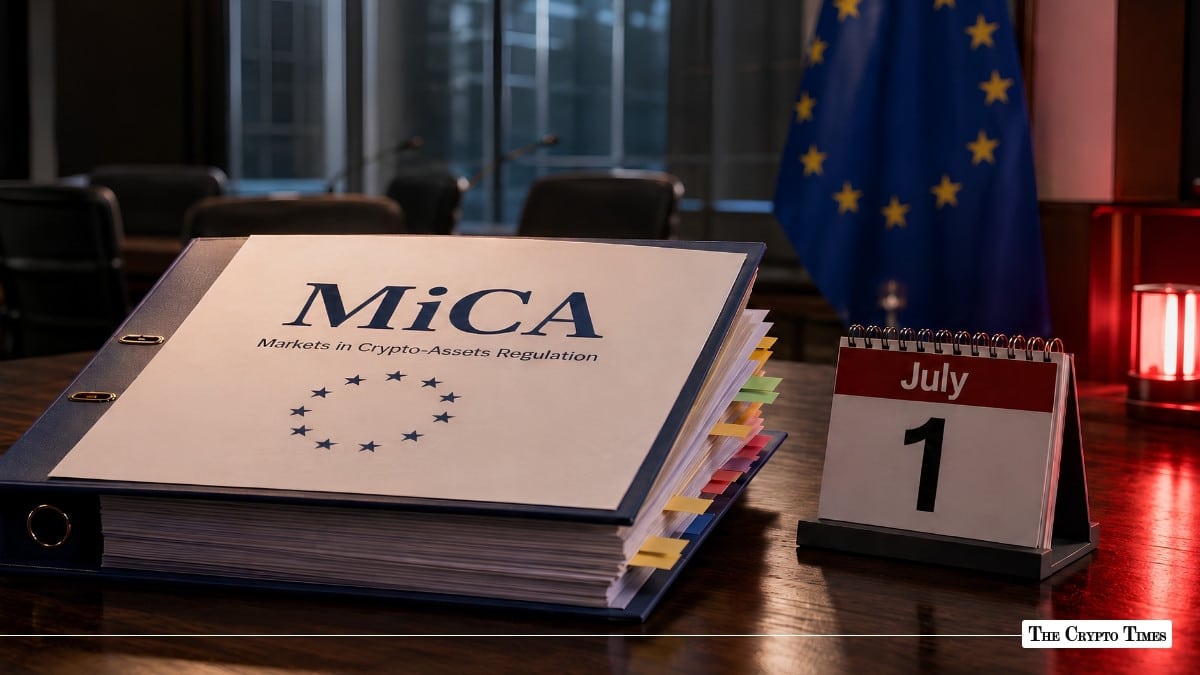
Europe’s MiCA deadline is not another soft regulatory milestone. It is the moment crypto platforms find out whether they are built for Europe’s next market cycle — or whether they were only renting access under the old rules.
For years, exchanges and crypto apps operated across Europe through a patchwork of national registrations, temporary permissions and product workarounds. That era is closing. From July 1, platforms need a MiCA route, a licence strategy, a restricted product menu, or a clean exit plan.
This is where the story gets interesting.
MiCA is not only approving platforms. It is forcing them to show their hand. Coinbase is cutting non-compliant stablecoin exposure. Bitstamp is shrinking its EU asset list. Kraken, Bitpanda, Crypto.com, OKX, Gemini and Revolut are using licences to lock in access. Smaller firms, meanwhile, face a much harsher question: comply, merge, wind down, or disappear from the EU market.
So the July 1 deadline is not just about regulation. It is about survival, market access and who gets to sell crypto to Europe’s next wave of users.
1. Coinbase: Compliance First, Stablecoins Cut First
Coinbase moved early on MiCA by restricting services for European Economic Area users tied to stablecoins that did not meet the EU’s new requirements.
The exchange said its decision was based on compliance, with affected users expected to receive options to move toward authorised stablecoins such as USDC and EURC. That made Coinbase one of the clearest examples of a large global exchange choosing product restriction over regulatory risk.
The platform’s move also showed how MiCA is changing exchange menus before it changes user behaviour. Instead of waiting for enforcement, Coinbase started narrowing what European users could access.
2. Bitstamp: Altcoin Menu Shrinks Under MiCA Pressure
Bitstamp made one of the more visible non-stablecoin changes.
The platform said SGB, FLR, EGLD and ICP would no longer be supported for EU and EEA customers as it worked toward MiCA approval. Deposits were disabled first, followed by trading and withdrawals, with remaining balances set for automatic conversion to euros.
That matters because MiCA pressure is not limited to stablecoins. Platforms are also reviewing ordinary token listings, especially where compliance, disclosures or risk classification become harder under the new EU framework.
Bitstamp’s case gives the article a stronger platform angle: MiCA is not only about who gets a licence. It is also about which assets licensed platforms are willing to keep.
3. Kraken: Licence Secured, Expansion Under Regulation
Kraken has moved into the licensed camp after receiving MiCA approval from Ireland’s central bank.
That licence gives the exchange a passport to serve users across the European Economic Area. Kraken has framed the approval as part of its European expansion and a way to offer regulated services across spot trading, derivatives and payments.
This puts Kraken on the opposite side of the MiCA story from platforms forced to exit. It is using the deadline as a growth opportunity, not just a compliance burden.
4. Crypto.com: Licensed Early, But Malta Route Faces Scrutiny
Crypto.com secured a MiCA licence in Malta during the early phase of the regime.
That gave the exchange a path to operate across the EU, but it also placed the platform inside a broader political debate. ESMA later criticised Malta’s authorisation process for one unnamed crypto company, saying the process had only partially met expectations.
The regulator did not name Crypto.com in that review. Still, the broader Malta debate matters because several major platforms received approvals there. After July 1, the question will not only be whether a platform has a MiCA licence, but whether other regulators trust the quality of that licence.
5. OKX: Licensed, But Part of the Passporting Debate
OKX also secured MiCA approval through Malta.
That approval allows the exchange to operate across the EU through MiCA passporting. However, like Crypto.com, OKX sits inside the wider debate over whether smaller national regulators are approving complex global crypto platforms too quickly.
For OKX, MiCA is both a win and a watchpoint. The licence gives access to Europe, but post-deadline supervision could become tougher if France, Italy and Austria succeed in pushing more power toward ESMA.
6. Bitpanda: One of MiCA’s Early Winners
Bitpanda became one of the first major crypto platforms to secure MiCA approval, receiving authorisation from Germany’s BaFin.
That approval gave the Austrian broker a strong position in Europe because Germany is seen as one of the stricter regulatory jurisdictions. Bitpanda can now present itself as a regulated European player at a time when offshore platforms face tighter scrutiny.
Its case shows the commercial upside of MiCA: platforms with early approvals can use regulation as a trust signal.
7. Gemini: Europe Expansion Through Malta
Gemini obtained a MiCA licence in Malta, giving the Winklevoss-founded platform a route to operate across Europe.
The approval came as Gemini was also expanding into tokenised stocks and other institutional-facing products. The company has described regulatory clarity as important for broader crypto adoption.
Gemini’s entry adds another layer to the MiCA story. U.S.-origin platforms are not leaving Europe entirely. Some are using MiCA as a structured route into the bloc, even as regulators debate whether all national approvals should carry the same weight.
8. Revolut: Fintech Turns MiCA Into Crypto Expansion
Revolut secured a MiCA licence in Cyprus, allowing it to provide crypto services across the EU.
Unlike pure crypto exchanges, Revolut brings MiCA into a broader fintech product stack that includes banking, payments, cards and wealth products. The company has also been expanding its crypto offering through Revolut X and plans for a broader Crypto 2.0 push.
This makes Revolut one of the most important non-exchange platforms in the MiCA story. It shows how crypto access in Europe may increasingly move through regulated fintech apps, not only crypto-native exchanges.
9. Smaller French-Registered Platforms: The Silent Exit List
The biggest MiCA pressure group may not be a household name.
France’s AMF said roughly 90 registered crypto firms in the country did not yet have MiCA licences. Around 30% had applied, 40% were not seeking one, and another 30% had not told the regulator their plans.
This is the hidden side of the July 1 deadline. Large platforms make headlines, but smaller registered firms may quietly stop serving users, migrate customers, or disappear from the EU market.
For regulators, this is also where enforcement risk begins. Firms that keep targeting EU customers without authorisation could face blacklisting, lawsuits or prosecution.
| Platform | MiCA Position | What It Has Done | Why It Matters For The Story | Angle To Use |
|---|---|---|---|---|
| Coinbase | Compliance-first platform | Restricted services for EEA users linked to stablecoins that do not meet MiCA requirements. | Shows how major exchanges are cutting products before regulators force action. | Coinbase is not waiting for enforcement; it is redesigning its EU stablecoin menu. |
| Bitstamp | Product restriction case | Removed SGB, FLR, EGLD and ICP support for EU/EEA users while working toward MiCA compliance. | Proves MiCA pressure is not limited to stablecoins; altcoin listings are also being reviewed. | Bitstamp shows how Europe’s crypto menu is shrinking under MiCA. |
| Kraken | Licensed expansion case | Secured MiCA approval through Ireland and positioned the licence as a route to expand across the EEA. | Shows how some exchanges are using MiCA as a growth passport, not a burden. | Kraken is treating MiCA as a distribution advantage. |
| Crypto.com | Licensed but under scrutiny bucket | Secured a MiCA route through Malta, placing it among early licensed global platforms. | Its licence matters because Malta’s authorisation process has faced ESMA scrutiny. | Crypto.com is licensed, but the Malta route keeps it inside the passporting debate. |
| OKX | Licensed global exchange | Secured MiCA approval through Malta and gained access to EU passporting. | Shows how global exchanges are using one EU licence to defend access to the whole bloc. | OKX is a MiCA winner, but also part of the cross-border supervision fight. |
| Bitpanda | Early European winner | Received MiCA approval from Germany’s BaFin. | Germany’s tougher regulatory image gives Bitpanda a stronger credibility signal. | Bitpanda turns MiCA into a trust badge. |
| Gemini | U.S. platform expanding in Europe | Obtained a MiCA licence in Malta, adding to its European regulatory push. | Shows U.S.-origin platforms are not abandoning Europe; they are entering through formal authorisation. | Gemini is using MiCA to turn Europe into a regulated expansion market. |
| Revolut | Fintech crypto platform | Received a crypto licence in Cyprus to offer crypto services across the EU. | Brings MiCA beyond crypto-native exchanges and into fintech super-apps. | Revolut shows crypto access may shift from exchanges to regulated fintech apps. |
| Smaller French-registered firms | Silent exit group | About 90 registered crypto firms in France lacked MiCA licences; many had either not applied, were not seeking approval, or had not responded to the AMF. | This is the hidden casualty list: firms may disappear without headline-making rejection notices. | The biggest MiCA fallout may happen quietly among smaller platforms. |
What the Data Signal Shows
The strongest market signal is in stablecoins as MiCA pushed European platforms to review stablecoins first because the regulation places strict requirements on issuers, reserves, redemption rights and supervision. That is why exchange restrictions have focused heavily on USDT, DAI, PYUSD and other tokens that were not treated as MiCA-compliant for EEA users.
The wider stablecoin market remains large and liquid globally, but Europe is trying to separate global liquidity from regulated European access. That shift benefits authorised issuers and forces platforms to redesign trading pairs, conversion routes and customer disclosures.
In practice, MiCA does not remove stablecoin demand. It redirects where European users can access it.
What Regulators Plan After July 1
After July 1, regulators are expected to focus on four areas. Unauthorised platforms must stop new EU business and follow wind-down plans. Spain’s CNMV has already said there will be no extensions or waivers.
France has also warned that firms without licences could be blacklisted or sued if they continue seeking EU customers. Regulators will now watch customer migrations closely, and the concern is not only whether platforms leave, but whether users can withdraw assets, move funds and understand what protections they lose.
ESMA and national regulators are preparing for the next fight: passporting. A licence from one EU state can unlock the whole bloc, but France, Italy and Austria want stronger central oversight because they fear platforms may shop for easier regulators.
Why It Matters
MiCA is turning Europe into a regulated crypto market, but the transition is messy. Platforms are now being separated into two camps: those strong enough to play under the new rules, and those that may lose access to one of the world’s largest financial markets.
For users, the change means fewer unsupported tokens, fewer non-compliant stablecoin pairs and more disclosure from platforms. For exchanges, it means Europe is no longer a market where global products can simply be copied and pasted.
For regulators, July 1 is the start of enforcement, not the end of implementation.
The platform list shows the real split: Coinbase, Bitstamp, Kraken, Crypto.com, OKX, Bitpanda, Gemini and Revolut are adapting in different ways, while smaller firms face the risk of silent exits.
MiCA’s deadline is not just deciding which tokens remain available in Europe. It is deciding which platforms get to stay.
Also Read: Binance to Halt EU Services From July 1 After Failing to Secure MiCA License
Disclaimer:
Some elements of this content may have been enhanced with the help of our artificial intelligence (AI) assistants for purposes such as basic refinement, review, image generation, and translation to deliver high-quality news in a shorter time frame. However, all AI-assisted content is reviewed and approved by our team to ensure accuracy, fairness, and editorial integrity.