Key Highlights
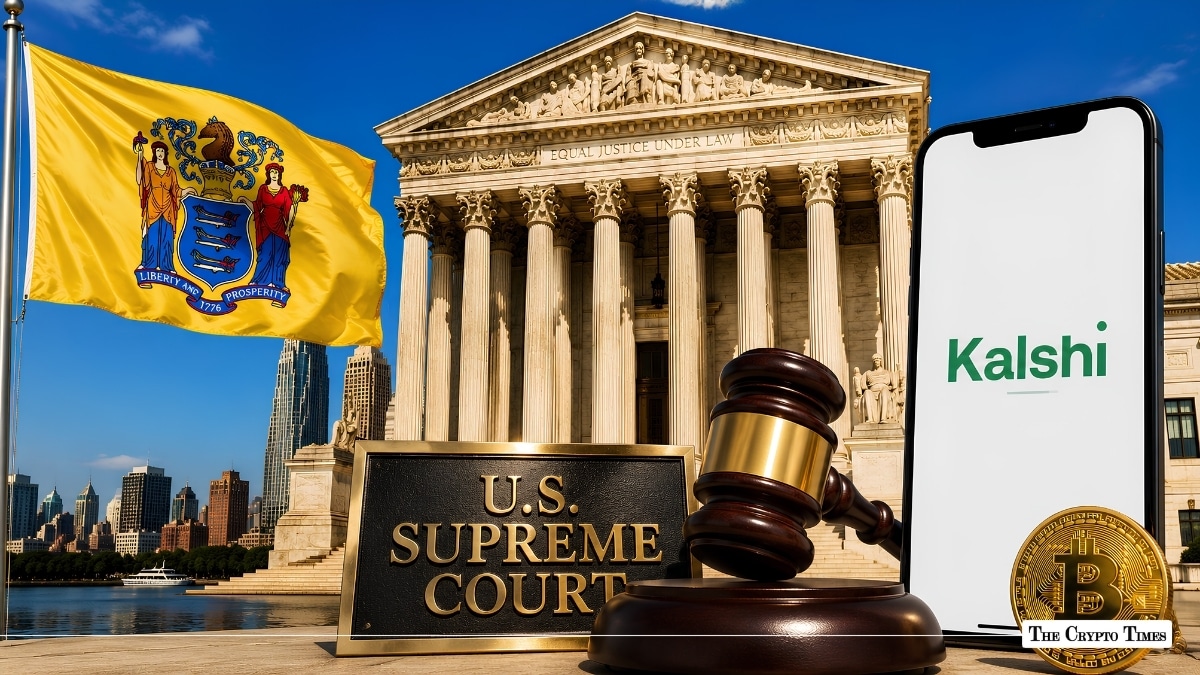
- New Jersey Attorney General Jennifer Davenport filed a petition asking the U.S. Supreme Court to review Kalshi’s sports contracts.
- New Jersey argues that federally regulated prediction markets remain subject to state gambling laws.
- The Third and Ninth Circuits have issued conflicting rulings on state authority over Kalshi’s sports contracts.
New Jersey is asking the U.S. Supreme Court to decide whether prediction-market platforms can offer sports-related contracts without complying with state gambling laws.
New Jersey Attorney General Jennifer Davenport filed a petition for a writ of certiorari on September 2, seeking review of whether federally regulated platforms such as Kalshi can offer sports contracts without obtaining state gambling licenses.
The petition asks the court to address the division between federal derivatives regulation and state authority over sports wagering. The Supreme Court has not yet decided whether to hear the case.
New Jersey challenges Kalshi’s sports contracts
The dispute concerns Kalshi’s contracts tied to sporting events. Kalshi has argued that the products are financial contracts regulated by the Commodity Futures Trading Commission (CFTC), not conventional sports bets governed by state gambling laws.
New Jersey disputes that interpretation and argues that operators cannot avoid state gambling requirements by structuring sports wagers as federally regulated derivatives.
Davenport said state gambling laws cover issues including underage gambling, problem gambling and the integrity of sporting events.
“Companies like Kalshi claim to offer legal sports betting in all 50 States, but they refuse to follow the gambling laws of any State.”
Davenport also argued that Congress did not remove state authority over sports betting through the federal derivatives framework.
The statements reflect New Jersey’s position in the litigation and do not represent a Supreme Court ruling.
Third and Ninth circuits reach different conclusions
The petition follows conflicting decisions from two federal appeals courts.
In April 2026, the Third Circuit ruled 2-1 in favor of Kalshi in its dispute with New Jersey. The court concluded that the state’s restrictions on Kalshi’s sports contracts were preempted by federal law and that the CFTC had exclusive jurisdiction over the contracts.
The Ninth Circuit reached a different conclusion in a case involving Nevada. On August 28, the court ruled that the Commodity Exchange Act likely did not preempt Nevada’s gaming regulations as applied to Kalshi’s sports contracts.
The Ninth Circuit therefore allowed Nevada to enforce its gaming laws against the company’s sports-related contracts, creating a direct conflict with the earlier Third Circuit ruling.
Ninth Circuit ruling and Dodd-Frank
The Nevada case also addressed how the Dodd-Frank Act applies to sports-related event contracts.
The Ninth Circuit rejected Kalshi’s argument that the contracts should be treated as federally regulated swaps and found that federal law did not prevent Nevada from applying its gambling regulations.
New Jersey said its position in the Nevada litigation was supported by an amicus brief joined by 39 other jurisdictions.
The conflicting appellate decisions provide the legal basis for New Jersey’s request for Supreme Court review.
State challenges to prediction markets continue
The Supreme Court filing comes as prediction-market operators face additional challenges from state and local authorities.
Kalshi and Polymarket have faced lawsuits and regulatory actions in several states over sports-related contracts. State authorities have argued that these products constitute sports wagering and therefore require state authorization.
In Baltimore, local authorities filed lawsuits against Kalshi and Polymarket alleging that the platforms offered sports contracts without the required licenses and misled consumers about their legality and regulatory status.
Kalshi is separately involved in a dispute with FlightAware over contracts tied to flight cancellations. That case concerns flight data and trademark issues rather than sports betting.
These cases involve different legal issues but reflect the broader disputes between prediction-market operators and state regulators.
Federal derivatives rules vs. state gambling laws
New Jersey argues that CFTC oversight does not replace state gambling regulations.
The state points to requirements involving licensing, age restrictions, responsible gambling, and sports-integrity protections that it says fall within state authority.
Kalshi has maintained that its contracts are federally regulated financial products and that allowing individual states to prohibit them could interfere with the federal derivatives framework.
The Supreme Court could therefore be asked to determine whether federal law prevents states from regulating sports contracts traded through federally regulated prediction markets.
Sports betting market adds to state concerns
New Jersey also pointed to the size of the sports-betting market in arguing for state oversight.
The state cited data showing that sports betting generated $16.89 billion in revenue for states nationwide in 2025, excluding tribal casino sportsbooks.
New Jersey also said approximately 95% of Kalshi’s 2025 revenue came from sports betting.
The figures show the scale of the sports-betting activity involved in the dispute and the extent of Kalshi’s reported exposure to sports-related contracts.
Consumer protections remain part of New Jersey’s argument
New Jersey says state gambling frameworks provide protections that may not be addressed through federal derivatives regulation alone.
The state’s arguments include rules concerning minors, problem gambling, operator oversight, sports integrity and the financial ability of operators to pay customers.
Mary Jo Flaherty, Interim Director of New Jersey’s Division of Gaming Enforcement, described the dispute as a question of state authority.
“This is a states’ rights issue.”
New Jersey maintains that its voters and lawmakers have established constitutional and statutory limits on gambling that should also apply to federally regulated prediction markets.
Supreme Court has yet to decide whether to hear the case
New Jersey is seeking Supreme Court review after the Third and Ninth Circuits reached different conclusions over whether states can regulate sports-related contracts offered by prediction-market platforms.
If the justices accept the case, they could decide whether federal derivatives law preempts state gambling restrictions on these contracts.
A ruling in Kalshi’s favor could strengthen its position that federally regulated sports contracts can operate outside state gambling frameworks, while a ruling favoring state authority could leave prediction-market operators subject to state-specific requirements.
The Supreme Court has not yet indicated whether it will hear the dispute.
Also Read: Circle President Urges Congress to Advance CLARITY Act