Key Highlights
- The Ninth Circuit ruled that federal derivatives law does not preempt Nevada’s gaming regulations in Kalshi’s sports-contract case.
- The decision allows Nevada regulators to continue enforcement proceedings against Kalshi.
- The ruling differs from a Third Circuit decision that favored Kalshi’s federal preemption argument.
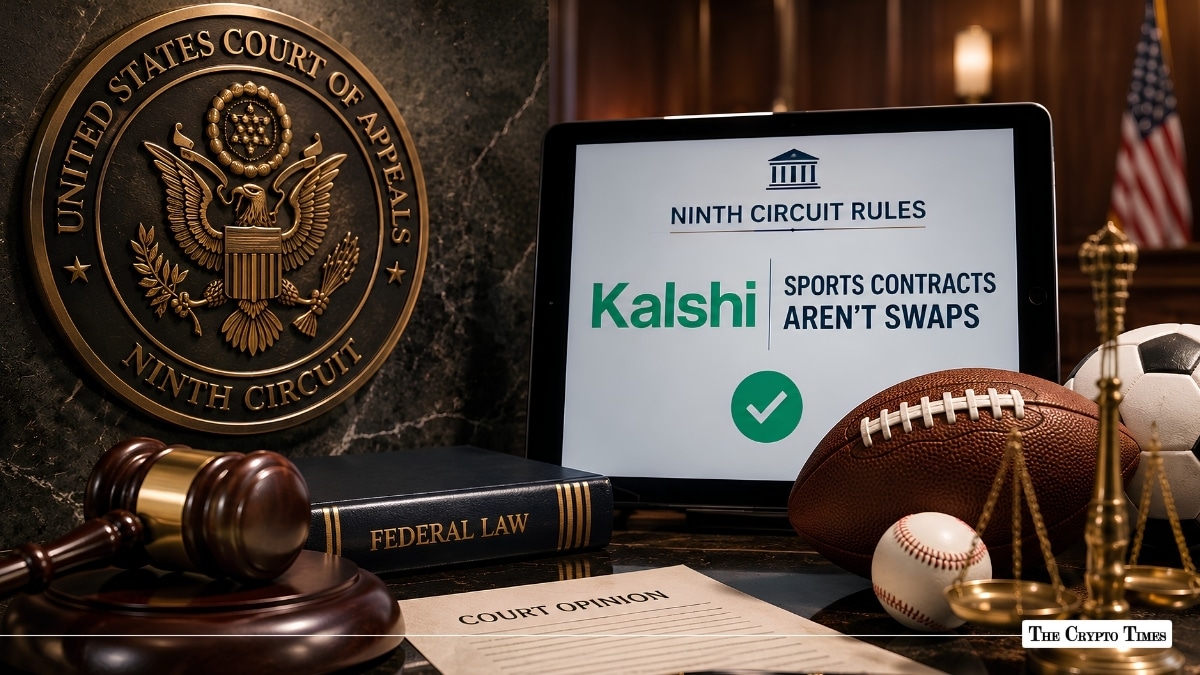
The U.S. Court of Appeals for the Ninth Circuit has ruled against prediction-market operator Kalshi in its dispute with Nevada regulators, finding that federal derivatives law does not prevent the state from applying its gaming regulations to Kalshi’s sports-related contracts.
In an opinion published Friday, a three-judge panel of the U.S. Court of Appeals for the Ninth Circuit, the decision allows the Nevada Gaming Control Board to continue its enforcement action against Kalshi and adds to a growing disagreement among federal courts over how sports prediction contracts should be treated under U.S. law.
The ruling concerns Kalshi’s sports markets and does not apply to the company’s broader derivatives business.
Ninth Circuit rejects federal preemption claim
The central issue was whether Kalshi’s sports contracts are protected by federal commodities law in a way that prevents Nevada from enforcing its gaming regulations.
Kalshi argued that the contracts qualify as swaps under the Commodity Exchange Act (CEA) and therefore fall under the exclusive jurisdiction of the Commodity Futures Trading Commission (CFTC).
The Ninth Circuit rejected that position.
Judge Ryan D. Nelson, writing for the three-judge panel, concluded that federal law does not preempt Nevada’s gaming regulations as they apply to Kalshi’s sports contracts.
The decision means Kalshi cannot rely solely on its status as a CFTC-registered designated contract market to prevent Nevada from pursuing its case.
CFTC gaming rule also considered
The court also examined 17 C.F.R. § 40.11, a CFTC regulation concerning certain contracts involving or referencing gaming.
Kalshi had argued that the federal regulatory framework protected it from state-level restrictions.
The Ninth Circuit disagreed, finding that the sports contracts at issue did not receive the federal protection claimed by Kalshi under the relevant framework.
The court therefore found no federal barrier preventing Nevada from applying its gaming laws.
Nevada case began in 2025
The dispute dates back to March 2025, when Nevada regulators sent Kalshi a cease-and-desist letter alleging that the company was operating an unlicensed sports pool.
Kalshi challenged the action in federal court, arguing that its CFTC registration placed its contracts under federal rather than state oversight.
A district court initially issued a preliminary injunction preventing Nevada from enforcing its gaming laws against the company. That protection was later dissolved, leading Kalshi to appeal.
The Ninth Circuit also rejected Kalshi’s argument that complying with Nevada’s restrictions would conflict with its federal obligations.
The panel pointed to geofencing as one possible mechanism through which an exchange could comply with state-specific restrictions.
Ninth Circuit decision conflicts with third circuit
The ruling differs from a decision reached by the Third Circuit in KalshiEX v. Flaherty.
In that case, the Third Circuit found that Kalshi’s sports contracts likely qualified as federally protected swaps and that state restrictions were likely preempted.
The conflicting decisions leave different interpretations of the relationship between federal derivatives regulation and state gaming laws.
The issue could become particularly important for prediction-market operators offering sports contracts across multiple states, where federal and state authorities may take different positions over the same products.
A separate Kalshi case is also pending before the Fourth Circuit, leaving open the possibility of another appellate ruling on the issue.
Other states continue challenging Kalshi
The Nevada case comes as Kalshi faces additional scrutiny from state authorities.
On August 27, Connecticut filed a lawsuit involving allegations concerning underage users and the marketing of prediction-market products to teenagers.
That case involves different issues from the Nevada litigation, including consumer protection and state oversight of sports-related prediction contracts.
The allegations in the Connecticut case have not been established in court.
Kalshi pursues other derivatives products
The Nevada dispute is limited to Kalshi’s sports contracts, while the company continues developing other derivatives products.
On August 19, Kalshi filed to self-certify a proposed US500 perpetual futures contract with the CFTC. The product is designed to track a U.S. large-cap stock market index.
The filing illustrates the distinction between the company’s broader derivatives business and the specific legal questions surrounding its sports markets.
What the ruling means
The Ninth Circuit decision allows Nevada regulators to continue pursuing enforcement against Kalshi’s sports contracts.
It does not, however, establish a nationwide rule for prediction markets.
The Ninth Circuit and Third Circuit have now reached different conclusions over whether federal derivatives law preempts state restrictions on Kalshi’s sports contracts. Further litigation could determine whether one interpretation ultimately gains broader acceptance.
For prediction-market operators, the central question is where federal derivatives oversight ends, and state gaming authority begins.
Until Congress or additional court decisions provide greater clarity, operators offering sports-related event contracts may continue to face different regulatory requirements across U.S. jurisdictions.
Also Read: CFTC Orders Ex-White House Staffer to Pay $172K for Insider Trading on Kalshi