Key Highlights
- Circle President Heath Tarbert urged Congress to advance the CLARITY Act during a House Financial Services Committee hearing.
- Tarbert said the dollar’s share of global foreign-exchange reserves has declined from more than 70% in the late 1990s to about 57%.
- He pointed to dollar-backed stablecoins and tokenized assets as areas where regulation could influence future financial infrastructure.
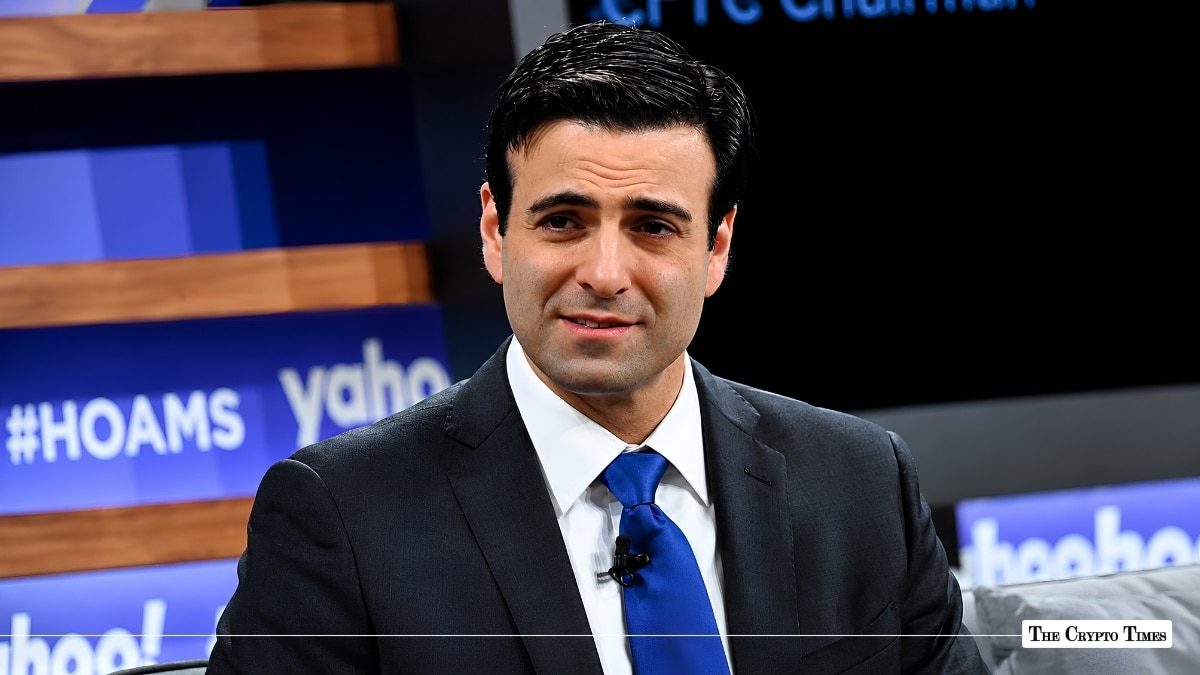
Circle President Heath Tarbert urged U.S. lawmakers to advance the CLARITY Act during a House Financial Services Committee hearing, arguing that changes in stablecoins, tokenization and digital payments are creating new questions for financial regulation.
Tarbert made the comments during the committee’s hearing on September 2, “Strengthening the American Economy: Promoting Growth, Opportunity, and Prosperity.”
His testimony comes as the United States continues debating broader crypto market-structure legislation while other jurisdictions develop their own approaches to digital assets.
Tarbert points to declining dollar reserve share
Tarbert opened his testimony by discussing the dollar’s position in the global financial system.
“The dollar’s global role is an economic asset, not a birthright.”
He cited data showing that the U.S. dollar accounted for more than 70% of global foreign-exchange reserves in the late 1990s, compared with roughly 57% today.
Tarbert argued that the shift shows why policymakers should not assume continued demand for the dollar.
He referred to the broader effort to maintain the dollar’s role as “dollar statecraft,” connecting monetary policy with developments in financial infrastructure.
Stablecoins keep Dollar use at the center
Stablecoins formed another major part of Tarbert’s testimony.
He cited Bank for International Settlements data indicating that approximately 98% of global stablecoin value is denominated in U.S. dollars.
At the same time, Tarbert cautioned that dollar dominance in stablecoins is not guaranteed to continue.
“No law of nature requires that the currency of the internet be the dollar.”
He pointed to the GENIUS Act, which established a federal framework for payment stablecoins, as an example of legislation that could influence how dollar-denominated digital payments develop.
Tarbert said the legislation was intended to establish U.S. standards around digital dollars before other jurisdictions’ regulatory frameworks gain greater influence.
The comments reflect Circle’s policy interests, particularly around stablecoins, but they also form part of a wider debate over how governments should regulate digital-dollar products.
Tokenized assets expand beyond crypto markets
Tarbert also discussed the growth of tokenized financial assets.
He said tokenized Treasury and money-market products had exceeded $16 billion in circulation by August, as financial institutions increasingly experimented with blockchain-based versions of traditional assets.
Asset managers including BlackRock and Franklin Templeton have already launched tokenized investment products.
Tarbert argued that institutional interest is being driven by potential applications rather than blockchain technology alone.
He pointed to settlement, custody and collateral management as areas where tokenization could potentially change existing financial processes.
However, the expansion of tokenized assets does not necessarily mean traditional financial infrastructure will be replaced. Adoption still depends on factors such as regulation, liquidity, costs, and whether blockchain-based systems offer measurable advantages.
AI could change how payments work
Artificial intelligence was another topic in Tarbert’s testimony.
He discussed the possibility of AI agents initiating transactions within predefined parameters and subject to compliance controls.
If such systems become more widely used, payment networks may need to accommodate transactions initiated by software rather than directly by individuals.
Tarbert said he would prefer this emerging activity to operate through U.S.-based infrastructure and under U.S. legal and regulatory standards.
That remains a policy preference rather than an established direction for the market.
CLARITY Act remains Tarbert’s legislative ask
Tarbert’s central request to lawmakers was to move forward with the CLARITY Act, which is intended to establish a broader framework for digital-asset markets and clarify the responsibilities of federal regulators.
He argued that legislation would provide greater certainty for companies making long-term investments.
Tarbert also stressed that market-structure legislation should not be interpreted as government endorsement of particular digital assets.
“None of that is a subsidy, or a blessing of any asset.”
The distinction comes as lawmakers continue debating how cryptocurrencies and other digital assets should be classified and which federal agencies should oversee different activities.
Russia adjusts its crypto rules
The U.S. debate is taking place alongside regulatory changes elsewhere.
In July, Russia’s Financial Markets Committee approved a revised cryptocurrency regulation bill for its second reading.
Among the changes was the removal of a previously proposed requirement for crypto users to report wallet addresses.
The revision shows how governments are adjusting digital-asset rules as they work through questions involving oversight, reporting requirements and practical compliance.
Russia’s framework is separate from the U.S. legislation under discussion, but the developments highlight the different approaches being taken across major markets.
G20 calls for clearer digital-asset frameworks
International discussions are also continuing.
A recent G20 Chair’s Statement recognized the potential role of digital assets in economic activity and called for regulatory frameworks that provide “clear pathways” for responsible digital-asset innovation.
The statement reflects the broader challenge for regulators: developing rules that address financial stability, consumer protection and illicit-finance risks while allowing digital-asset businesses to operate within defined legal frameworks.
For companies operating internationally, differences between national regulations remain an important consideration.
U.S. crypto policy faces another test
Tarbert’s testimony places stablecoins and tokenization within a broader argument about the future of financial infrastructure, but his comments also underline the uncertainty surrounding U.S. crypto policy.
The GENIUS Act has established a federal framework for payment stablecoins, while the CLARITY Act is intended to address the wider market structure. Neither development settles how every digital-asset activity will ultimately be regulated.
Meanwhile, other jurisdictions are continuing to adjust their own rules.
For Circle, the discussion is directly relevant to its stablecoin business. More broadly, the hearing focused on how U.S. rules for stablecoins, tokenized assets and blockchain-based financial services could affect how these markets operate under domestic regulation.
The CLARITY Act therefore remains an important piece of the broader U.S. regulatory debate, with its eventual progress depending on negotiations in Congress rather than industry support alone.
Also Read: SEC Crypto Task Force Meets Clique on Token Listing Due Diligence