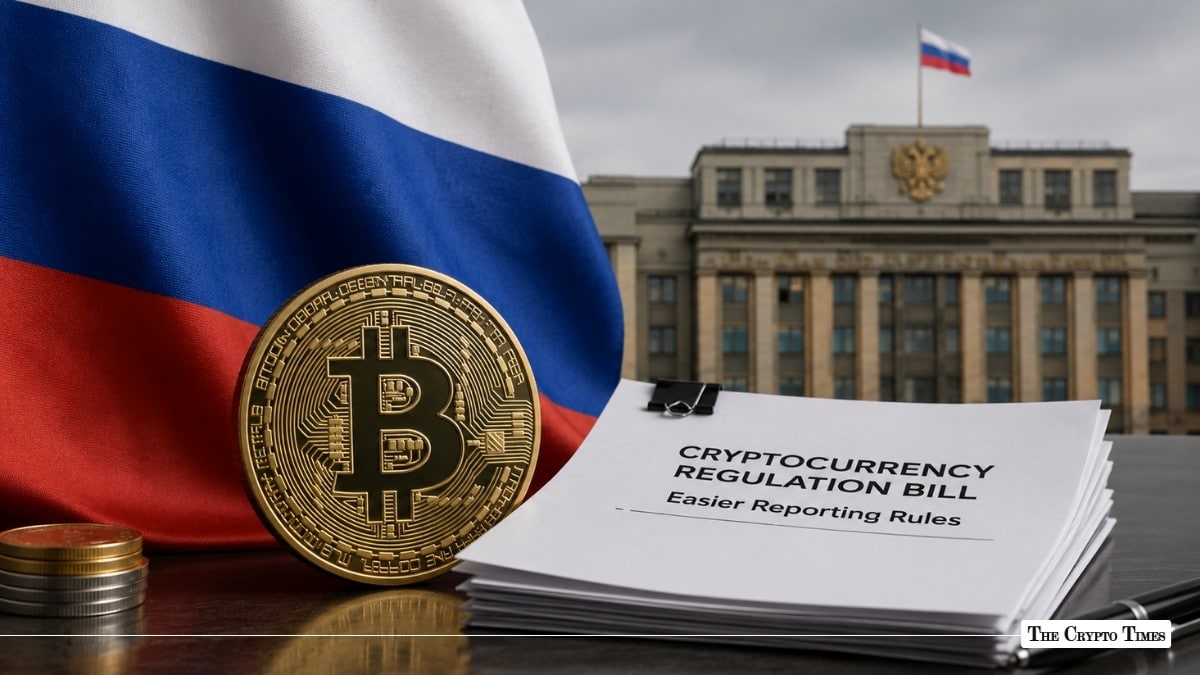
Russia’s State Duma has taken another step toward creating a regulated cryptocurrency market after its Financial Markets Committee (FMC) approved a revised crypto oversight bill for a second reading.
The updated legislation drops a controversial proposal that would have required users to disclose cryptocurrency wallet addresses. Instead, it introduces a broader framework covering investor eligibility, consumer protections, cross-border crypto transactions, and the use of digital assets in Russia’s financial markets.
If passed, the bill would form the legal foundation for Russia’s domestic cryptocurrency market while expanding government oversight of digital asset activity.
Wallet address disclosures and new limits
One of the most notable changes removes the requirement for Russian residents to report the addresses of their cryptocurrency wallets. Instead, holders would only need to disclose their crypto balances and transaction volumes. FMC Chairman Anatoly Aksakov said the change would help reduce the risk of sensitive information being leaked or misused. He announced the committee’s recommendation through his official Telegram channel after lawmakers endorsed the revised draft for its main parliamentary reading.
The bill also guarantees judicial protection for cryptocurrency ownership regardless of whether the assets were previously declared. According to Aksakov, the provision was added after lawmakers considered the Constitutional Court’s position on the issue.
Further, the legislation preserves Russia’s existing distinction between qualified and non-qualified investors while setting new limits for retail participation. Non-qualified investors would only be allowed to purchase cryptocurrencies classified as the most liquid, with annual investments capped at 300,000 rubles through each regulated intermediary. Both qualified and retail investors would also have to pass a suitability test before investing. The bill would also allow investors to qualify as professional investors based on their crypto trading history, mirroring Russia’s traditional securities market’s approach.
Foreign exchange access and crypto payments
The legislation would also allow cryptocurrency to be used to purchase Russian securities and digital financial assets (DFAs), broadening the use of digital assets within the country’s financial system.
In addition, licensed Russian brokers and asset managers could eventually be allowed to execute transactions through foreign cryptocurrency exchanges and crypto service providers. Aksakov said such access would be subject to additional requirements, including whether those exchanges operate in jurisdictions considered friendly by Russian authorities.
The proposal also seeks to make cross-border crypto payments easier for businesses engaged in international trade. Companies would be able to settle transactions using cryptocurrencies or stablecoins through either Russian or foreign infrastructure, with or without regulated intermediaries, provided the underlying contracts are registered with a bank.
Stronger safeguards against crypto fraud
Regulated crypto exchanges would only be permitted to transfer purchased cryptocurrency to wallets owned by the buyer. Digital custodians would also be required to delay large transfers sent abroad or to third parties for 48 hours, giving customers time to stop or reconsider potentially fraudulent transactions.
If regulated intermediaries fail to comply with these requirements, they could be required to compensate customers for stolen funds. The 48-hour delay would not apply to cryptocurrency purchases or sales carried out through regulated intermediaries.
Questions remain over self-custody wallets
One question remains unanswered. Aksakov did not address an earlier proposal that could prohibit Russians from using non-custodial wallets, where users retain sole control of their private keys without relying on intermediaries.
The revised bill will now move to the State Duma for its second reading, where lawmakers will debate the amendments before deciding whether to advance the legislation further.
If approved, the measure would establish Russia’s legal framework for cryptocurrency investments, trading, consumer protections, and cross-border digital asset transactions, marking another milestone in the country’s evolving approach to crypto regulation.
Also Read: Russia Announces September 1 Digital Ruble Commercial Rollout