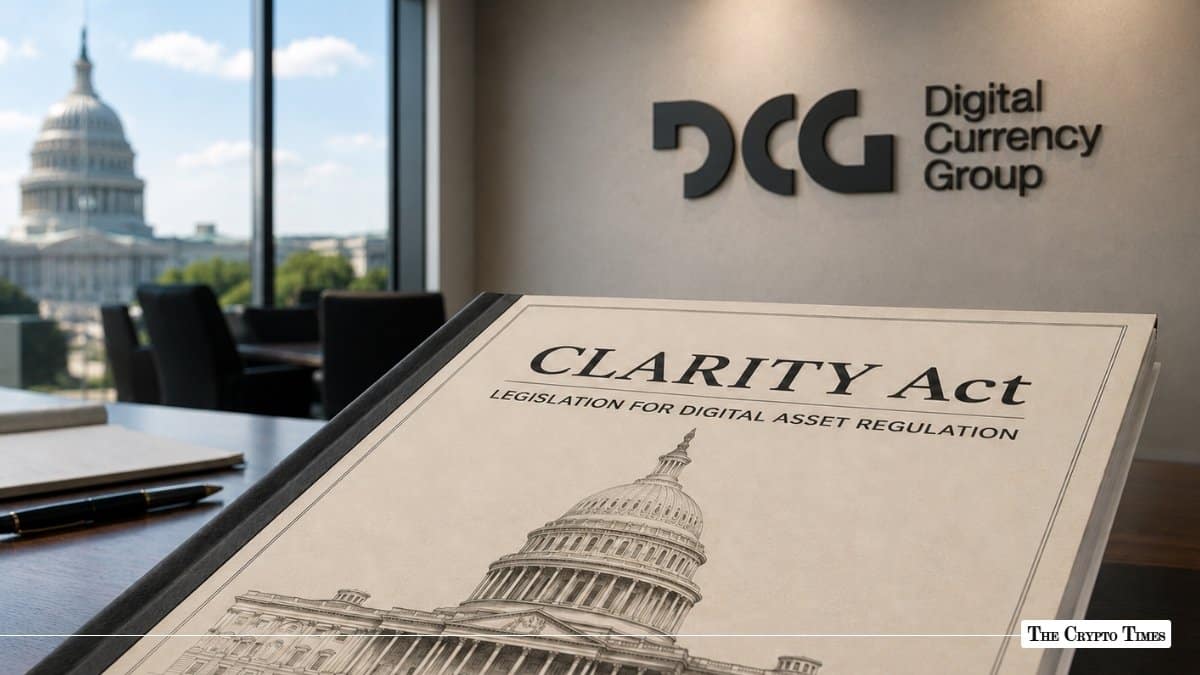
Digital Currency Group has added its name to the chorus urging the Senate to pass crypto market-structure legislation, but the letter reads differently once you place it against everything else DCG is doing right now.
In a July 29 letter to Majority Leader John Thune and Minority Leader Chuck Schumer, DCG President Mark Murphy urged the Senate to schedule a floor vote on the Digital Asset Market Clarity Act before the August recess. He framed the bill as the certainty the industry needs, praising its consumer protections, its developer safeguards, and its clear jurisdictional lines between the SEC and CFTC, and warned that continued delay pushes talent and companies toward Singapore, Abu Dhabi, the European Union, and the UAE.
The letter leans on DCG’s scale to make the case. It describes a Connecticut-based firm with more than 250 portfolio companies, 70-plus employees, and stakes in over 100 American startups, and it invokes two crown jewels: Grayscale, which it calls the world’s largest digital-asset investment platform and the operator of the first publicly traded Bitcoin fund, and Foundry, the largest Bitcoin mining pool.
The message, echoed in a same-day post from DCG, is that the company wants to keep building in the United States but needs a functioning statutory framework to do it.
The Safeguard It Praises Is Still Unsettled
One of the protections DCG singles out is not yet locked. The developer safeguard, Section 604, drawn from the Blockchain Regulatory Certainty Act, remains an active negotiation between the crypto industry and law enforcement, and it moved again this week.
According to reporting from journalist Eleanor Terrett and Politico’s Jasper Goodman, a pair of prosecutor groups sent the White House proposed changes that would remove language shielding software developers from criminal prosecution, while the National Sheriffs’ Association, a vocal CLARITY opponent, declined to sign on.
The provenance is itself disputed. Senator Catherine Cortez Masto has described the proposal as reflecting the administration’s input, but the White House and Treasury have pushed back, with Crypto Council Executive Director Patrick Witt calling it “not even close” to the administration’s position and Treasury describing the language as the product of Washington lobbyists. For a company staking its endorsement on the bill’s protections, the takeaway is that the certainty DCG is asking the Senate to deliver is not fully settled even inside the text it is praising.
A Conglomerate Still Rebuilding After Genesis
That framing matters because DCG is not lobbying from a position of steady-state strength. Barry Silbert’s holding company was one of the industry’s worst-hit institutions in the last cycle. Its lending arm, Genesis, was crippled by the 2022 collapse of Three Arrows Capital and then FTX, and filed for bankruptcy in January 2023, dragging DCG into years of litigation with regulators and former partners.
DCG has spent the period since rebuilding around its surviving assets, and the reconstruction is visibly ongoing. This week the company’s retail exchange Luno moved to cut about 20% of its staff and pivot toward business-to-business services and stablecoin infrastructure. On the other end of the portfolio sits the prize: a reported $33 billion initial public offering of Grayscale, which would be the first major public listing by a crypto asset manager and, if it succeeds, the clearest signal that DCG’s comeback is complete.
Why the Clarity DCG Wants Is the Clarity DCG Needs
Seen against that backdrop, the letter is industry advocacy and self-interest at once, and the two are hard to separate. A clean federal framework dividing SEC and CFTC authority is exactly the environment a $33 billion Grayscale listing would want, because institutional underwriters and public-market investors price regulatory ambiguity as risk. The same certainty that DCG says would keep jobs onshore would also make its asset-management arm easier to take public and its restructured businesses easier to sell to institutions.
None of that makes the argument insincere; DCG has real reasons, shared across the industry, to want the bill passed. But it does make DCG an interested party lobbying for the specific conditions its own rebuild depends on, rather than a neutral observer, and the letter is best read as a company placing a public bet that Washington will deliver the runway for its next chapter.
The Genesis Shadow
The complication is that the past is not fully settled. The Genesis bankruptcy spawned litigation that remains live, including claims from a Genesis oversight committee that DCG and its executives prioritized the parent’s interests over creditors and a DCG countersuit contesting those claims. That overhang is one of the factors observers expect underwriters and regulators to scrutinize before any Grayscale listing proceeds.
It leaves DCG advancing on two fronts at once: pressing Washington for the rules that would legitimize its future while working to close out the disputes that define its recent past. The CLARITY letter is one move in that larger campaign, and its fate is now tied to the same August calendar squeezing the rest of the crypto industry’s Washington agenda.
Also Read: Solana Institute President Explains Why Senate Must Move CLARITY Act