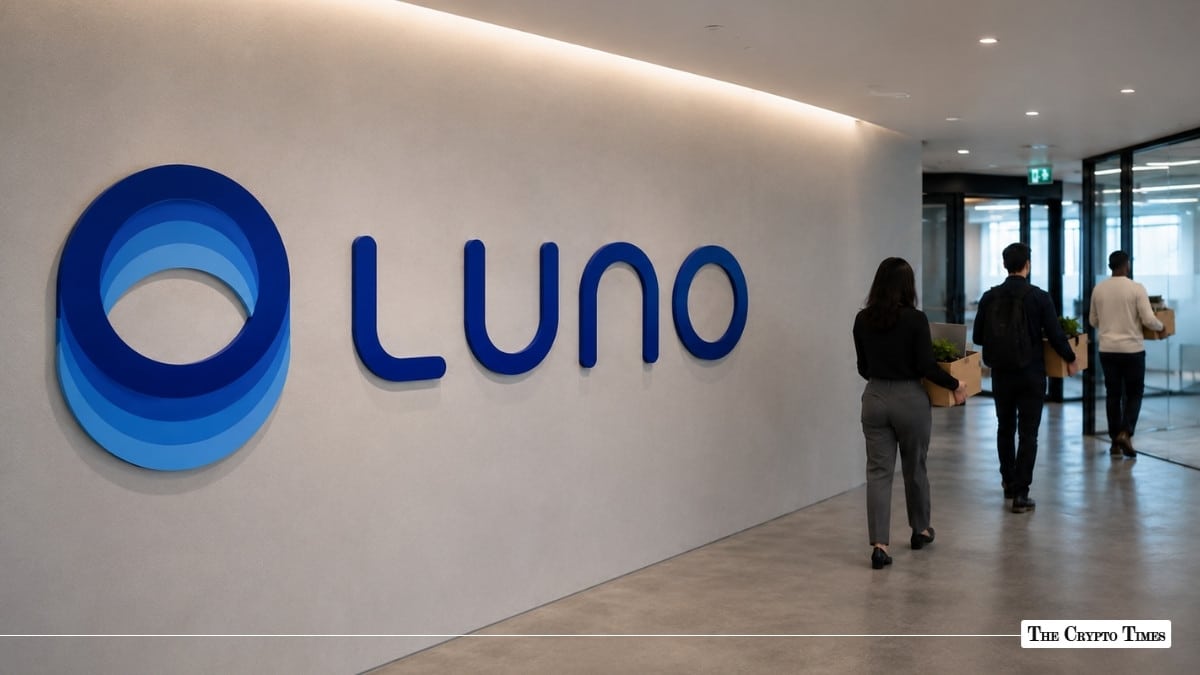
Luno is cutting roughly 20% of its global workforce, but the more telling detail is where the exchange says it is heading next.
CEO James Lanigan told Bloomberg that the Digital Currency Group-owned exchange is cutting headcount globally as part of a restructuring and that the reorganization will expand Luno’s business-to-business operations while trimming costs to reflect current market conditions. He declined to specify how many jobs are affected.
His rationale went beyond the market. Lanigan said Luno invested heavily last year in automation and operational efficiency, and that the staffing structure needed to run the business is changing rapidly, leaving the company in need of a leaner, revamped organization. The cuts land against a backdrop of weak retail trading, as exchanges broadly hunt for steadier revenue from institutions, payments, and infrastructure.
The scale is still meaningful. The company is one of the largest retail crypto platforms in sub-Saharan Africa and Southeast Asia, with around 15 million customers.
The B2B and Stablecoin Bet
The pivot has a track record behind it. Luno has been moving beyond retail into infrastructure, providing liquidity, wallets, and compliance tooling that banks, fintechs, and telecom operators use to offer crypto under their own brands, most visibly through its partnership with South Africa’s Discovery Bank, which became the first bank in the country to let customers trade crypto in-app, powered by Luno.
The newer piece is stablecoins. Luno is a founding participant in ZARU, a South African rand-pegged stablecoin, and plans to apply the same local-currency model to other emerging markets that lack their own stablecoin infrastructure. For a company whose strongholds are high-inflation, thin-dollar-liquidity economies across Africa and Southeast Asia, local-currency stablecoin rails are a natural, defensible business, and a far stickier one than retail trading fees. Reallocating staff toward that, rather than simply shrinking, is what distinguishes this from a downturn cut.
Positioning for a Listing or Exit
The restructuring also reads against DCG’s longer-term plans for the asset. In 2023, Luno engaged Canaccord Genuity to help bring in new institutional and strategic investors alongside DCG and to prepare the company for an eventual public listing.
A leaner, B2B-weighted, cost-disciplined Luno is a more attractive candidate for a listing or a sale. Viewed that way, the reduction is less about surviving a downturn than about sharpening the margins and story that a future IPO or strategic exit would require.
A Different Cut Than 2023
This is Luno’s second major workforce reduction in three years, but the context has shifted. The first, a 35% cut in January 2023, came under co-founder Marcus Swanepoel amid the FTX collapse and the depths of the crypto winter and was framed explicitly as a response to market shocks.
This round is smaller, tied to a specific strategic direction, and led by Lanigan, who was promoted from chief operating officer to CEO in March 2023 as Swanepoel moved to executive chairman. The company has continued to expand its product range in the interim, adding a yield product, tokenized stocks, and prediction markets. As in past reductions, the changes concern staffing and strategy rather than customer funds.