Crypto Times Logo Black
Google News Follow Banner
  • News
    • Market
    • Bitcoin
    • Ethereum
    • Altcoins
    • Regulations & Policies
    • DeFi News
    • Blockchain News
    • Industry
  • Exclusive
    ExclusiveShow More
    MiCA's July 1 Deadline What It Means for Your Crypto in Europe
    MiCA’s July 1 Deadline: What It Means for Your Crypto in Europe
    STRC Drops 19% Below Par Was Peter Schiff Right About Saylor Deceiving Investors
    STRC Drops 19% Below Par: Was Peter Schiff Right About Saylor Deceiving Investors?
    Litecoin Summit Day 2 LitVM's $50M Bet and BasicSwapDEX's Bold Vision
    Litecoin Summit Day 2: LitVM’s $50M Bet and BasicSwapDEX’s Bold Vision
    Litecoin Summit Day 1 Quantum Warnings, Privacy Coin Breakthroughs, & MiCA's Looming Deadline
    Litecoin Summit Day 1: Quantum Warnings, Privacy Coin Breakthroughs, & MiCA’s Looming Deadline
    Inside the High-Stakes Corporate War Over the GENIUS Act
    Inside the High-Stakes Corporate War Over the GENIUS Act
  • Opinion
    OpinionShow More
    Why Wall Street is Divided Michael Saylor’s Scarcity vs. Tom Lee’s Staking Empire
    Why Wall Street is Divided: Michael Saylor’s Scarcity vs. Tom Lee’s Staking Empire
    The Arthur Hayes Paradox Macro Prophet or Market Opportunist
    The Arthur Hayes Paradox: Macro Prophet or Market Opportunist?
    RBI Denies Gold Sale Amid Oil Crisis: Could It Speed Up India's Digital Rupee Push?
    RBI Denies Gold Sale Amid Oil Crisis: Could It Speed Up India’s Digital Rupee Push?
    The CLARITY Act War Starts Jamie Dimon Vs Armstrong
    The CLARITY Act War Starts: Jamie Dimon Vs Armstrong
    Is Crypto Dying, or Is Pump.fun Turning It Into an Attention Casino
    Is Crypto Dying, or Is Pump.fun Turning It Into an Attention Casino?
  • Learn
    • Explained
    • How To
    • Insights
  • Videos
  • More
    • About Us
    • Our Authors
    • Contact Us
    • Editorial Policy
The Crypto TimesThe Crypto Times
  • All News
  • Market
  • Bitcoin
  • Ethereum
  • Altcoins
  • Regulations & Policies
  • Blockchain
  • DeFi
  • Industry
  • Exclusive
  • Opinion
Search
  • News
    • Market
    • Bitcoin
    • Ethereum
    • Altcoins
    • Regulations & Policies
    • Blockchain
    • DeFi
    • Industry
    • Exclusive
    • Opinion
  • Learn
    • Explained
    • How To
    • Insights
  • Quick Links
    • About Us
    • Our Authors
    • Contact Us
    • Editorial Policy
    • AI Policy
    • Sponsored & Advertorial Policy
  • Videos
  • Glossary
Follow US
© 2026 By Crypto Times. All Rights Reserved.
Industry

Vitalik Buterin Drops 10,000-Word Deep Dive on Indistinguishability Obfuscation: The ‘Final Boss’ of Cryptography

Vitalik describes iO as potentially enabling applications like collusion-resistant voting systems, private DeFi strategies, and more robust privacy infrastructure when combined with public blockchains.

Written By Gopal Solanky Gopal Solanky
Edited by Divya Mistry Divya Mistry
Published 1 hour ago·Updated 29 minutes ago
Make The Crypto Times preferred on GoogleGoogle
Last updated: 29 minutes ago
Published 1 hour ago
Share
Last updated: 29 minutes ago
Published 1 hour ago
Vitalik Buterin Drops 10,000-Word Deep Dive on Indistinguishability Obfuscation — The ‘Final Boss’ of Cryptography

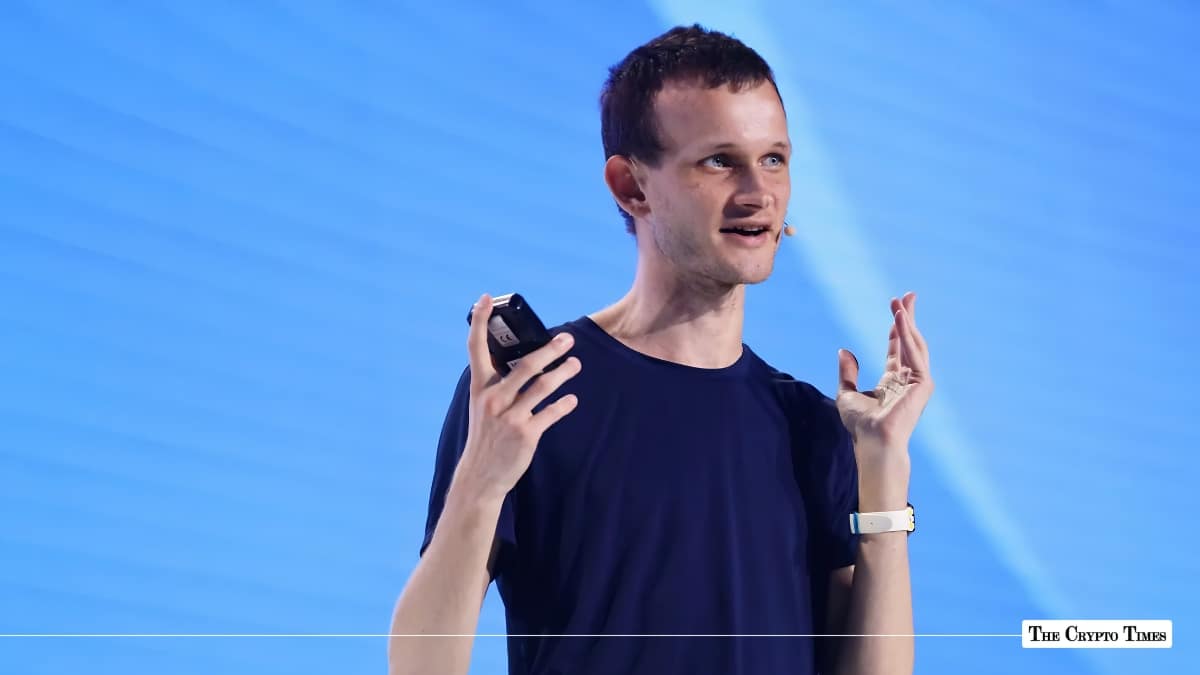
On June 29, 2026, Ethereum Co-Founder Vitalik Buterin published what he called a “ten-thousand word monster post” attempting to chart the entire technical history and future of one of cryptography’s most elusive goals: indistinguishability obfuscation, or iO. 

The post, hosted on his personal blog, is accompanied by detailed diagrams, systematically mapping the “tech tree” behind the main lineage of iO protocols, from early broken attempts to modern lattice-based constructions that remain theoretically promising but practically distant. 

Show AI Summary
Ethereum co-founder Vitalik Buterin’s post on indistinguishability obfuscation could impact DeFi by enabling private yet verifiable computation, reducing front-running and MEV extraction
Achieving efficient indistinguishability obfuscation could serve as a master primitive for various cryptographic tools, but current constructions suffer from enormous performance gaps and impractical runtimes
The development of indistinguishability obfuscation could transform Ethereum’s vision for complex, trust-minimized applications, but significant hurdles remain, including efficiency, security assumptions, and trusted setup or quantum resistance

What Is Indistinguishability Obfuscation?

At its core, iO is a cryptographic primitive that takes a computer program (or circuit) and transforms it into an obfuscated version. Anyone can run the obfuscated program on chosen inputs and receive correct outputs, but they learn essentially nothing about how the program works internally. Two different programs that compute the same function should produce obfuscated versions that are computationally indistinguishable. 

This seemingly modest property turns out to be extraordinarily powerful. Cryptographers have shown that secure iO, if achieved efficiently, could serve as a “master primitive” from which many other cryptographic tools — functional encryption, secure multiparty computation, and even certain forms of zero-knowledge proofs — can be constructed. 

In blockchain contexts, it raises the possibility of “trustless trusted third parties”: smart contracts that execute complex logic without revealing their inner workings or requiring trusted intermediaries. 

Vitalik describes iO as potentially enabling applications like collusion-resistant voting systems, private DeFi strategies, and more robust privacy infrastructure when combined with public blockchains.

The Long Road to iO 

In the article, the Ethereum co-founder traces the history carefully. Early attempts at code obfuscation — simple techniques like variable renaming or logic shuffling — were repeatedly broken. A landmark 2001 result by Barak, Goldreich, Impagliazzo, Rudich, Sahai, Vadhan, and Yang proved that strong “virtual black-box” obfuscation is impossible for general programs. This impossibility result shifted the field toward the weaker but still extremely useful notion of indistinguishability obfuscation, first proposed in 2013. 

Since then, the field has seen two decades of incremental progress, much of it built on lattice-based cryptography and assumptions such as Learning With Errors (LWE). 

Vitalik’s post walks through the main construction pipeline:

  • Succinct functional encryption (FE) as a key stepping stone.
  • Layers of attribute-based encryption (ABE), fully homomorphic encryption (FHE), and garbled circuits.
  • Sublinear compact randomized encodings.
  • XiO (a slightly relaxed form of iO) that can be bootstrapped into full iO.

The diagrams in the post illustrate these relationships vividly. One chart positions different approaches along axes of security assumptions (conservative to very aggressive) and computational cost (consumer-friendly to galactic). Another details the intricate flow of key generation, encryption, and evaluation in FE-based constructions. A third shows how programs with inputs are handled via recursive thunk trees. 

The post credits numerous researchers and collaborators, emphasizing that this is a community effort spanning academia and cryptography engineering.

Why This Matters for Ethereum and Crypto

Ethereum’s vision has always included more than simple value transfer. From decentralized finance (DeFi) to decentralized autonomous organizations (DAO) and identity systems, the platform aims to support complex, trust-minimized applications. iO could theoretically push this vision further by allowing private yet verifiable computation. 

For DeFi specifically, obfuscated contracts could hide trading algorithms or position sizes, potentially reducing front-running and MEV (miner/maximal extractable value) extraction. They could also enable more sophisticated privacy-preserving lending or options protocols. 

However, Vitalik is careful not to overhype immediate applications. The post repeatedly highlights the enormous performance gap. According to him, current constructions suffer from “galactic” runtimes — overheads so large that even simple programs would require impractically vast computation. A single functional encryption step alone can involve trillions of operations under today’s parameters. 

This aligns with Ethereum’s historical development pattern: ambitious long-term research (sharding, zk-SNARKs, account abstraction) pursued in parallel with practical, incremental improvements.

Limitations and Realistic Timelines

Despite the excitement the post has already generated in crypto circles, several major hurdles remain:

  1. Efficiency: Even optimistic future improvements leave iO far from production-ready for on-chain use.
  2. Security assumptions: Most constructions rely on relatively new lattice-based hardness assumptions that have not yet withstood decades of cryptanalysis.
  3. Trusted setup or quantum resistance: Some variants require trusted setups or remain vulnerable to future quantum attacks.
  4. Auditability trade-offs: Public smart contract code currently allows widespread auditing and bug bounties. Full obfuscation could make discovering certain classes of vulnerabilities harder, creating new security dynamics.

Most DeFi exploits to date have stemmed from logic errors, poor economic design, or access control failures rather than the public visibility of source code. Obfuscation does not automatically prevent flawed incentives or implementation bugs. 

Broader Context in Cryptography

iO research sits at the intersection of theoretical computer science and applied cryptography. Progress here often feeds into other areas: zero-knowledge proofs have already moved from academic curiosity to core components of Ethereum scaling (via zk-rollups), and similar trajectories may unfold for iO. 

The post also serves as a reminder of Ethereum’s unique position. While many blockchain projects focus primarily on token economics or short-term adoption tactics, Ethereum continues to invest heavily in foundational research. Vitalik’s willingness to publish long, technical articles — often without marketing spin — has become a signature part of the project’s culture.

Looking Ahead 

Vitalik’s 10,000-word exploration synthesizes years of scattered research into a coherent map, highlights remaining bottlenecks, and invites more contributors to the field. It underscores that meaningful advances in privacy and security primitives often arrive slowly, through painstaking academic and engineering effort rather than viral announcements. 

True general-purpose iO capable of transforming DeFi or enabling entirely new application classes remains a distant but tantalizing goal. In the meantime, the ecosystem will continue relying on established tools — formal verification, audited code, bug bounties, and careful protocol design — to improve security. 

Also read: Galaxy Cuts CLARITY Act 2026 Odds to 50% as Senate Floor Time Vanishes

Disclaimer: The information researched and reported by The Crypto Times is for informational purposes only and is not a substitute for professional financial advice. Investing in crypto assets involves significant risk due to market volatility. Always Do Your Own Research (DYOR) and consult with a qualified Financial Advisor before making any investment decisions.

Follow The Crypto Times on Google News to Stay Updated!      Google News
Google News Banner

TAGGED:Ethereum (ETH)Vitalik Buterin
Share This Article
Whatsapp Whatsapp LinkedIn Telegram Copy Link
Gopal Solanky, Senior Reporter for Markets and Protocols at The Crypto Times
By Gopal Solanky Sr. Crypto Journalist
Follow:
Gopal Solanky is a Senior Reporter for Markets & Protocols at The Crypto Times, based in Ahmedabad. He covers institutional crypto adoption, Bitcoin treasury strategies, DeFi markets, protocol ecosystems, Ethereum network activity, Hyperliquid, on-chain trends, and broader digital asset market movements. Gopal has been active in the crypto ecosystem for more than six years. Before joining The Crypto Times full-time in 2023, he worked as a freelance crypto content writer, developing a strong understanding of blockchain infrastructure, DeFi protocols, market cycles, token mechanics, and peer-to-peer systems. His reporting focuses on explaining how protocols work, why market movements happen, and how institutional and on-chain activity affects crypto investors and builders. At The Crypto Times, Gopal also hosts on-the-record interviews with regional Web3 founders, protocol teams, and ecosystem leaders. His work has been cited by external publications, including Vulture.com, in coverage of major crypto stories such as the Hawk Tuah memecoin controversy. His reporting has also contributed to The Crypto Times’ coverage of major industry events, including FTX-related developments, institutional crypto adoption, and emerging protocol narratives. Gopal holds a Bachelor’s degree in Computer Applications, giving him a technical foundation for analyzing blockchain systems, crypto infrastructure, and market data.
Divya Mistry
By Divya Mistry
Follow:
Divya Mistry is the Senior Editor at The Crypto Times. She leads the central editorial desk, overseeing the review and publication of policy analyses, investigative reports, exchange coverage, and protocol exploit stories. Her editorial remit spans digital asset markets, global exchange operations, cross-border digital asset settlements, regulatory developments, and other key developments shaping the cryptocurrency industry. Divya brings more than a decade of experience in editorial strategy, content development, public relations, marketing communications, and research. Before joining The Crypto Times, she worked across multiple sectors, including finance, technology, education, healthcare, real estate, entertainment, lifestyle, and vertical transport, contributing to both digital and print publications. Her research and content work has been featured on platforms including DNA India, Zee, Forbes, and Elevator World India. She holds a Master's degree in English Literature from the University of Mumbai. Drawing on her background in long-form publishing, research, and editorial leadership, she reviews and refines complex stories to ensure accuracy, clarity, and strong editorial standards before publication.

Latest News

BitMEX Replaces Top C-Suite Executives as Exchange Explores Sale
Galaxy Cuts CLARITY Act 2026 Odds to 50% as Senate Floor Time Vanishes


Kiwoom Securities in Talks for Bithumb Crypto Exchange Stake
Weekly Wrap $1B Liquidated as Bitcoin Breaks $60K, Binance Halts EU Services Before MiCA Deadline
Weekly Wrap: $1B Liquidated as Bitcoin Breaks $60K, Binance Halts EU Services Before MiCA Deadline
Bitcoin Price Holds Onto $60K Key Support Amid Extreme Fear Sentiment

Find Us on Socials

You may also like

Strategy Holds 4% of Bitcoin Supply as MSTR, STRC Hit Lows 

Strategy Holds 4% of Bitcoin Supply as MSTR, STRC Hit Lows 

Russia Drafts 6 Year Crypto Mining Ban Across Moscow Starting July 2026 

Russia Drafts 6 Year Crypto Mining Ban Across Moscow Starting July 2026 

DraftKings Launches Own Prediction Market Exchange DKeX, Drops CME

DraftKings Launches Own Prediction Market Exchange DKeX, Drops CME

Elon Musk's X Money Launch Spark Speculation on XRP Integration

Elon Musk’s X Money Launch Spark Speculation on XRP Integration

The Crypto Times Logo PNG

Providing real-time, accurate Crypto reporting. Your trusted source for Crypto News and Research.

Stay Updated

All News
Exclusive
Opinions
Learn
Videos
Glossary

Company

About Us
Our Authors
Editorial Policy
AI Policy
Advertorial Policy

Get In Touch

Contact Us
Career

Find Us on Socials

X-twitter Linkedin Telegram Youtube Instagram

© 2026 The Crypto Times | A BITROCK TECHNOLOGIES L.L.C. Company.

DMCA.com Protection Status
  • Terms and Conditions
  • Disclaimer
  • Privacy Policy
  • Cookie policy
Do Not Sell or Share My Personal Information