
Key Highlights
- Vitalik Buterin challenged users to identify an Ethereum-related document he wrote anonymously.
- The experiment aims to test claims that AI can reliably de-anonymize online authors.
- Buterin believes the document is among the more influential writings in Ethereum’s ecosystem.
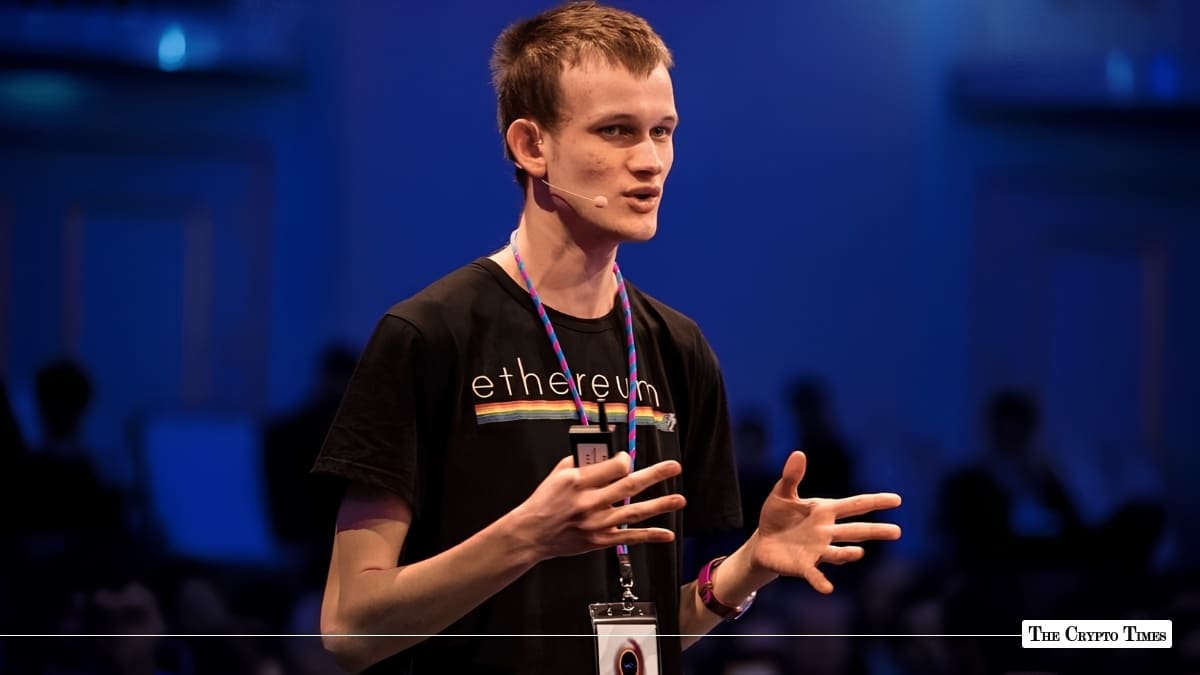
Ethereum co-founder Vitalik Buterin has launched an unusual public challenge to test a growing claim in the artificial intelligence era: that AI-powered text analysis could eventually make online anonymity impossible.
In a post shared on X on Monday, Buterin shared that he had previously authored an Ethereum-related document under a different identity and invited the public to identify which one it was.
Testing the limits of AI de-anonymization
The challenge comes amid growing debate over whether AI-powered text analysis can reliably identify anonymous authors based on their writing style.
To test that idea, Buterin revealed that he had anonymously authored a published Ethereum-related document sometime during the current decade.
“There have recently been claims that AI text analysis will make online anonymity untenable,” Buterin wrote. “So let me cannibalize a piece of my own anonymity to do an experiment.”
According to Buterin, the document carries “medium importance” within the Ethereum ecosystem and was published without his name attached. He then challenged the community to identify it, ending the post with a simple invitation: “Find it.”
Ethereum community begins the search
The post quickly attracted attention from developers, researchers, and crypto enthusiasts eager to test their ability, and AI’s ability, to identify Buterin’s writing style. Several users immediately began proposing theories.
One of the most detailed responses came from a community member who suggested that Ethereum’s official roadmap page could be the anonymous document.
The user argued that certain stylistic traits felt distinctly “Vitalik-esque,” citing the use of biological evolution analogies, extensive caveats, and philosophical framing often associated with Buterin’s writing.
Others speculated that AI-assisted editing could make attribution increasingly difficult regardless of an author’s natural writing style.
Privacy debate returns to center stage
Buterin’s experiment comes as artificial intelligence increasingly blurs the line between privacy and surveillance online.
The Ethereum co-founder has long been vocal about both the opportunities and risks associated with AI. In December 2025, Buterin pushed back against simplistic AI “doomsday” narratives, arguing that the industry should focus on solving alignment challenges and ensuring advanced systems remain beneficial to humanity.
While dismissing some of the more extreme predictions surrounding artificial intelligence, he warned that poorly aligned systems could still pose significant long-term risks if development outpaces safeguards.
The debate has only intensified as AI capabilities continue to advance. Earlier this year, Tether-backed neurotechnology project BrainWhisperer claimed it could decode human thoughts into text with 98.3% accuracy, highlighting how quickly machine learning systems are improving at interpreting human-generated signals.
Against that backdrop, Buterin’s latest challenge shifts the discussion from theoretical future risks to a practical present-day question: whether AI can already undermine one of the internet’s most important protections — anonymous speech.
Researchers have long used stylometric analysis to identify authors based on linguistic patterns, but advances in AI have significantly improved the ability to detect subtle writing fingerprints across large datasets.
Supporters argue such tools can help uncover misinformation networks and coordinated influence campaigns, while critics warn they could erode online privacy and make anonymous communication increasingly difficult.
As community members continue searching for the mystery document, the challenge raises a broader question for the AI era: can true anonymity survive when machines are becoming increasingly capable of recognizing the subtle fingerprints hidden within human writing?
Also read: Baillie Gifford Debuts Native On-Chain Yield Fund on Solana