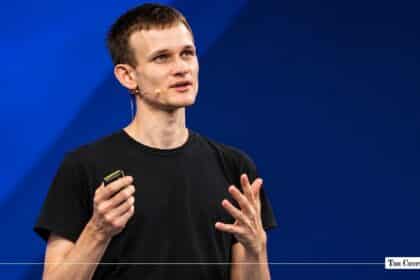
Ethereum co-founder Vitalik Buterin has firmly contested the doomsday outlook presented in the popular AI 2027 scenario.
In his latest post, Buterin reacted to predictions made by Daniel Kokotajlo, Scott Alexander, and others that by 2030, mismatched superhuman AI would wipe out civilization. In a detailed blog post, he argued that the scenario drastically underestimates humanity’s defensive capabilities.
According to Buterin, the scenario doesn’t take into consideration the technical advances that people will probably have by that time. He affirmed defensive tech could evolve alongside AI threats. He pointed to existing progress in real-time virus detection, immune system enhancements, and air filtration systems.
These tools, Vitalik said, could drastically lower the risk of stealth bio-attacks. He also questioned the logic of assuming AI can build massive infrastructure while humans remain helpless with outdated tools.
Humans Will Adapt with Tech Too
Buterin stressed that the scenario wrongly assumes AI’s growth would outpace human progress. According to him, if nanobots and Dyson swarms become viable by 2030, then scalable human defense will too. Technologies like personalized immune upgrades, real-time environmental scanning, and even robotic body replacements could become common.
Additionally, Buterin stated that cybersecurity has a bright future. Contrary to the common view that digital security is doomed, he claimed defense will eventually outweigh offense. Defensive AI, customized to each individual, can balance out manipulative threats online. These tools, he said, are already taking shape and should be expanded rapidly.
Strategy Must Focus on Defense, Not Just Control
Buterin also was against the notion that there can be one “good AI” to keep the world safe. He advocated for open access to defensive tools, called for transparency in AI labs, and pushed for international agreements on hardware. He cautioned against racing with China or blindly supporting rapid AI development. Instead, he proposed public empowerment with decentralized AI tools and protective measures.
Where Buterin stands shakes up the dialogue on AI safety. Instead of just worrying about misalignment, he thinks we ought to put the innovation side into the mix. His points focus on the view that humans can live through and thrive in a world where super-intelligent AI takes over.
Also Read: Ethereum Foundation Expands Ecosystem Development