Crypto Times Logo Black
Google News Follow Banner
  • News
    • Market
    • Bitcoin
    • Ethereum
    • Altcoins
    • Regulations & Policies
    • DeFi News
    • Blockchain News
    • Industry
  • Exclusive
  • Opinion
  • Learn
    • Explained
    • How To
    • Insights
  • Podcasts
  • More
    • About Us
    • Our Authors
    • Contact Us
    • Editorial Policy
The Crypto TimesThe Crypto Times
  • All News
  • Market
  • Bitcoin
  • Ethereum
  • Altcoins
  • Regulations & Policies
  • Blockchain
  • DeFi
  • Industry
  • Exclusive
  • Opinion
Search
  • News
    • Market
    • Bitcoin
    • Ethereum
    • Altcoins
    • Regulations & Policies
    • Blockchain
    • DeFi
    • Industry
    • Exclusive
    • Opinion
  • Learn
    • Explained
    • How To
    • Insights
  • Quick Links
    • About Us
    • Our Authors
    • Contact Us
    • Editorial Policy
    • AI Policy
    • Sponsored & Advertorial Policy
  • Podcasts
Follow US
© 2026 By Crypto Times. All Rights Reserved.
Market News

Scammers Demand Bitcoin and USDT for Strait of Hormuz ‘Clearance’

Security experts warn fraudsters are mimicking official Iranian toll systems to extort stranded vessels, leading to unauthorized transit attempts and live-fire incidents.

Written By:
Divya Mistry

Last updated: 1 hour ago
Published 2 hours ago
Share
Last updated: 1 hour ago
Published 2 hours ago
Scammers Demand Bitcoin and USDT for Strait of Hormuz 'Clearance'
Show AI Summary
A cryptocurrency-based scam is targeting shipping companies in the Strait of Hormuz, threatening global maritime trade security.
The scam’s use of Bitcoin and Tether for payment mirrors actual payment infrastructure, complicating its detection and prevention.
The incident highlights the growing intersection of cybercrime and geopolitical tensions, with potential lethal consequences for vessels and crew.

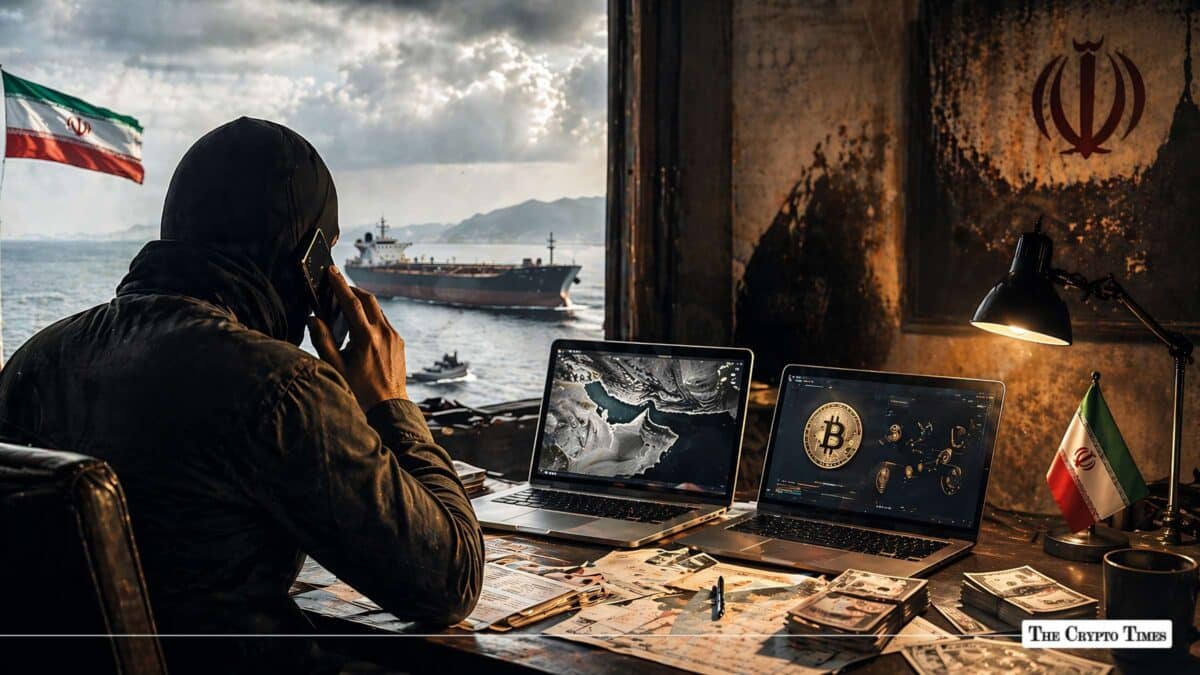
Fraudsters impersonating Iranian authorities are demanding cryptocurrency payments from shipping companies whose vessels are trapped in the Persian Gulf, offering fake “clearance” to transit the Strait of Hormuz — a scam that Greek maritime risk management firm MARISKS warned may have already led to at least one ship being fired upon.

The alert, reported by Reuters on April 21, describes messages sent to shipping companies from unknown actors claiming to represent Iranian security services. The messages demand that shipowners submit documentation and pay a fee in Bitcoin (BTC) or Tether (USDT) before being granted safe passage through the strait at a pre-arranged time.

“After providing the documents and assessing your eligibility by the Iranian Security Services, we will be able to determine the fee to be paid in cryptocurrency (BTC or USDT). Only then will your vessel be able to transit the strait unimpeded at the pre-agreed time,” the message read, according to the text cited by MARISKS.

MARISKS was unequivocal, “These specific messages are a scam.” The firm confirmed the messages were not sent by Iranian authorities. Tehran has not publicly commented.

A ship was fired upon

What elevates this from a routine fraud warning to a serious security concern is MARISKS’ assessment that the scam may have already had lethal consequences.

On April 18, when Iran briefly opened the strait subject to checks, several ships attempted to pass through. At least two vessels — including a tanker — reported that Iranian boats fired shots at them, forcing them to turn around. MARISKS said it believes at least one of those vessels may have been following instructions from the fraudulent messages — meaning a ship that paid scammers in crypto for “clearance” attempted to transit without actual Iranian authorisation and was fired upon.

Why crypto is the payment of choice

The scammers’ demand for BTC or USDT is not incidental — it mirrors the actual payment infrastructure that Iran has been building at Hormuz.

Since mid-March 2026, Iran’s Islamic Revolutionary Guard Corps (IRGC) has been charging tankers $1 per barrel of crude in cryptocurrency and Chinese yuan for transit through the strait. Iran’s Oil, Gas and Petrochemical Products Exporters’ Union confirmed the fee structure. The Iranian parliament formally codified the system as the “Strait of Hormuz Management Plan” on March 30. According to TRM Labs, the IRGC has charged ships up to $2 million each, with estimated revenue of $600–800 million per month.

The fact that Iran’s actual toll system uses crypto makes the scam more convincing — and more dangerous. Shipping companies already know that crypto payments are part of the real transit process. A fraudulent message demanding BTC or USDT doesn’t look out of place against that backdrop. It fits seamlessly into an environment where the line between state-imposed tolls and criminal extortion has become uncomfortably thin.

Hundreds of ships and 20,000 seafarers stranded

The scam exploits a desperate situation. Hundreds of ships and approximately 20,000 seafarers remain stranded in the Gulf. The U.S. has maintained its blockade of Iranian ports, while Iran has lifted and then re-imposed its blockade of the strait — through which roughly a fifth of the world’s oil and liquefied natural gas passed before the conflict escalated.

Iran briefly reopened the strait on April 17 for commercial vessels during the ceasefire period, triggering a broad rally across crypto markets. But the reopening has been partial and unpredictable — ships have been fired upon, passage remains limited to roughly 12 vessels per day, and the toll system adds a layer of cost and compliance that many operators have not previously encountered.

For shipping companies with vessels anchored for weeks amid missiles and drones, a message offering a clear path out — for a crypto fee — is designed to exploit exactly that level of desperation.

What shipowners should know

MARISKS and multiple maritime security firms have issued advisories urging shipowners to verify any transit instructions through official channels before making payments. No legitimate passage arrangement through the Strait of Hormuz is conducted via unsolicited messages demanding cryptocurrency.

The real toll system, while itself controversial, operates through a documented process: ship operators contact an IRGC-linked intermediary, submit cargo manifests and crew data, receive approval through a screening process, and then pay via crypto or yuan before receiving a VHF-broadcast passcode and naval escort.

Any message that bypasses this structure — particularly one that arrives unsolicited and demands direct crypto payment for immediate clearance — should be treated as fraudulent.

Also Read: Indian Authorities Uncover ₹6.82 Crore Crypto Scam in Yamunanagar

Disclaimer: The information researched and reported by The Crypto Times is for informational purposes only and is not a substitute for professional financial advice. Investing in crypto assets involves significant risk due to market volatility. Always Do Your Own Research (DYOR) and consult with a qualified Financial Advisor before making any investment decisions.

Follow The Crypto Times on Google News to Stay Updated!      Google News
Google News Banner

TAGGED:Bitcoin (BTC)Crypto ScamTether
Share This Article
Whatsapp Whatsapp LinkedIn Telegram Copy Link
Divya Mistry - Content Editor at The Crypto Times
By Divya Mistry
Follow:
Divya Mistry is a Content Editor with over 9 years of experience in news, PR, marketing, and research. Armed with a Master’s Degree in English Literature from the University of Mumbai, she specializes in crafting and refining long-form content across digital and print platforms. Over the years, Divya has contributed to and shaped content for leading brands across a range of industries, including real estate, healthcare, vertical transport, entertainment, lifestyle, education, EdTech, tech, and finance. Her research work has been featured on platforms like DNA India, Forbes, and Elevator World India. She now brings her editorial and research skills to explore the rapidly evolving world of cryptocurrency.

Join Our Newsletter

Subscribe to get latest crypto news!

    ​

    Built with Kit

    Latest News

    A $292 Million Wake-Up Call: Inside KelpDAO Hack That Exposed DeFi’s Fragility
    A $292 Million Wake-Up Call: Inside KelpDAO Hack That Exposed DeFi’s Fragility
    Why India's Crypto Market is Getting Older, Slower, & Smarter CoinSwitch Report
    Why India’s Crypto Market is Getting Older, Slower, & Smarter: CoinSwitch Report
    OCBC and Lion Global Bring S$669M Gold Fund to Ethereum and Solana
    OCBC and Lion Global Bring S$669M Gold Fund to Ethereum and Solana
    Indian-Origin Man Arrested in Texas in $335K Crypto-to-Gold Scam
    Indian-Origin Man Arrested in Texas in $335K Crypto-to-Gold Scam
    The Binance Life (币安人生) Meme Coin: No Website, No X, But Still Listed on Binance!
    The Binance Life (币安人生) Meme Coin: No Website, No X, But Still Listed on Binance!

    Find Us on Socials

    Ad image

    You may also like

    U.S. Court Deals Blow to SEC Crypto Theory in Caitlyn Jenner Token Case

    U.S. Court Deals Blow to SEC Crypto Theory in Caitlyn Jenner Token Case

    India on Alert as ISKP Pushes AI Propaganda and Crypto Appeals

    India on Alert as ISKP Pushes AI Propaganda and Crypto Appeals

    BTC, ETH, XRP Flash Bullish Reversal Trendline Breaks Across Top 3

    BTC, ETH, XRP Flash Bullish Reversal: Trendline Breaks Across Top 3

    Tether Bets on Tokenized Funds With $8M KAIO Backing

    Tether Bets on Tokenized Funds With $8M KAIO Backing

    The Crypto Times Logo PNG

    Providing real-time, accurate Crypto reporting. Your trusted source for Crypto News and Research.

    Stay Updated

    All News
    Exclusive
    Opinions
    Learn
    Podcasts

    Company

    About Us
    Our Authors
    Editorial Policy
    AI Policy
    Advertorial Policy

    Get In Touch

    Contact Us
    Career

    Find Us on Socials

    X-twitter Linkedin Telegram Youtube Instagram

    © 2026 The Crypto Times | A BITROCK TECHNOLOGIES L.L.C. Company.

    DMCA.com Protection Status
    • Terms and Conditions
    • Disclaimer
    • Privacy Policy
    • Cookie policy
    Do Not Sell or Share My Personal Information