Key Highlights
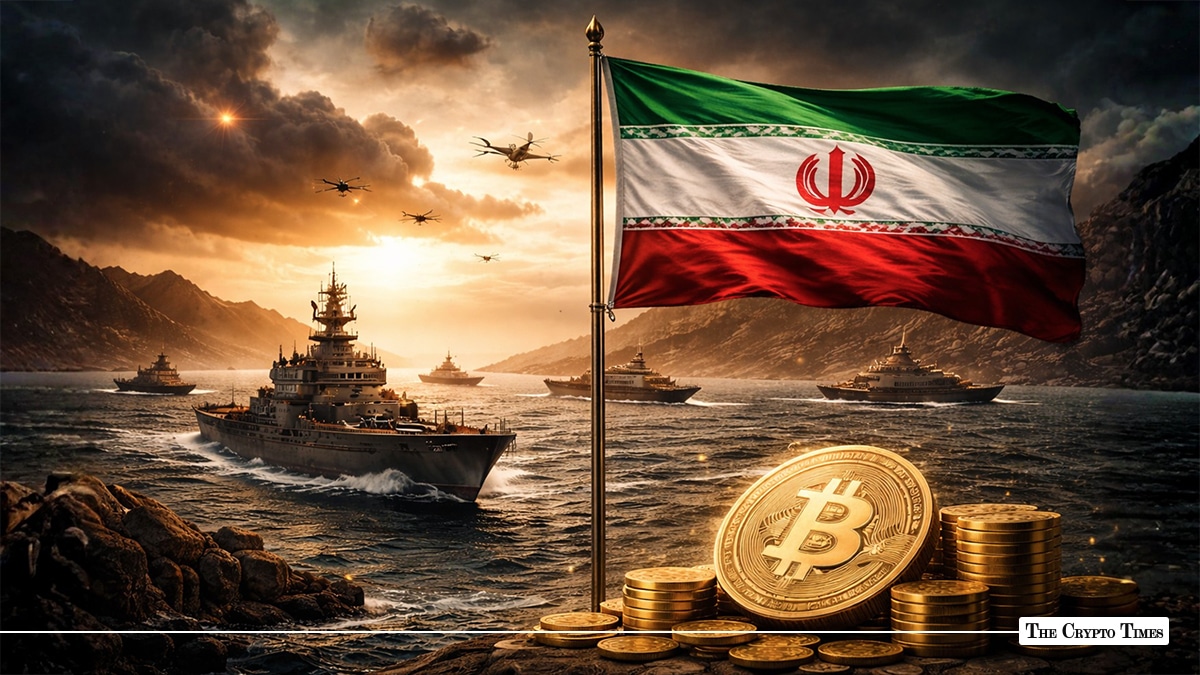
- Iran is charging oil ships $1 per barrel and requires payment in Bitcoin before they can pass.
- Ships must send cargo details, wait for approval, and risk being targeted if they move without permission.
- Traffic has slowed significantly, with hundreds of ships waiting and global oil movement affected.
Following the two-week ceasefire between the United States and Iran, Tehran is now asking shipping companies to pay transit tolls in cryptocurrency and Chinese Yuan for any oil tankers moving through the Strait of Hormuz.
According to a Financial Times report, the country is doing this in order to keep control of the route while it monitors cargo and enforces compliance through strict approval and payment procedures.
Iran to charge $1 per oil barrel
Iran plans to charge $1 for every barrel of oil carried by each tanker passing through the strait. This means the more oil a ship carries, the more it will pay. Hamid Hosseini, spokesperson for Iran’s Oil, Gas and Petrochemical Products Exporters’ Union, said every vessel will be checked one by one. Before passing, ships must send an email to Iranian authorities showing what they are carrying.
“Once the email arrives and Iran completes its assessment, vessels are given a few seconds to pay in bitcoin, ensuring they can’t be traced or confiscated due to sanctions,” Hosseini said.
Iran said the system is designed to monitor what passes through the strait and prevent weapons from being transported during the ceasefire period.
“Iran needs to monitor entry and exit from the Strait to prevent this period from being used for the transfer of weapons,” Hosseini stated. He added that all cargo can pass, but each vessel will go through a review process that may take time.
Iran warns non-compliant ships
At the same time, the country issued a warning to ships operating in the Persian Gulf. Radio messages in English have reportedly been sent to vessels that any movement without Iranian permission could lead to them being targeted.
As a result, the traffic through the Strait of Hormuz has reduced. Reports indicate that hundreds of ships are waiting in the region for clear instructions on how to proceed. Before the conflict, between 100 and 120 vessels passed through the strait each day. But now, only a few ships are moving, as many companies prefer to wait until the situation becomes safer.
The issue was only one of the keys discussed in extending the ceasefire. U.S. President Donald Trump said the continuation of the truce depends on the “full, immediate, and secure reopening” of the waterway. He also suggested the possibility of a joint system with Iran to manage tolls, although Iranian officials have not confirmed such an arrangement.
The Strait of Hormuz is a narrow water route near Iran and is very important for global oil supply. A large part of the world’s oil passes through it every day. When the route was affected by conflict, oil prices increased, and global trade was disturbed.
Iran’s new system shows a new way for the country to stay in control of the Strait even during the ceasefire.
Market reaction
Meanwhile, the crypto market reacted sharply to the news of the ceasefire during early trading hours. About $657 million in crypto was liquidated from the market in 24 hours due to the sentiment.
Bitcoin is up by 4.45% and is trading for $71,667, supported by a 64% surge in trading activity in 24 hours, reaching about $54 billion in volume, according to data from CoinMarketCap.
Also Read: Oil Perps Dethrone Bitcoin on Hyperliquid as 24/7 Trading Frenzy Surges