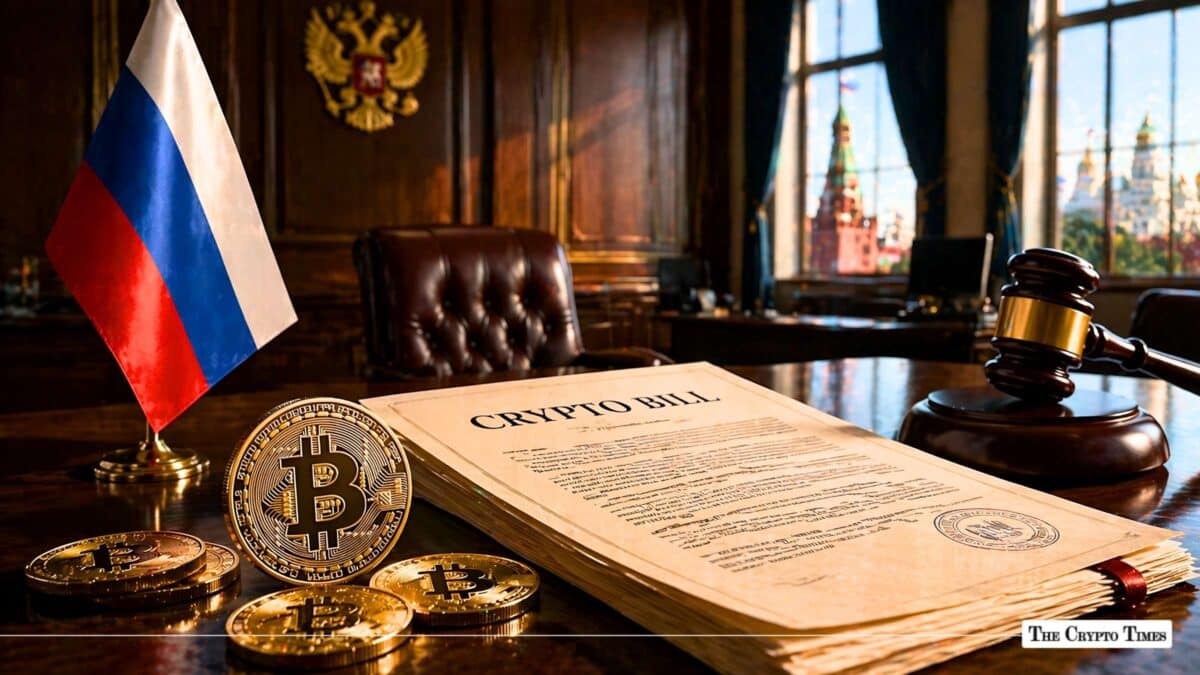
Russia’s lower house of parliament gave initial approval on April 21 to a major government bill that brings the country’s once-shadowy cryptocurrency market under formal rules, recognizing digital assets as property while keeping them firmly away from everyday domestic use.
The draft law, titled “On Digital Currency and Digital Rights,” passed its first reading with broad support. It defines key terms such as the “circulation of digital currency” and “organization of circulation,” and sets out who can legally operate in the space—primarily licensed exchanges, brokers, trustees, and digital depositories overseen by the Central Bank of Russia.
Under the bill—as reported by TASS, a local media outlet—cryptocurrencies gain clear legal standing as property. Owners would be able to defend their holdings in court, include them in bankruptcy proceedings, factor them into divorces or inheritance cases.
Yet lawmakers drew a hard line: crypto cannot be used to pay for goods, services, or wages inside Russia. The ruble remains the only legal tender for domestic transactions.
The exception is foreign economic activity. Russian companies and individual entrepreneurs would be permitted to settle cross-border deals using digital currency—a practical tool for maintaining trade flows amid ongoing Western sanctions.
The Central Bank emerges as the central gatekeeper. It would authorize, regulate, and supervise all organizers of crypto circulation, issue licenses, and set operational standards. The legislation also introduces a distinction between qualified and unqualified investors, limiting riskier transactions for ordinary citizens to protect them from sharp losses in volatile markets.
Existing banks, brokers, and participants in the experimental legal regime would benefit from simplified licensing procedures. The bill further regulates mining operations when they rely on Russian information infrastructure, requiring clear accounting of equipment and output.
“Digital Currency Is Now Property” — Lawmaker Explains Impact
Deputy Chairman of the State Duma Committee on Budget and Taxes Kaplan Panesh (LDPR faction) described the current market as a risky “gray zone” that exposed both citizens and the broader economy to potential harm.
“Now we clearly define: digital currency is property,” he said. “This means it can be defended in court, included in bankruptcy estates, and taken into account in divorces. This is a crucial step for the legal protection of millions of people who already own such assets.”
Panesh stressed the domestic ban protects the national currency, while the foreign-trade carve-out creates “a legal instrument for cross-border payments,” helping businesses bypass sanctions restrictions. He highlighted the shift away from anonymous exchangers: “No ‘black’ brokers. Trading through underground platforms will carry the risk of blocking and loss of funds.”
The bill also formalizes mining as a legitimate activity — but only under strict rules tied to Russian infrastructure.
July 2026 Target Date Set as Bill Moves Forward
If the legislation clears the remaining readings with minimal changes and receives presidential signature, most provisions would take effect on July 1, 2026. Some technical sections may follow a different timeline.
The vote marks a pragmatic evolution in Russia’s approach: acknowledging the growing role of digital assets in global trade while asserting state control to reduce anonymity, fraud, and risks to financial stability. Amendments are expected in the coming weeks as lawmakers incorporate feedback from regulators, market participants, and security services.
Also read: Coinbase Hits Back at NY AG, Shifts Prediction Markets Lawsuit to Federal Court