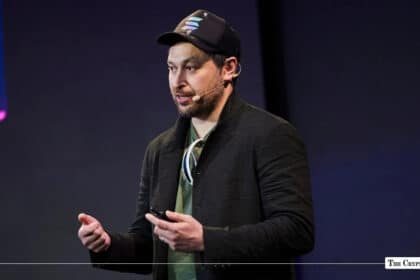
The long-running feud between Tron Founder Justin Sun and the Trump-backed World Liberty Financial (WLFI) has escalated from a bitter social media spat into a high-stakes federal courtroom battle.
Sun filed a lawsuit on Tuesday in a California federal court against World Liberty Financial LLC. The complaint alleges his multi-million dollar investment was procured through fraud and characterizes the decentralized finance (DeFi) project as being “on the verge of collapse.”
In an announcement on X, Sun framed the litigation as a last resort. “I have tried in good faith to resolve this situation with the World Liberty project team without resorting to litigation,” he wrote. “But the project team has refused my requests to unfreeze my tokens and restore my rights as a token holder. They have left me with no choice but to turn to the courts.”
Sun was remarkably careful to insulate President Donald Trump from the fallout. “I have always been—and remain—an ardent supporter of President Trump and his Administration’s efforts to make America crypto-friendly,” he stated. “This lawsuit does not change how I feel about President Trump or the Trump Administration.”
What the Complaint Alleges
The complaint lists seven distinct causes of action, including breach of contract, fraud in the inducement, conversion, unjust enrichment, and extortion. Sun and his affiliated companies, represented by the law firm Cahill Gordon & Reindel, have demanded a jury trial.
The specific demands include: a court order requiring WLFI to unfreeze Sun’s tokens; monetary damages to be determined at trial; interim and permanent injunctive relief preventing WLFI from “seizing, burning, destroying, or encumbering” Sun’s holdings; restitution; and costs and attorneys’ fees.
The filing makes several explosive allegations regarding WLFI’s internal operations. The complaint claims WLFI misrepresented its legal compliance, repeatedly extorted Sun, and threatened to report him to law enforcement. Furthermore, it alleges that WLFI has structured the project to pay up to 95% of all token sale proceeds directly to company insiders.
According to the lawsuit, WLFI has raised approximately $550 million since Sun’s initial investment—a 2,400% capital increase that the complaint attributes directly to the credibility Sun’s backing provided.
The Road to This Lawsuit
The filing did not arrive without warning. The dispute has been building for over seven months, with each escalation well-documented on-chain and on social media.
Sun invested approximately $75 million directly into WLFI beginning in late 2024, making him the project’s largest known outside backer. He was subsequently appointed as an advisor. His total exposure to Trump-affiliated crypto projects reached roughly $175 million, including $100 million in the TRUMP memecoin.
The relationship fractured in September 2025, shortly after WLFI tokens became tradable. Sun transferred approximately $9 million worth of WLFI to an external wallet — which he described as routine wallet testing. WLFI flagged the transfers as a potential agreement violation and activated a blacklist function in the smart contract, freezing 595 million of his unlocked tokens, then valued at over $100 million.
What made the freeze particularly contentious was that the blacklist function did not exist in the original contract. The capability was added through a proxy contract upgrade in August 2025 — nearly 11 months after Sun’s initial investment and just before trading commenced. A subsequent November upgrade introduced a “batch reallocation” mechanism.
On April 12, Sun went fully public, calling WLFI “a trap door marketed as an open door” and alleging the project had embedded a hidden backdoor giving insiders “unilateral power to freeze, restrict, and effectively confiscate the property rights of any token holder.” WLFI responded on X: “See you in court pal.”
The following day, Sun escalated further, citing on-chain analysis by Yearn developer banteg showing that a single guardian EOA — which also sits on WLFI’s 3-of-5 multisig — could unilaterally freeze any wallet. He called the governance setup “theatre.” WLFI’s token dropped over 20% in the days that followed.
On April 15, WLFI published a governance proposal targeting over 62 billion WLFI tokens — introducing extended vesting, a mandatory 10% insider burn, and indefinite lockups for non-opt-in holders. Sun publicly opposed the proposal, arguing it penalised dissent, excluded frozen token holders from voting, and concentrated power in anonymous wallets. Because his tokens remain frozen, he cannot vote on it.
“All I want is to be treated the same as every other early investor who received tokens — no better, no worse,” Sun wrote in Tuesday’s post.
The Governance Proposal Sun Wants Blocked
In his Tuesday post, Sun also addressed the governance proposal directly, announcing: “I also want the community to know that I strongly oppose the new governance proposal World Liberty published on April 15.”
His objection is specific. Under the proposal, token holders who do not “affirmatively accept” the new terms — including a requirement that 10% of all advisor tokens be permanently burned — will have their tokens locked indefinitely. For early purchasers, the proposal imposes a two-year cliff followed by a two-year vesting schedule, and non-acceptance again results in indefinite lockup.
“This proposal is bad for the community,” Sun wrote. “But because World Liberty has frozen my early investor tokens, I cannot vote them for or against the proposal.”
The structural irony is hard to miss: the project’s largest investor is being asked to accept terms he was excluded from negotiating, on a vote he is barred from participating in, for tokens he cannot move or sell.
The Political Dimension
The lawsuit is unusually delicate. World Liberty Financial’s co-founders include Donald Trump Jr., Eric Trump, and Barron Trump, and the project was launched as part of President Trump’s pro-crypto platform. The Trump family reportedly receives up to 75% of profits from certain token sales.
Sun appears acutely aware of the political minefield. His public statement was structured to draw a clear line between the project’s team and the president: “Unfortunately, certain individuals on the World Liberty project team have been operating the project in a manner that goes against President Trump’s values.” He added: “I do not believe President Trump would condone these actions if he knew about them.”
Whether that framing holds — particularly as the complaint alleges the project is paying up to 95% of token sale proceeds to insiders — will depend on how clearly the court can separate the Trump family’s financial interest in WLFI from the operational decisions Sun is contesting.
House Democrats have already been probing WLFI. In February, California Representative Ro Khanna launched an inquiry into a reported $500 million UAE-linked investment, seeking answers on revenue distribution, conflict-of-interest policies, and the transparency of the deal. Sun’s federal lawsuit now adds private litigation to the growing pile of scrutiny.
If the case proceeds to discovery, it will force both parties to produce internal communications and smart contract documentation that have thus far been hidden behind social media bluster. This transparency could pull back the curtain on the financial architecture of a project that has raised over half a billion dollars under the political brand of a sitting U.S. president.
As of writing, WLFI has not formally responded to the lawsuit. The WLFI token is currently trading near $0.079, down more than 83% from its all-time high of $0.46, as per data from CoinMarketCap.
Also Read: Indian-Origin Man Arrested in Texas in $335K Crypto-to-Gold Scam