Key Highlights
- World Liberty Financial (WLFI) has unveiled a governance proposal targeting over 62 billion WLFI tokens. Insiders face a two-year cliff plus three-year vest with a mandatory 10% burn (up to 4.5 billion WLFI destroyed). Early supporters get a milder 2+2 year schedule with no burn. Non-opt-in tokens stay locked indefinitely.
- The move comes days after a sharp clash with major investor Justin Sun, who accused WLFI of embedding a hidden “backdoor” blacklist function. The Tron Founder claims over 500 million of his tokens were frozen unilaterally since September 2025 without disclosure.
- Marketed as decentralized with community governance, WLFI’s handling of the Sun dispute highlights guardian/multisig powers to freeze tokens without approval, resembling corporate oversight more than permissionless DeFi.
World Liberty Financial (WLFI), the DeFi project tied to the U.S. President Donald Trump’s family, rolled out a major governance proposal on Wednesday aimed at tightening insider token locks amid mounting criticism and a high-profile feud with Tron Founder Justin Sun.
The proposal, posted to the project’s forum, targets more than 62 billion WLFI tokens held by team members, advisors, founders, partners, and early supporters. Insiders opting in would face a two-year cliff followed by a three-year linear vest, with a mandatory 10% token burn—potentially destroying up to 4.5 billion WLFI permanently.
Under the new terms, early supporters would see a milder schedule: a two-year cliff and two-year vest with no burn. Tokens not opted into the new terms would remain locked indefinitely under existing rules.
WLFI framed the move as a “strongest long-term governance alignment signal in DeFi,” ensuring at least two years of committed participation while highlighting recent wins like explosive growth in its USD1 stablecoin, Chainlink-powered proof-of-reserves, and multi-chain expansion.
A DeFi platform or centralized company?
World Liberty Financial’s recent clash with Justin Sun has laid bare a core contradiction at the heart of WLFI. Marketed aggressively as a DeFi platform that empowers users through community governance and decentralized lending, the project instead revealed hidden blacklist functions and backdoor controls embedded in its smart contract.
These allow a single guardian address or small multisig group to unilaterally freeze token holdings without notice, due process, or transparent community approval.
When Sun moved roughly $9 million worth of WLFI tokens, his wallet holding hundreds of millions was promptly blacklisted, prompting accusations that the team treats investor assets as controllable property rather than sovereign holdings.
Usually, true DeFi protocols derive their value from immutable code and user sovereignty; here, the ability to restrict or seize funds at will looks far more like discretionary corporate oversight than permissionless finance.
WLFI vs. Justin Sun drama
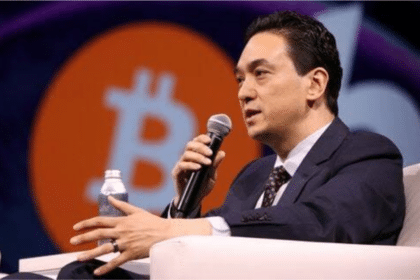
Sun, who invested around $75 million in WLFI, had over 500 million of his tokens frozen in a blacklisted wallet since September 2025. Sun accused the team of embedding a hidden “backdoor” blacklist function in the smart contract, allowing unilateral freezes without disclosure or governance recourse.
He called himself the “first and largest victim” and slammed the project for treating investors like a “personal ATM,” especially after WLFI used billions of its own tokens as collateral to borrow $75 million in stablecoins on Dolomite—a move that briefly restricted user access and drew broader scrutiny.
WLFI fired back, labeling Sun’s claims “baseless” and part of his “same playbook,” while threatening legal action for breach of contract and defamation. The dispute has amplified questions about transparency in the Trump-linked venture, with critics pointing to centralized controls disguised as decentralized finance.
Now WLFI’s latest proposal arrives as its native token faces sharp price pressure, currently trading at $0.08266 and shedding more than 15% in the past week, amid the drama and earlier borrowing controversy.
Whether the proposal passes and restores confidence—or fuels more skepticism—will test WLFI’s ability to bridge TradFi polish with genuine DeFi principles in a politically charged spotlight.
Also read: “Quantum Security Shouldn’t Be a Debate”: Justin Sun Targets Bitcoin & Ethereum