Key Highlights
- Tron Founder Justin Sun announced TRON’s post-quantum upgrade, saying the network aims to lead rather than debate quantum security.
- The initiative targets NIST-standardized cryptographic signatures, positioning TRON ahead of Bitcoin and Ethereum’s slower approaches.
- TRON is leveraging its stablecoin dominance to push a “quantum-safe by default” narrative in the evolving crypto race.
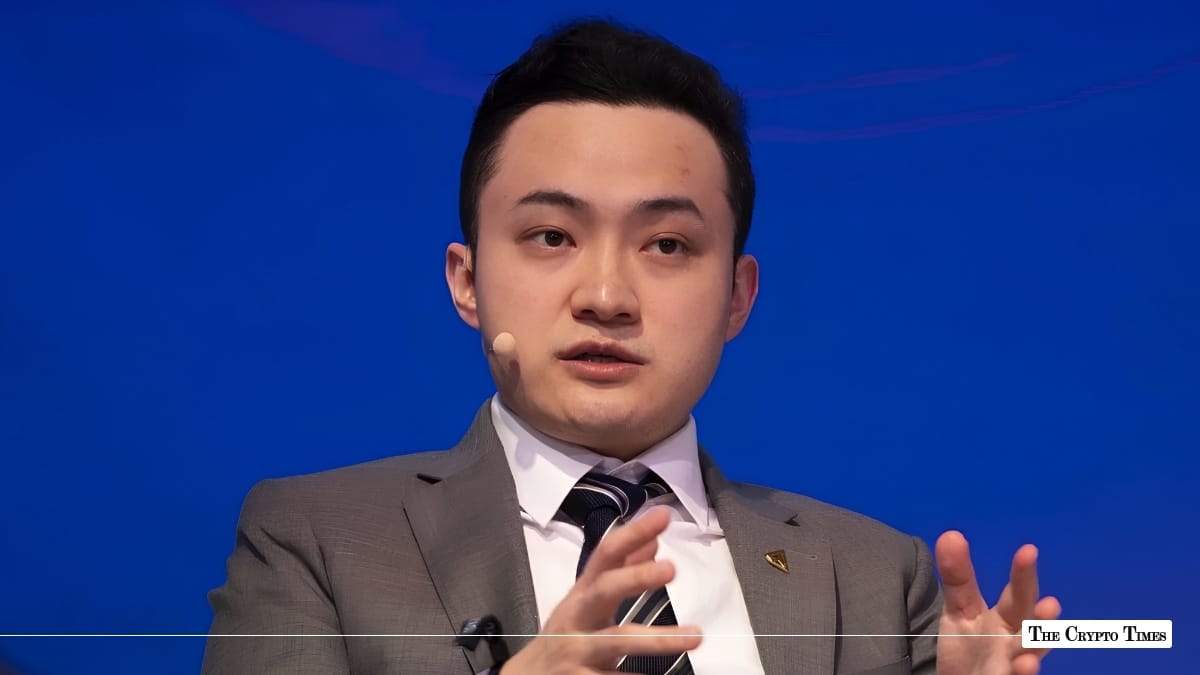
In a sharply worded post on X earlier today, TRON Founder Justin Sun declared that the network is officially launching its post-quantum upgrade initiative, positioning TRON to become the first major public blockchain to deploy NIST-standardized post-quantum cryptographic signatures on mainnet. And he did not waste the opportunity to take a swing at his two largest rivals on the way out.
“While Bitcoin debates whether to freeze vulnerable coins and Ethereum forms research committees, TRON is building,” Sun wrote. “Quantum security shouldn’t be a debate. It should be a feature. We will ensure that no TRON user ever loses their assets to quantum threats.”
A technical roadmap, he added, is “coming soon.”
A direct shot at Bitcoin and Ethereum
Sun’s framing is no accident. The crypto industry has spent the better part of 2026 locked in two parallel and very public debates over what to do about the looming quantum threat, and TRON has, until today, been notably absent from both.
On the Bitcoin side, the conversation has turned increasingly uncomfortable. According to recent on-chain analysis, roughly 6.98 million BTC, worth around $440 billion, sit in addresses that could be exposed to a sufficiently powerful quantum computer, including the estimated 1.1 million BTC attributed to Satoshi Nakamoto himself.
Developers and community figures have splintered into camps, with some pushing for a soft fork to freeze or burn vulnerable coins through proposals like BIP-360, and others insisting that any such intervention would shatter Bitcoin’s foundational claim of immutability.
As Lightning Labs CTO Olaoluwa Osuntokun and Blockstream’s Adam Back have noted in recent weeks, even the patches being prototyped come with the very real risk of locking users out of their own funds.
Ethereum’s situation looks more organized on paper, but is no less drawn out. The Ethereum Foundation formally established a dedicated Post-Quantum research team in January 2026, and Ethereum Co-Founder Vitalik Buterin followed up in February with a four-year quantum roadmap, often called the “Strawmap,” that proposes migrating away from ECDSA and BLS signatures toward hash-based alternatives through upgrades like Glamsterdam and Hegotá.
The plan is ambitious, but the keyword in nearly every Ethereum post on the topic is “gradual.” Full post-quantum consensus is described as a longer-term goal stretching toward 2030.
That gap between debate and deployment is exactly the wedge Sun is now driving into.
What TRON is actually promising
The announcement is, by Sun’s own admission, light on specifics for now. But the language he chose is precise enough to matter.
By committing to NIST-standardized post-quantum cryptographic signatures, TRON is signalling that it intends to adopt one or more of the schemes finalised by the U.S. National Institute of Standards and Technology in its post-quantum cryptography standards.
The most relevant of these for blockchain use is SLH-DSA, also known as SPHINCS+, a hash-based signature scheme standardised as FIPS 205 in August 2024. Other NIST picks include ML-DSA (CRYSTALS-Dilithium) and FN-DSA (Falcon).
These schemes are designed to remain secure against attacks from large-scale quantum computers running Shor’s algorithm, the same algorithm that, in theory, could one day reverse a public key into its corresponding private key on Bitcoin or Ethereum. The trade-off is size and cost.
SLH-DSA signatures, for example, can run 8 kilobytes or larger compared to the roughly 64-byte ECDSA signatures used today, which is why Bitcoin and Ethereum developers have spent years debating compression schemes, aggregation layers, and recursive proofs before touching mainnet.
Sun’s pitch is that TRON will simply ship it, and ship it first.
Why is the timing sharp
The announcement also lands at a moment when quantum risk has stopped feeling abstract. Earlier this month, researchers at Google made waves by suggesting that a sufficiently powerful quantum computer could, in theory, break Bitcoin’s core cryptography in under nine minutes, with the threat potentially materialising as early as 2029.
A StarkWare researcher published a last resort emergency scheme called Quantum Safe Bitcoin that costs up to $200 per transaction. Bitcoin developers are openly discussing a hard fork. None of this looked plausible even a year ago.
Against that backdrop, Sun’s “while they argue, we build” message reads less like ordinary marketing and more like a deliberate attempt to claim the post-quantum narrative for TRON before either Bitcoin or Ethereum can ship something on mainnet. It is, in many ways, classic Sun, a founder who has long understood the value of moving the headline before the technology.
The stakes for TRON
TRON has a reasonable case to be assertive here. The network has emerged as the dominant rail for stablecoin transfers across much of Asia, Africa, and Latin America, with USDT settlement on TRON now central to billions of dollars of daily flow. A successful quantum attack on TRON would not just affect TRX holders; it would ripple into the global stablecoin economy. That gives Sun both the motivation and the moral high ground he is currently leaning into.
It also gives TRON a competitive opening. If the network can credibly deploy NIST-standardized post-quantum signatures on mainnet while Ethereum is still iterating through Strawmap forks and Bitcoin is still arguing over whether Satoshi’s coins should be frozen, “quantum-safe by default” becomes a marketing line that few rivals can match.
Of course, the announcement is not without its skeptics. Sun has a long history of well-timed teases, and the crypto community has learned to wait for the actual code before celebrating. The technical roadmap, when it lands, will need to address the hard questions: which NIST scheme TRON intends to adopt, how validator and wallet migration will work, what happens to existing TRX, USDD, and TRC-20 token holders, and how the network will handle the larger signature sizes without blowing up block space or fees.
For now, though, Sun has done what Sun does best. He has put TRON at the centre of a conversation it was not previously part of, and dared Bitcoin and Ethereum to catch up.
The roadmap, as he put it, is coming soon. The crypto industry will be watching very carefully to see whether the build matches the boast.
Also Read: BIP 361’s Post-Quantum Migration Plan Sparks Debate Over Bitcoin Freezing