Key Highlights
- Justin Sun alleges WLFI embedded a hidden blacklist function, allowing it to freeze investor tokens without notice or consent.
- Around 545 million WLFI tokens linked to Sun remain locked since September 2025, causing an estimated $70 million paper loss.
- WLFI has yet to respond, while scrutiny grows over its governance, security actions, and borrowing risks.
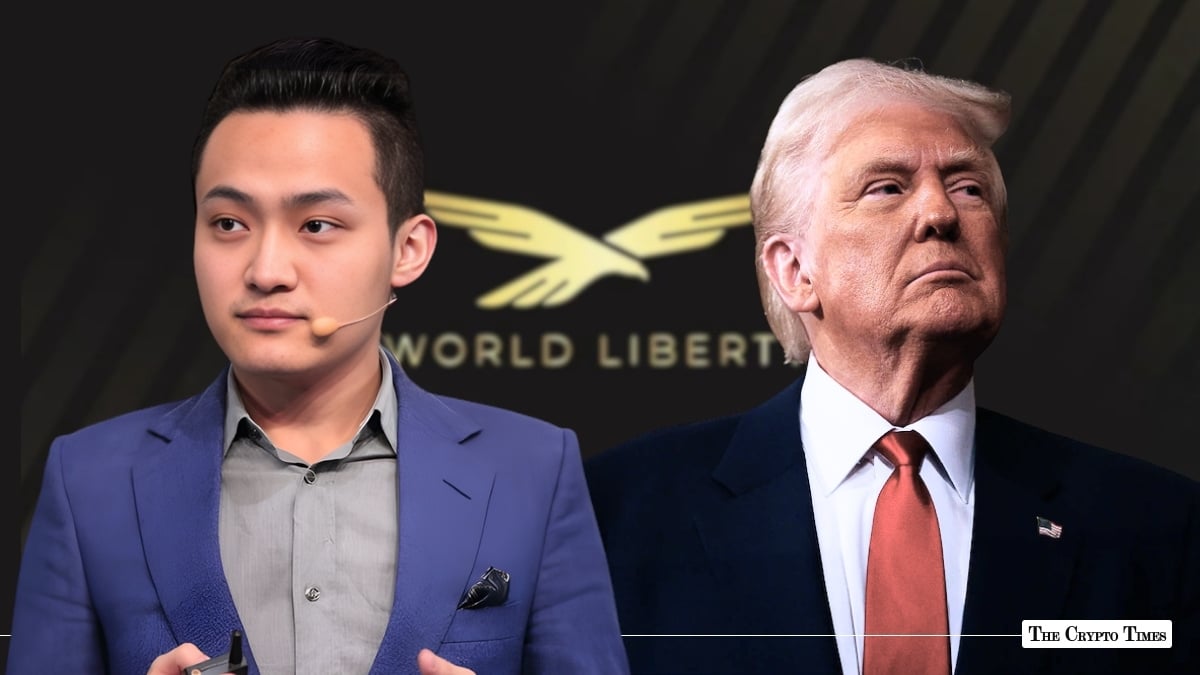
Tron founder Justin Sun has launched his sharpest public attack yet on World Liberty Financial (WLFI), accusing the Donald Trump-backed DeFi project of hiding a backdoor blacklisting function inside its token contract and using it to freeze investor funds without cause.
In a lengthy statement posted on X on April 12, Sun said WLFI had built “a trap door marketed as an open door” and declared himself the “first and single largest victim” of the project’s wallet freeze, which has kept roughly 545 million of his WLFI tokens locked since September 2025.
“What was never disclosed, to me or to any investor, is that World Liberty embedded a backdoor blacklisting function in the smart contract used to deploy WLFI tokens,” Sun wrote. “This function gives the Company unilateral power to freeze, restrict, and effectively confiscate the property rights of any token holder, without notice, without cause, and without recourse.”
Sun reaffirms Trump support, targets WLFI team
Sun was careful to separate the WLFI team from President Trump himself, reiterating that he remains “an ardent supporter of President Trump and his crypto-friendly policy” and that he had invested heavily in WLFI because he believed in the promise of a decentralised finance platform that would remove intermediaries and bring DeFi to mainstream Americans.
The criticism, he stressed, is directed at “the bad actors at WLFI.”
Sun said every action taken by the WLFI team, from extracting fees and secretly implanting backdoor controls to freezing investor funds and treating the crypto community as “a personal ATM,” was illegitimate and never authorised through any fair governance process.
He also attacked the governance votes WLFI has cited to justify its moves, alleging that key information was withheld from voters, meaningful participation was restricted, and the outcomes were predetermined. “These votes do not represent the will of the community, they represent the will of those who designed them,” Sun wrote.
Sun escalated the criticism in a follow-up post on X, calling on those behind World Liberty Financial to publicly identify themselves rather than operate anonymously. He argued that actions such as freezing user funds without notice point to deeper accountability failures, and said individuals responsible for these decisions should step forward under their real names, framing the issue as a broader breakdown of transparency in DeFi governance.
WLFI Fires Back at Sun
WLFI pushed back forcefully against Sun’s claims in a post on X, accusing him of repeating a familiar pattern of portraying himself as a victim while making unsubstantiated allegations to deflect from his own conduct. The firm suggested that this was a “same playbook, different target” approach, implying that such disputes were not new.
The company added that it has “the contracts” and “the evidence” to back its position, asserting confidence in its case and signaling that the dispute is headed for legal resolution. It closed with a pointed remark, saying “see you in court,” underscoring its willingness to escalate the matter further.
The background: A $107 million freeze that never ended
The feud traces back to September 4, 2025, when WLFI’s controlling address function on the token contract and blacklisted a wallet linked to Sun. The action followed on-chain transfers of roughly $9 million worth of WLFI from Sun’s address, including movements routed through HTX, the exchange where he serves on the Global Advisory Board.
At the time, the freeze affected 595 million unlocked WLFI tokens worth about $107 million, along with billions more in locked tokens. Sun responded then by calling the transfers mere “exchange deposit tests” and insisting no buying or selling was involved.
WLFI never publicly explained the blacklist in detail, though a later spokesperson framed the action as part of a broader security response tied to a phishing incident that affected 272 wallets. Sun’s wallet was flagged under a category described as suspected misappropriation of other holders’ funds, an allegation he has consistently denied.
$60 million in paper losses and counting
The freeze has been financially punishing. As The Crypto Times previously reported, Bubblemaps data in December showed Sun’s locked WLFI position had shed roughly $60 million since the blacklist was imposed, as the token slid more than 55% from its trading debut.
The losses have since deepened. WLFI is now changing hands near $0.09, down over 74 percent from its launch price, and Sun’s frozen stake is currently worth under $50 million, representing a paper loss of roughly $70 million on that tranche alone.
Sun’s total exposure to the Trump-linked crypto ecosystem stands at around $175 million, including $75 million invested into WLFI and a $100 million commitment to the TRUMP memecoin. He was named an advisor to WLFI in late 2024 after an initial $30 million token purchase and attended a gala dinner hosted by the President in May 2025 as one of the top TRUMP holders.
“Unlock the Tokens”
Sun closed his statement with a direct demand to the WLFI team: release the funds and operate transparently.
“The WLFI team’s actions erode trust in the project. Unlock the tokens and uphold transparency for the community. Let’s build with integrity, not misconduct,” he wrote.
WLFI has not publicly responded to Sun’s latest statement at the time of publishing. The project’s leadership, which includes President Trump’s three sons as listed co-founders, has previously dismissed concerns around its treasury activity as “FUD” and maintained that its security actions were not targeted at any individual.
Sun’s post lands in the same week that fresh scrutiny hit WLFI over its borrowing activity on the lending protocol Dolomite, where the project pledged billions of WLFI tokens as collateral to draw tens of millions in stablecoins, drawing warnings from analysts about bad-debt risk if the token falls further.
Also Read: WLFI Drops 15% After $75M DeFi Borrow Sparks Concerns