Key Highlights
- SpaceX priced the largest IPO in history at $135 a share, raising ~$75 billion at a ~$1.77 trillion valuation and pushing Elon Musk’s net worth past $1 trillion, a world first.
- Crypto rails priced SPCX months before Nasdaq: pre-IPO perps, tokenized shares, and Polymarket bets formed an on-chain “when-issued” market that out-forecast Wall Street by roughly half a trillion dollars.
- SpaceX’s filing disclosed 18,712 BTC worth ~$1.29 billion, more than double what on-chain trackers estimated, instantly making the new public giant a major corporate Bitcoin holder.
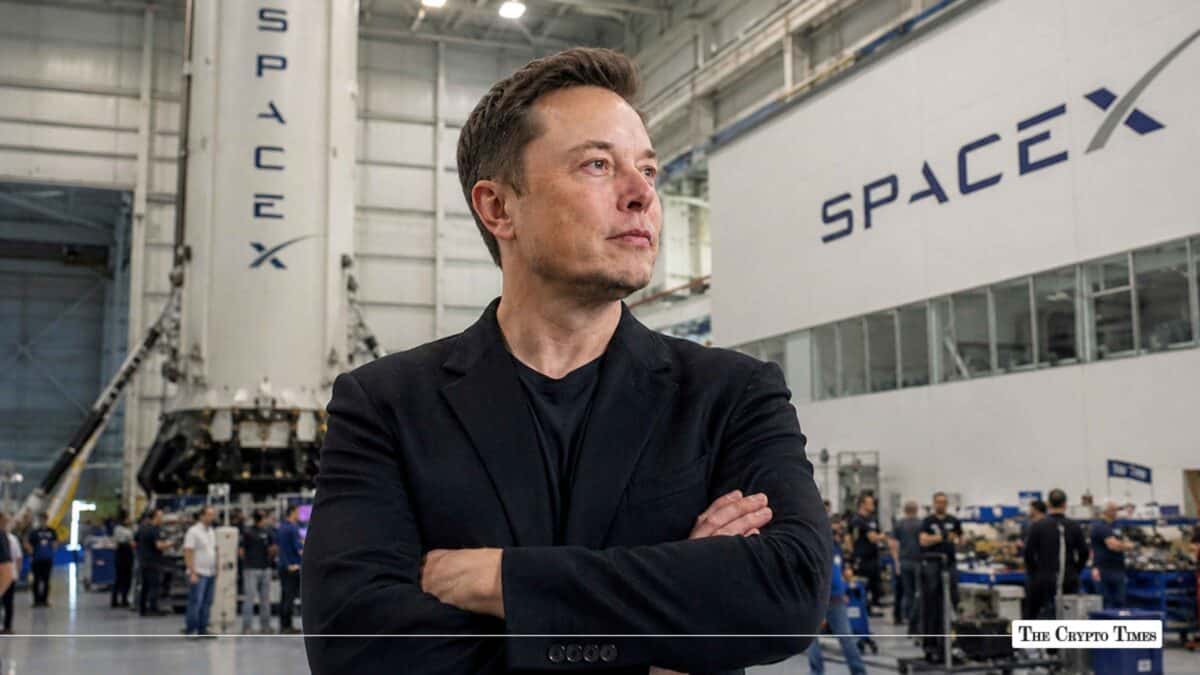
It finally happened. With SpaceX pricing the biggest initial public offering ever recorded, Elon Musk has become the world’s first trillionaire, a milestone that reads like science fiction and arrived, fittingly, via a rocket company. SPCX priced at $135 per share, sold roughly 555.6 million shares, raised about $75 billion, and landed a valuation near $1.77 trillion as it heads for its Nasdaq debut today, easily topping Saudi Aramco’s 2019 record. The deal was wildly oversubscribed, with demand reportedly near $150 billion; double the raise.
For mainstream finance, the story is the man and the money: Forbes pegged Musk’s fortune just under $983 billion heading in, and the listing vaulted him over the trillion-dollar line, with some estimates already placing him above $1.1 trillion once his SpaceX stake is marked to the offer price. But for crypto, the more remarkable story is how this IPO was priced, and what SpaceX has been quietly holding.
Crypto Rails Priced SpaceX Months Before the Opening Bell
Every previous mega-IPO — Aramco, Alibaba, Facebook — went public with one forward signal: the bankers’ book. SPCX arrived with a full derivatives layer that had been trading for two months, built entirely on crypto rails before the equity even existed.
Since April, an unofficial “when-issued” market assembled itself on-chain, permissionlessly. Synthetic SPCX perpetuals launched on Hyperliquid via Ventuals and trade.xyz; BingX rolled out a SpaceX-tracking token; OKX added a USDT-settled pre-market future; Bitget listed a 5x leveraged pre-IPO perp; and Bybit and Binance tokenized exposure, with Binance’s SPCX products alone clearing over $280 million in volume. At least eight major crypto or crypto-linked platforms had stood up some form of SpaceX exposure before a single share traded on Nasdaq. On top sat Polymarket and Kalshi, running strike-laddered prediction markets on the first-day market cap like an options surface.
The kicker: this crypto-native consensus centered around $2.0–2.3 trillion, diverging from the $1.77 trillion bookbuild by roughly half a trillion dollars. Polymarket traders assigned a 64% chance SpaceX closes its first day above a $2 trillion valuation, and just 5% above $3 trillion. In other words, decentralized markets didn’t just bet on the trillionaire outcome, they out-forecast the sell-side on price.
The S-1 Revelation: A $1.3 Billion Bitcoin Treasury
Beyond the market mechanics, the true shockwave for cryptocurrency investors was buried deep inside SpaceX’s formal SEC S-1 registration statement. The documents officially disclosed that the enterprise holds a massive balance sheet reserve of 18,712 BTC.
This disclosure reveals that SpaceX’s actual Bitcoin position is more than double the size previously estimated by public on-chain analytics firms. Acquired at an average cost basis of roughly $35,000 per token, the position represents over $1.35 billion in active capital, cementing SpaceX as a top-tier public corporate holder of digital assets alongside MicroStrategy and Tesla.
Crucially, under updated fair-value corporate accounting rules, these crypto positions will show up directly in SpaceX’s quarterly earnings statements. This means the macro price action of Bitcoin is now directly tied to the financial volatility profiles of a multi-trillion-dollar aerospace company.
Direct On-Chain Equity Access
The blurring of crypto and equities doesn’t stop at price discovery. For the first time, exposure to the biggest listing in history exists simultaneously as Nasdaq common stock and as a self-custodial token in a crypto wallet.
Tokenized SPCX is going live across crypto venues in lockstep with the listing. Through Kraken’s xStocks, retail buyers can pick up tokenized SpaceX at the IPO price and trade it on Bybit’s spot market, bypassing traditional brokerages entirely. Ondo’s Global Markets is bringing tokenized SPCX to MetaMask Swaps, tokens backed 1:1 by real shares in bankruptcy-remote custody with daily attestations, passing through economic exposure and dividends, minus voting rights.
One important caveat worth flagging for readers: these wrappers are not all the same instrument, and none is identical to owning ordinary shares through a broker. Tokenized products carry custody, jurisdiction, and rights differences that the simple buy screen hides.
Price movement: How crypto reacted
This is where the hype meets the tape; and the picture is messier than the bulls hoped.
Bitcoin went into the listing bruised, down roughly 20% since SpaceX filed on May 20, slipping under $60,000 on June 5 for the first time since 2024 before stabilizing near $62,800. The popular narrative blamed the IPO for vacuuming up risk capital, but the timing undercuts it: most of the drop happened before SPCX ever traded, with analysts pointing instead to ETF outflows, leverage liquidations, and macro pressure. A softer core inflation print gave crypto a modest bounce into the debut, though only Bitcoin held up on the week. Ether traded around $1,650 and XRP near $1.12.
Dogecoin, the Musk proxy everyone expected to rip, did the opposite. Despite the lore, Musk has said he, Tesla and SpaceX all hold DOGE, and SpaceX once agreed to be paid in Dogecoin for the DOGE-1 lunar mission, DOGE fell about 18% in early June and briefly touched $0.07, its first visit there since February 2024, hovering near the $0.081 multi-year support into the listing. Its open interest collapsed from roughly $6 billion last October to about $1 billion. The classic “buy the rumor, sell the fact” setup played out before the fact even arrived, a reminder that the Musk-DOGE reflex is weaker than the memes suggest.
SPCX itself is the one asset analysts expect to pop: pre-IPO crypto perps traded at a premium to the $135 offer for weeks, and Oppenheimer opened coverage with an “outperform” and a $190 target (about 40% upside), while New Street set $165. Whether that strength rotates spare capital back toward Bitcoin once the allocation frenzy clears is now the live question for crypto traders, the thesis The Crypto Times unpacked ahead of the debut.
The richest human in history was effectively underwritten by prediction markets and perps, sits atop a billion-dollar Bitcoin stack, and now trades as a token you can hold in MetaMask. Whatever you think of the valuation, or whether DOGE ever catches the updraft, crypto isn’t a sideshow to this IPO. It’s woven through the whole thing.
Also Read: BlackRock and Franklin Templeton Top Fortune’s First Crypto 100 as Wall Street Moves In